

Why are gay men attracted to masculine men? The short answer is that several things are going on at once, and they do not all deserve the same response. Some of the pull is ordinary attraction, the same way a person might simply like tall people or dark hair. Some of it was learned from media, porn and the men around us growing up. And for some men, a share of it is fear: of being read as feminine, of being rejected, of being the boy they were teased for being.
This article separates those strands. It does not tell you to stop wanting what you want. It gives you a way to look at your own preferences, work out which ones belong to you, and keep your dating life and your self-respect intact while you do.
If you want the positive side of this topic, the piece on how masculine energy influences gay relationships covers what that energy can bring to a partnership. This one looks at the harder question underneath it.
What we mean when we say masculine, and why the word is slippery
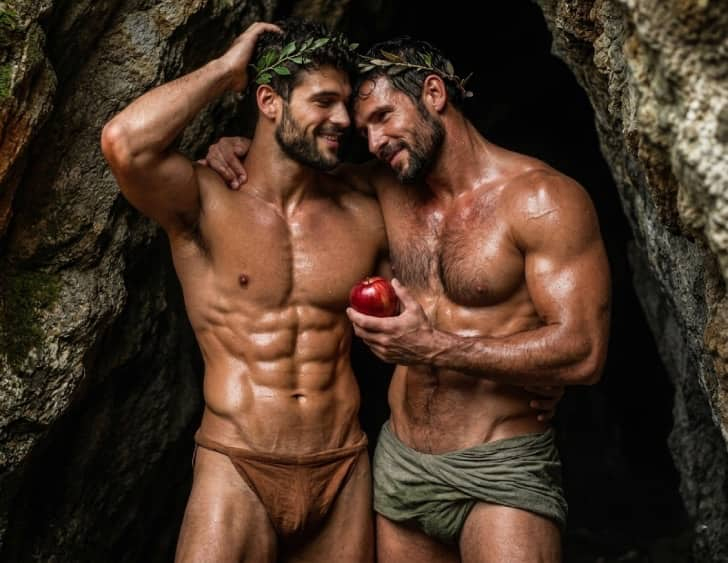
How Emotional Connection Builds in Masculine Gay Relationships
Ask ten gay men what "masculine" means and you will get ten lists. For one man it is a deep voice and a broad back. For another it is a trade job, a beard, and a way of taking up space in a room. For a third it is emotional steadiness, or simply not being dramatic. These are separate traits that happen to be bundled under one word.
The bundle breaks apart easily. A man can have a soft voice and be physically strong. A man can lift heavy weights and cry at films. A man can work with his hands and also love musicals and talk openly about his feelings. If "masculine" were one coherent thing, those combinations would be rare. They are everywhere.
On apps and in profiles, "masc" often carries a particular meaning: does not read as gay. That is a different thing from strength, competence or physical build. It is a statement about how a man is perceived by strangers, and it tells you more about the writer's relationship to being visible than about what he finds attractive in another body.
Cultures and decades also disagree about what counts. Behavior coded masculine in one place is neutral or even feminine in another. Because the label moves around, it is worth asking which specific traits you mean when you say you want a masculine man. The rest of this article depends on getting that specific.
Where the pull comes from: biology, culture, porn and the men we grew up around
Nobody has established a single cause of sexual attraction, and anyone who says they have is overselling. What can be said is more modest. If you are attracted to men, then male-typical features such as facial hair, body hair, broad shoulders and a lower voice are part of what attracts you to men in the first place. For many gay men, attraction to masculinity is just that, with no hidden meaning.
Culture then shapes which version of masculinity gets the spotlight. Look at what gets photographed, advertised and cast as the desirable man: athletes, soldiers, cowboys, lumberjacks, men in uniform. Gay visual culture has long drawn on those same figures, and the artist Tom of Finland built a career drawing exaggeratedly masculine men. When the same image is repeated across decades, it becomes the default meaning of "hot," whether or not you chose it.

Porn plays a similar role at closer range. It presents a narrow set of roles, bodies and behaviors, and repeated exposure tends to train what feels familiar and arousing. If most of what you have watched features one kind of man, your arousal can attach to that kind of man without any deliberate decision on your part. That is worth knowing about yourself, and it is not a moral failing.
Then there are the men you grew up around. Fathers, brothers, coaches, teachers, classmates and the boys who bullied you all taught you something about what male approval looks like. Many gay men learned early that masculine boys were the ones who set the rules, and that being accepted by them was safer than being rejected by them. Desire can form around that history. Wanting the man who would once have shut you out can be attraction, longing for acceptance, or both tangled together.
None of these sources makes your attraction fake. They explain why it has the shape it has, and that is the information you need for the next question.
Attraction or armor: when wanting masculinity is really fear of being seen as feminine
Internalized homophobia means absorbing the negative messages society sends about gay people and turning them on yourself. It does not always look like self-hatred. Often it looks like a preference. If you were taught that effeminate men are weak, embarrassing or a threat to your safety, then putting distance between yourself and anything feminine can feel like a taste in men when it is closer to self-protection.
A few signs suggest a preference may be doing that job:
- You feel relief when a partner passes as straight. Being with him lowers your anxiety in public, and that relief is a bigger part of the appeal than the man himself.
- You feel disgust, not just lack of attraction, around femme men. Not being attracted to someone is neutral. Contempt is a reaction to something in yourself.
- You edit your own behavior around other men. You lower your voice, stop your hands, change what you say about your interests, because you do not want to be read.
- You would be embarrassed if friends or family saw you dating a femme man. The question here is whose opinion is shaping the choice.
- Your type is defined by what he is not. "Not girly," "not dramatic," "not like those guys" are descriptions built around avoidance.
Having one or two of these does not mean your attraction is a trick. Shame and genuine desire can sit in the same man at once. The point of the list is to notice when the main thing you are chasing is a feeling of being safe, because a partner cannot permanently give you that.
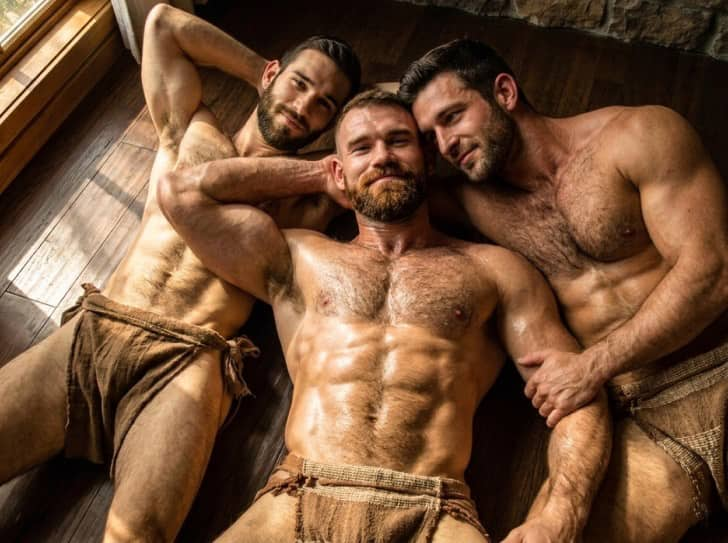
The masc4masc problem and what femme-shaming costs the people who do it
"Masc4masc" in a profile is a preference stated openly, and people are entitled to their attractions. The trouble starts when the phrase comes with contempt: "no fems," "not into feminine guys," "straight-acting only." That language rejects a whole group of men based on how they move and sound, and those men are often the ones who have already absorbed the most hostility from outside the community.
Femme-shaming also costs the person doing it, and the cost is easy to miss.
- Constant self-monitoring. If you hold other men to a standard of how they must act, you apply the same standard to yourself. That takes ongoing effort and leaves little room to relax in your own body.
- A smaller social world. Rejecting femme men removes a large share of potential friends, flirts and partners, and they are often the people most comfortable being open about who they are.
- Repeating the bullying you may have received. Many men who sneer at femininity were the targets of that sneer first. Passing it on does not heal the original hurt.
- Shallower connection. A partner chosen mainly for how he looks to outsiders is hard to be vulnerable with, because your shared project is keeping up an image.
It helps to separate two positions. "I am not attracted to very feminine men" is a statement about desire. "Feminine men are lesser" is a statement about value. The first can be true without hurting anyone. The second does damage, including to the person who holds it.
What chasing a type does to your dating life, your body image and your mood
A narrow type shrinks your options before you have met anyone. If you only respond to a small set of looks and mannerisms, you will skip over many men who would have been good company, good friends or good partners. You will also compete with a very large number of other men chasing that same ideal, which makes rejection and ghosting more frequent.
Body image takes a hit too. When one version of masculinity is the standard of desirability, anything that falls short of it can feel like a personal failure: not muscular enough, voice too light, not hairy enough, not "manly" in the right way. Some men respond by over-training, restricting food, or performing a toughness that does not match how they feel. A partner who values you only when you fit the picture does not leave you secure in your body.
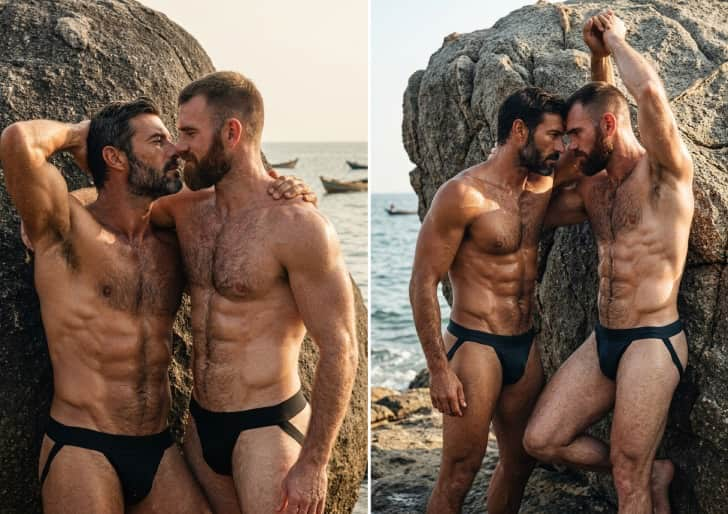
Transforming Your Body and Mind: The Benefits of Exercise for Middle-Aged Gay Men
Mood follows. Constant comparison and a high bar for who counts as attractive can leave you anxious before dates, flat afterward, and quick to read any lukewarm reply as proof you are not enough. Expecting a very specific type to fix your loneliness also puts a lot of weight on a stranger.
There is a quieter cost as well. If you equate masculinity with emotional restraint, you can end up choosing men who do not talk about feelings, then feel unseen in the relationship. The packaging attracted you and the missing communication wears you down.
If this pattern is affecting your mood, a counselor or therapist experienced with LGBTQ clients can help. Shame about femininity is a common topic for them, and it is usually easier to work through with someone else in the room.
How to audit your own preferences without shaming the desire itself
Auditing a preference is different from banning it. You are not trying to force yourself to be attracted to everyone, and you do not owe anyone your attraction. You are looking at which parts of your type are really yours.
Break the type into parts.
Write down what you find attractive in men you have fancied. Sort the items into body (build, hair, height), voice and movement, behavior (confidence, humor, how he treats people) and values. Notice which category dominates your list. A list made entirely of surface traits tells you something different from a list heavy on behavior.
Run the unseen test.
For each trait, ask whether you would still want it if nobody else ever saw you together. If the answer for some traits is no, those traits are doing social work for you.
Swap one detail.
Picture a man you find attractive with a higher voice, or a more expressive way of talking, while everything else about him stays the same. Notice your first reaction. Mild disappointment is information about taste. A flash of embarrassment or irritation is information about shame.
Look at your history.
Think through who you have dated and how those relationships felt. Did the most masculine-looking men treat you well? Did you ever overlook a kind man because he did not look the part? Patterns in your own past are better evidence than any theory.
Watch your reaction to femme men.
Neutral or indifferent is fine. Pay attention only to contempt, discomfort at being near them, or a need to explain that you are not like them.
Notice what you hide in yourself.
Interests, gestures, ways of speaking you have trimmed to look more masculine are worth reclaiming. How you feel about those parts of you often predicts how you feel about other men who show them.
If the audit turns up some shame, that is common and not a verdict on your character. You can keep the attraction you have found to be genuine while working on the part that grew out of fear. The two are separable.
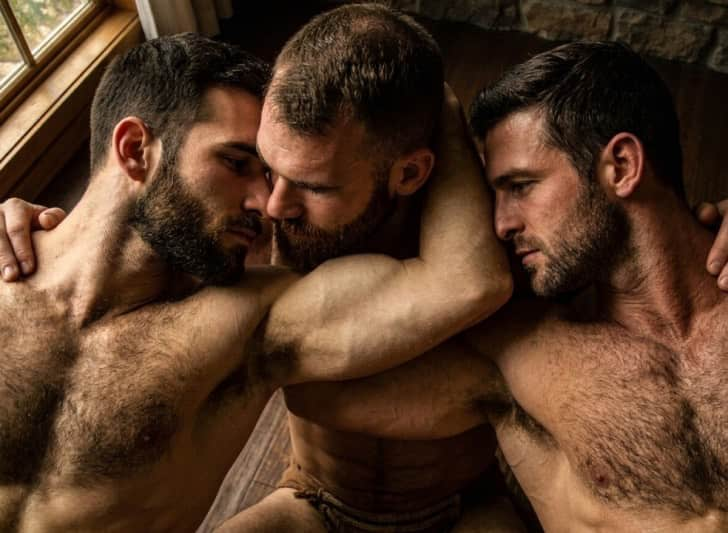
Masculine is not a personality: what to look for once the packaging stops mattering
Qualities that people often credit to masculinity, such as calm, protectiveness, reliability and confidence, are available to anyone. A man can be broad and loud and still be unreliable. A man can be slight and expressive and the steadiest guy you know. The packaging does not predict the contents.
When you are deciding whether you want to keep seeing someone, these tend to tell you more:
- How he handles disagreement. Does he listen, get defensive, go silent, or turn it into a contest?
- Whether he can say what he feels. Even a little. A man who can name that he is nervous or hurt is easier to be close to than one who cannot.
- How he treats people with no power over him. Servers, junior colleagues, strangers on the street.
- How he talks about other men. Casual contempt for femme men, or for men who are less successful or less fit, usually shows up toward you eventually.
- Whether he does what he says. Showing up on time, following through, replying when he said he would.
- How comfortable he is in his own body and identity. A man at ease with himself puts you at ease.
- How he talks about sex and boundaries. Clear, relaxed communication about what you each want, and what you do not, matters more than how he looks doing it.
You can keep a preference for masculine looks and still use these criteria. Heat and compatibility are different questions, and a good relationship needs both answered.
Keeping the heat and dropping the baggage: a few honest questions to take on your next date

You do not have to give up what turns you on. A deep voice, a rough beard or a big frame can stay on your list of things you love. What can go is the pressure that attached itself to them: the need to be seen as not gay, the fear of looking soft, the habit of ranking men by how masculine they seem.
A few questions you can ask yourself before or after a date make this practical:
- Am I attracted to him, or to how I will look beside him? Check whether the thrill is about his company or about how the pairing reads to others.
- Am I relaxed around him? Notice whether you can speak and move naturally, or whether you are managing your image.
- What did I find out about him that had nothing to do with his looks? If the answer is very little, there is more to learn before you decide.
- Would I still be interested if he showed a softer side? A man who is tender, anxious or silly at times is a whole person, and that is worth wanting.
- Did I dismiss anyone recently because of how they sounded or moved? If so, ask whether the reason was attraction or discomfort.
- Do I like who I am when I'm with him? This matters more than whether he fits your type.
The Queer Tarot: An Inclusive Deck and Guidebook
Tarot deck and guidebook set for LGBTQ+, created by queer and trans artist team Ash + Chess.
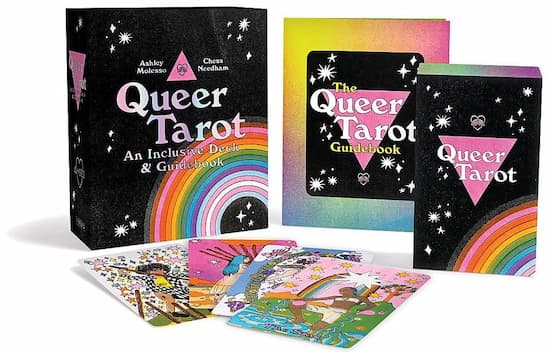
We earn a commission if you click this link and make a purchase at no additional cost to you.
You can also bring some of this into the conversation. Telling a date what you like about masculinity, and asking what he likes in a partner, tends to produce more honest talk than trading profile phrases. A man who answers with curiosity is usually a better sign than a man who answers with a checklist.
Wanting masculine men is common among gay men, and it does not need an apology. It does deserve some attention, because the same preference can come from simple attraction in one man and from old fear in another. Once you know which one is operating in you, you can pick partners with more choice and less reflex, and you can stop treating your own softness as something to hide.