

Testosterone gets blamed for a lot and credited for even more. It is the hormone behind the idea that a "real" man is always ready, always hungry, always driven, and many gay men carry a version of that idea into the bedroom and into how they judge their own masculinity. The biology is more modest than the myth, and a good deal more useful once you separate what the hormone does from what people hope it does.
This article covers testosterone and sex drive in gay men: what the hormone plausibly affects, where its influence ends, how passion differs from closeness, and what to do when desire drops or two partners want different amounts of sex. It is general information, not medical advice, and it points to a doctor for anything that needs a blood test or a prescription.
Why we dream about testosterone in the first place

Testosterone is the cultural shorthand for male desire. Ads for "T boosters" promise a return of youth, muscle and a relentless sex drive. Gym talk treats levels like a score. Online, the word gets used as a stand-in for being attractive, dominant or sexually successful.
For gay men the shorthand carries extra weight. Many grow up measured against a narrow picture of manhood and spend years either performing it or feeling shut out of it. Desire for masculine partners is common in gay culture, and the hormone becomes a symbol for the whole package: the body, the confidence, the appetite. If you want to explore why that attraction runs so strong, the piece on how masculine energy shapes gay relationships goes into it. Here the question is narrower and more physical: what is the hormone actually doing in your body?
Two facts help set expectations. First, testosterone is made mainly in the testes, with a small amount from the adrenal glands, and every man has some. Second, there is no reliable evidence that gay men as a group have meaningfully higher or lower levels than straight men. Orientation is not something a blood test reveals, and the number on your lab report says nothing about how masculine, desirable or capable you are.
What testosterone does for desire, energy and mood, and where its influence stops
Testosterone does real work. It supports libido, the background sense of wanting sex that shows up without prompting. It helps maintain muscle mass and bone density, contributes to red blood cell production, and affects energy and mood. When levels are clearly low, men often report less interest in sex, less energy, lower mood, and difficulty building or keeping muscle.
The threshold effect
The relationship between the hormone and desire is not a straight line. The usual explanation is a threshold: below a certain level, desire tends to suffer, but above it, higher numbers do not reliably produce more desire. A man in the normal range who raises his levels artificially should not expect a matching rise in appetite. Treatment studies point the same way. Testosterone therapy tends to help most in men with a confirmed deficiency, and the benefit is far less convincing in men whose levels were already normal.
This matters because it undercuts the "more is better" assumption. If your levels are within a healthy range, the reason your desire feels flat is probably not the hormone.

What it does not do on its own
Testosterone is one input among several. Erections depend on blood flow, nerves and mental state as well as hormones, which is why a man with healthy levels can still have trouble and a man with lower levels can function well. Desire also responds to sleep, mood, medication, health, novelty, safety and how you feel about your partner and yourself.
The hormone also cannot supply the things people often hope it will:
- Emotional attunement. Noticing what your partner needs, and caring about it, is a skill and a habit.
- Confidence about your body. Shame and self-criticism are not hormonal problems.
- Attraction to a specific person. Who you want is far more specific than how much you want.
- Good communication. Nothing in a vial teaches you to say what you mean.
Passion versus connection: why high drive does not guarantee intimacy
Passion and connection overlap, but they are different experiences. Passion is arousal, appetite, the pull toward a body. Connection is feeling known, safe and chosen by someone. A man can have a strong drive and still feel lonely during sex, and a couple can have a quiet sex life and a deep bond.
Plenty of gay men know the gap from experience. Casual encounters can be physically intense and emotionally empty, while a long relationship can have fewer fireworks and far more trust. Neither is a failure. They are different needs, and the trouble starts when a person expects one to deliver the other.
High drive can even get in the way of closeness. Strong desire without emotional skill can lead to pursuing sex as a way of avoiding vulnerability, using it to settle anxiety, or reading a partner's lower interest as rejection. Intimacy grows from behaviours that sit outside the hormone's reach:
- Telling your partner something real about your day, your fears or your wants.
- Responding when they do the same, without fixing or deflecting.
- Touching without it needing to lead to sex.
- Repairing after an argument instead of waiting for it to fade.
- Staying curious about each other after years together.
None of those depend on a testosterone level. This is also good news for anyone whose levels are lower than they would like. Closeness is available at every level.

When low desire is a hormone question and when it is stress, shame or the relationship
Low desire is common and has many causes. Hormones are one of them, and often not the first place to look. A useful way to think about it is to sort the possible causes into groups.
Signs that point toward a medical cause
Consider a medical check if low desire arrives alongside other changes: persistent fatigue, a drop in muscle or strength despite training, loss of morning erections, reduced body hair growth, low mood that does not lift, or a clear change from how you used to feel. These are the symptoms that go with low testosterone, though they also go with other conditions, which is exactly why guessing is a poor strategy. Thyroid problems, diabetes, sleep apnea, depression and certain medications can look similar.
Medications deserve a mention on their own. Some antidepressants, certain blood pressure drugs and opioids can lower desire or affect arousal. If your drive dropped after starting a medication, say so to the prescriber. Do not stop a prescribed drug on your own.
Causes that come from mind and relationship
Many dips in desire have nothing to do with hormone levels:
- Stress and exhaustion. A body running on overwork and short sleep rarely feels playful.
- Depression and anxiety. Loss of interest in pleasure is a core feature of depression.
- Shame. Years of hiding or being told your desire is wrong can leave a residue that shows up as avoidance or numbness, even after you are out and settled.
- Past experiences. Trauma, coercion or bad early sexual experiences can change how safe desire feels.
- Performance pressure. Worrying about whether you will perform is one of the faster ways to stop wanting to.
- Relationship friction. Unspoken resentment, unresolved conflict or feeling like roommates all suppress desire.
- Routine. After years together, sex can slide down the priority list without anyone deciding it should.
One pattern helps explain why desire can seem to vanish. Some people feel desire spontaneously, out of nowhere. Others feel it mainly in response to touch, closeness or a good mood, and only after they have started. The second kind is just as normal, and it is easy to mistake for low drive if you are waiting for a feeling that only arrives once things are already underway.
If you feel your spark has dimmed and want a wider, less clinical look at it, the guide on getting your queer mojo back covers the emotional side of the same problem.
Sleep, training, alcohol and stress: the everyday levers that affect how you feel
You cannot choose your hormone levels the way you choose a meal, but ordinary habits do influence them, along with mood, energy and desire. The habits below have the best support and carry little risk.
Sleep
Short or broken sleep is one of the clearest everyday drags on testosterone and on mood. Studies that restrict sleep in healthy young men have shown hormone levels falling after just a week of short nights. Sleep problems such as untreated sleep apnea, which is common and often goes undiagnosed, affect both energy and desire. If you snore heavily, wake unrefreshed or feel exhausted despite enough hours in bed, mention it to a doctor.
Practical basics include a consistent wake time, a dark and cool room, and keeping screens and caffeine away from late evening.

Deeper Sleep
Training
Regular exercise helps mood, energy, body image and sleep, and resistance training in particular is associated with healthier hormone profiles. Carrying a lot of excess body fat is linked with lower testosterone, and losing weight can raise it in men who are overweight. You do not need extreme programmes. Consistent lifting two to three times a week plus some cardio is a sound base. If running no longer suits your joints or schedule, there are good alternatives, and the article on when running stops being ideal cardio lays some out.
Overtraining works the other way. Very heavy training with too little food and rest can leave you tired, irritable and with a flat libido.
Alcohol
Heavy drinking can suppress testosterone and interferes with sleep and erections. Even moderate drinking can blunt arousal in the moment while lowering inhibition, which is why many people mistake it for a help. If you notice that sex feels easier only after a few drinks, or that you struggle to connect without them, that is worth looking at honestly. The same applies to recreational drugs used around sex, which can affect erections, mood and the days that follow.
Stress
Chronic stress keeps the body in an alert state that works against desire. Cutting every stressor is unrealistic, but managing it is not: time outdoors, regular movement, time with friends, therapy, and protecting some part of the week for rest all help. Minority stress, the cumulative wear of living with stigma, is a real load for many gay men, and talking to a therapist who understands it can make a measurable difference to how you feel in your body.

Does Endothelial Oxidative Stress Affect Your Sexual Performance?
A note on anabolic steroids
Some men turn to anabolic steroids or injected testosterone to build a body they believe will be more desirable. Taking outside testosterone signals the body to cut its own production, which can shrink the testes, reduce sperm production, and leave natural levels low for a long time after stopping. If you are using or considering these, a doctor can talk it through and monitor your health. Raising it with them is not a confession, and good doctors have heard it before.
How to talk with a partner about desire that does not match
Differences in desire are among the most common issues couples face, gay or straight. One partner wants sex more often, the other less, and both can end up feeling wrong: one rejected, the other pressured. The mismatch is rarely about love. It is about two different appetites and two different ways of reaching arousal.
A few approaches make the conversation easier.
- Choose the moment carefully. Do not raise it in bed, right after sex was declined or attempted, or in the middle of an argument. A walk or a quiet evening works better, when neither of you feels cornered.
- Start with how you feel, not what they do wrong. "I miss feeling close to you and I've been taking it personally when we don't have sex" lands differently from "You never want me." Describe your experience and leave the verdict out.
- Be specific about what you want. "More sex" is vague. Do you want more initiation from your partner, more affection, more variety, or simply to feel desired? The specifics tell your partner what to actually do.
- Ask, and listen. Find out what is happening for them. Stress, medication, body image, tiredness and resentment all come up. Resist the urge to solve it as they speak.
- Separate sex from other kinds of touch. If every cuddle is read as a request, the lower-desire partner may avoid all contact. Agreeing that some touch has no agenda can ease the pressure and bring back warmth.
- Look for middle ground. Options include scheduling time together, which sounds unromantic but removes the guesswork for many couples, agreeing on other ways to be intimate, or, if both of you are comfortable, discussing how an open or flexible arrangement might work. What suits one couple would not suit another, and no arrangement is the "correct" one. The point is that both of you choose it.
- Get outside help if you are stuck. A sex therapist or couples therapist who works with gay clients can offer structure when the same argument keeps repeating.
Whichever of you has the lower desire, it helps to remember that wanting less is not a defect, and wanting more is not a demand. Both are information about what each of you needs.
What to ask a doctor, and why you should skip the supplement shelf
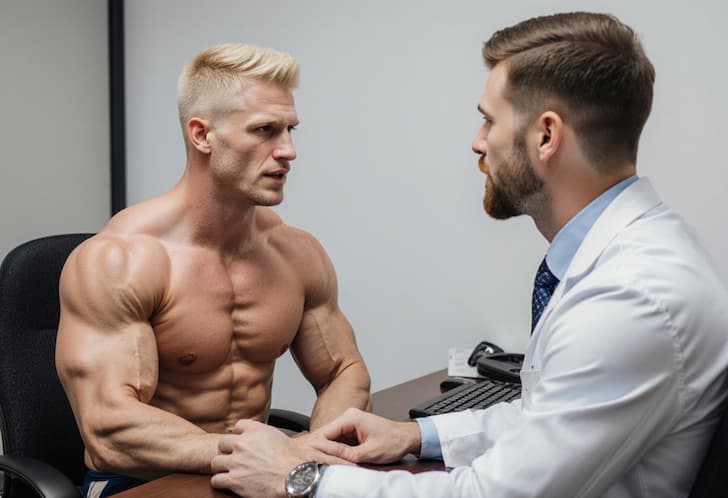
If you suspect a hormone issue, the route is a doctor, not a store. Low testosterone is diagnosed from symptoms together with blood tests, and doctors usually want the test done in the morning, when levels are highest, and often repeated to confirm. A single reading on a bad night's sleep or during an illness can mislead.
Questions worth bringing to the appointment
- Could my symptoms come from low testosterone, or from sleep, thyroid, blood sugar, depression or medication?
- Which blood tests do you recommend, and when should they be taken?
- Do any of my current medications affect desire or erections?
- If my levels are low, what is causing it, and what are the options for treatment?
- What are the risks of treatment, including effects on fertility, red blood cell count and sleep apnea?
- How often would I need monitoring?
- Should I also be checked for sleep apnea, diabetes or heart risk factors?
- Can you recommend a counsellor or sex therapist if the cause looks psychological?
Be open about your sex life, drug and alcohol use, any steroid use, and what you are hoping for. The more accurate the picture, the better the advice. A clinic or doctor with experience in LGBTQ health can make that conversation more comfortable. Testicular and prostate checks are part of the same conversation, and the article on prostate and testicular health for gay men explains why those are worth having too.
Electric Pulse Machines
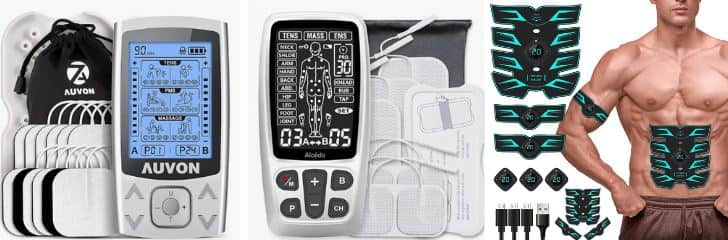
We earn a commission if you click this link and make a purchase at no additional cost to you.
Why the supplement shelf is a poor bet
Products sold as testosterone boosters promise a lot and are weakly regulated. For most of their ingredients the evidence is thin, doses vary between brands, and you cannot always be sure of what is in the bottle. Some contain herbs or compounds that can interact with medication or affect the liver, and some products marketed for sexual performance have been found to contain undeclared drugs. Even a product that did nudge your levels could do nothing for desire if your levels were already normal, which, given the threshold effect, is the likelier situation.
There is also a cost beyond the money. Reaching for a supplement can delay finding the real cause, whether that is sleep apnea, depression, a medication side effect or an unspoken problem in the relationship. A proper check costs more effort than buying a bottle, and it tells you something true.
If your levels turn out to be low, treatment exists and is managed by a doctor. If they turn out to be normal, that is useful too, because it lets you put your attention on sleep, stress, mood, shame and the conversations you may have been avoiding, which is where most of the change in desire and closeness tends to come from.