

Self-promotion gets a bad rap, but what if we flipped the script and called it what it really means - standing up for who you are? As a gay man who's learned to love himself loudly, I've discovered that propagandizing yourself has nothing to do with arrogance or manipulation. This conversation goes beyond the tired advice you've heard a million times about "being yourself" or "living your truth." We're talking about actively, intentionally, and unapologetically broadcasting your existence as a happy gay man in a world that still needs reminding that we exist in full color, not just black and white. The resistance you face from society makes your self-propagandization an act of rebellion, and honey, rebellion looks gorgeous on you.
Let me get real with you for a second - the world won't hand you visibility on a silver platter. Society has spent centuries trying to erase, minimize, and sanitize queer existence, so your refusal to disappear becomes revolutionary by default. When you propagandize yourself as a happy gay man, you're not just promoting yourself; you're dismantling the narrative that says happiness and queerness can't coexist. Every social media post, every conversation where you mention your boyfriend instead of staying vague, every moment you choose to be specifically, undeniably, visibly gay and happy - these are acts of propaganda in the best sense of the word.
Reclaiming the Word Propaganda for Personal Liberation
Propaganda sounds dirty, doesn't it? The word conjures images of wartime manipulation and corporate advertising that tries to sell you things you don't need. But propaganda, at its core, simply means spreading information to promote a particular point of view. Your point of view happens to be that you're a gay man who's happy, and that perspective deserves promotion just as much as any other. Society has been running anti-gay propaganda for centuries through religious doctrine, discriminatory laws, and cultural messaging that positions queerness as tragedy. Your counter-propaganda - the simple act of existing happily - disrupts that tired narrative.
Reclaiming propaganda means owning your story before someone else tells it for you. History gets written by whoever speaks the loudest, and for too long, straight voices have been narrating queer experiences. When you propagandize yourself, you're claiming authorship of your own narrative. The world tried to tell you that being gay meant a life of loneliness, disease, and social rejection. Your happiness becomes a direct rebuttal to those lies, and every time you share that happiness, you're rewriting the script.
Building Your Personal Brand as a Happy Gay Man
Personal branding sounds corporate, but strip away the business jargon and you're left with a simple concept - how you present yourself to the world matters. Your brand as a happy gay man starts with identifying what happiness looks like for you specifically, not what the mainstream gay scene tells you happiness should be. Maybe your happiness comes from your relationship, your career, your hobbies, your found family, or all of the above. The specificity makes your propaganda effective because generic messages about gay happiness get lost in the noise.
Start documenting your happy moments in whatever medium feels natural - Instagram stories, blog posts, TikToks, or even old-school journaling that you share with friends. The documentation serves two purposes: it reinforces your own happiness by making you conscious of the good things in your life, and it shows others that gay happiness exists in real, tangible forms. When you post a photo of you and your boyfriend cooking dinner together, you're not just sharing a meal prep update; you're propagandizing domestic gay bliss. Every mundane moment becomes radical when it contradicts the stereotypes people hold about queer life.
Your personal brand should feel like you, not like a performance of what you think people want to see. Authenticity makes propaganda stick because people sense when you're faking it. If your version of happiness includes staying home with your cats rather than hitting the clubs every weekend, propagandize that. The introvert gay guy who's blissfully content reading books on his couch deserves just as much visibility as the party boy dancing until dawn. Both versions dismantle the monolithic "gay lifestyle" stereotype that straight people love to reference.
Consistency matters when you're building your brand, but consistency doesn't mean repetition. You're not a robot programmed to post the same message over and over. Your happiness takes different forms on different days, and showing that range makes your propaganda more relatable. One day you might share your happiness about a work promotion, the next day you're posting about your chosen family brunch, and the following week you're talking about the gay book that changed your life. The through-line remains your happiness and your gayness, but the expression varies.
Owning Your Space in Physical and Digital Worlds
Physical space still matters even in our digital age, and how you occupy that space sends messages whether you intend them to or not. Walking down the street holding your boyfriend's hand propagandizes your relationship in public space where straight couples have always felt entitled to display affection. Your presence in spaces that don't explicitly market themselves as "gay-friendly" reminds everyone that queer people exist everywhere, not just in designated districts. The gay couple at the hardware store shopping for garden supplies challenges the assumption that certain spaces belong to straight people by default.
Claiming space physically means refusing to shrink yourself when heterosexual people seem uncomfortable with your presence. The instinct to tone down your mannerisms, lower your voice, or create distance from your partner in certain environments comes from years of conditioning that told you to make yourself palatable. Fighting that instinct and remaining fully yourself becomes an act of propaganda. You're teaching the people around you that gay men exist in all spaces and that their comfort level doesn't dictate your right to exist as you are.
Digital space offers different opportunities for propagandizing yourself because the internet removes geographical limitations. Your happy gay content reaches people in countries where homosexuality remains criminalized, in small towns where coming out feels impossible, and in the feeds of straight people who've never knowingly interacted with a gay person. The ripple effects of your online presence extend far beyond your immediate circle. That young gay kid in rural Nebraska who stumbles across your Instagram might see himself reflected back for the first time and realize that happiness remains possible for him.
Curate your digital presence deliberately, but don't confuse deliberate with fake. Choose platforms that align with how you naturally share information - if long-form writing feels comfortable, start a blog; if visual storytelling suits you better, focus on Instagram or TikTok. The medium matters less than the consistency of your message: you're gay, you're happy, and those two facts coexist beautifully. Your digital footprint becomes your propaganda legacy, a trail of breadcrumbs that leads other gay men toward their own happiness.
Dismantling Stereotypes Through Visibility

Dismantling Stereotypes Through Visibility
Stereotypes persist because people lack exposure to counter-examples, and your visibility as a happy gay man directly challenges the tired clichés that dominate mainstream perception. The media loves tragic queer narratives where gay characters exist to suffer, teach straight characters lessons, or die dramatically. Your decidedly un-tragic life becomes subversive by simply existing and being documented. Every time you share your happiness publicly, you're chipping away at the monolithic image of what gay life supposedly looks like.
The "sad gay" stereotype runs deep in cultural consciousness because for decades, the only queer stories that got told were cautionary tales. Society presented being gay as a problem to be solved or a burden to be carried, never as a neutral characteristic that exists alongside happiness. Your propaganda work involves replacing that narrative with lived reality. The stereotype says gay men lead shallow, hypersexual lives devoid of real connection; your Sunday morning farmers market trip with your partner says otherwise without you needing to write a dissertation on the topic.
Visibility works as propaganda because representation shapes perception, and perception influences how people treat you and others like you. When your coworkers see photos of your vacation with your boyfriend, they're forced to reconcile their stereotypes about gay relationships with the evidence in front of them. When your straight friends witness your stable, loving partnership, they become advocates who challenge homophobia in spaces where you're not present. Your visibility plants seeds that grow into changed minds, and changed minds eventually create changed policies and social norms.
Fighting stereotypes doesn't require you to become a spokesperson or educator for all gay men - a burden that gets unfairly placed on queer people constantly. Your propaganda focuses on your specific happiness, not on representing some imaginary monolithic gay experience. The specificity makes your message stronger because it reminds people that gay men are individuals with varied lives, interests, and definitions of happiness. The stereotype says all gay men love musical theater and brunch; your propaganda might reveal that you prefer heavy metal and breakfast burritos, and that contradiction helps break down the box society tries to put you in.
Refusing the Tragedy Narrative
Society expects gay stories to include suffering as a mandatory plot point, as if queerness automatically comes packaged with trauma. Your refusal to center pain in your narrative disrupts that expectation. Sure, you've faced discrimination, you've dealt with family rejection or workplace hostility, but those experiences don't define you or determine your capacity for happiness. The propaganda you spread emphasizes what you've built despite obstacles, not just the obstacles themselves.
The tragedy narrative serves a purpose for straight audiences - it makes them feel sympathetic while maintaining their position of power and "normalcy." When gay characters in movies suffer dramatically, straight viewers get to feel progressive for feeling bad, but they don't have to examine the systems that create that suffering. Your happy gay propaganda short-circuits that dynamic by denying them the tragic figure they expect. You're not asking for sympathy or pity; you're demonstrating that gay men create beautiful lives on our own terms.
Social media makes it tempting to perform trauma because pain tends to get more engagement than happiness. The algorithm rewards controversy and emotional intensity, which means posts about discrimination often spread further than posts about your lovely weekend. Resist that temptation to center suffering in your propaganda. Share your full human experience, which includes both hardship and happiness, but make sure happiness gets equal or greater airtime. The world already knows gay people suffer; what needs propagandizing is the reality that we also thrive.
Refusing the tragedy narrative means you get to be boring sometimes, and boring is revolutionary for gay men. The mundane details of your life - grocery shopping, doing laundry, watching Netflix with your partner - deserve documentation because they normalize queer existence. Straight people get to be boring all the time without anyone questioning their right to exist; claiming that same mundane happiness for yourself as a gay man challenges the notion that queerness must always be dramatic, traumatic, or performance-worthy.
Combating Invisibility in Everyday Moments
Invisibility functions as a form of social control, and many gay men learn to make themselves invisible as a survival mechanism. You code-switch at work, you avoid mentioning your partner in certain contexts, you police your mannerisms when you're in unfamiliar spaces. Each choice to make yourself invisible reinforces the message that gayness should stay hidden. Your propaganda work involves identifying those moments of self-erasure and replacing them with visibility.
Start small if full visibility feels too risky - mention your boyfriend in a work conversation the same way straight colleagues mention their wives. Use male pronouns when talking about your partner to the barista making your coffee. Wear that shirt with the subtle pride flag colors to your family gathering. These micro-moments of visibility accumulate into a propaganda campaign that says you exist and you won't hide. The safety calculation remains yours to make; propaganda doesn't require martyrdom. But each small act of visibility chips away at the invisibility that society prefers.
Invisibility affects single gay men differently than coupled ones, and your propaganda strategy adjusts accordingly. Single gay men face erasure because society assumes everyone pairs off, and your singleness gets read as failure or sadness rather than choice. Propagandize your happy single gay life by sharing the fulfillment you get from friendships, hobbies, career, or whatever brings you satisfaction. The narrative that happiness requires a romantic partner harms everyone, but it particularly damages queer people who already face limited options for partnership in many locations.
Public displays of affection between same-sex couples remain controversial in many places where straight couples kiss freely without a second thought. Your decision to show affection publicly propagandizes your right to express love in the same spaces where straight people do so constantly. Hold hands, kiss goodbye in parking lots, put your arm around your partner at restaurants. The discomfort others feel isn't your problem to solve by hiding. Your visible affection reminds everyone watching that gay love exists in their world, not just in designated gay spaces.
Creating Content That Reflects Your Reality
Content creation has democratized propaganda in ways previous generations couldn't access. You don't need a publisher, a production company, or mainstream media approval to spread your message. Your phone contains all the tools required to propagandize your happy gay existence to whoever wants to see it. The gatekeepers who used to control which stories got told have lost their monopoly, which means your specific version of gay happiness finally gets airtime.
The content you create should reflect your actual life, not some aspirational version that exists only in your imagination. Propagandizing yourself means showing up as you are, not as you think you should be. If your life looks messy sometimes, show the mess. If you're having a rough day, you don't need to pretend everything is perfect. The propaganda value comes from the overall message that gay men lead full, complex, human lives that include both ups and downs, but land ultimately on happiness and self-acceptance.
Content creation requires consistency more than perfection. You don't need professional photography, witty captions, or thousands of followers to make an impact. The young person who needs to see a happy gay man living his life will benefit from your unfiltered iPhone photos just as much as from a professionally produced video. Your consistency - showing up regularly with glimpses of your life - builds a body of work that serves as evidence: gay happiness is real and sustainable.
Different platforms serve different propaganda purposes, and you might find that your message resonates better on certain platforms than others. TikTok rewards personality and humor, Instagram prioritizes visual aesthetics, Twitter favors quick thoughts and commentary, blogs allow deeper exploration of ideas. Experiment with different platforms to see where you feel most comfortable expressing yourself. The platform matters less than your willingness to show up regularly with your message of gay happiness.
Telling Your Story in Your Own Words
Other people will try to tell your story for you if you don't tell it yourself first. Parents rewrite their children's coming-out experiences to center their own emotions. Straight allies position themselves as saviors in narratives where queer people did the actual work. The media reduces complex queer lives to soundbites that fit predetermined story arcs. Your propaganda work includes taking control of your narrative by telling your own story in your own words.
Telling your story doesn't require grand dramatic reveals or perfectly structured narratives. Your story lives in the accumulation of small details you share about your daily life. The story of your relationship gets told through photos of date nights, inside jokes you reference, challenges you mention overcoming together. The story of your happiness reveals itself in posts about hobbies you love, friendships that sustain you, achievements you're proud of. Each piece contributes to the larger narrative you're propagandizing.
Your story will contradict someone else's expectations, and that's precisely what makes it valuable propaganda. The gay man who has a complicated relationship with the mainstream gay scene needs to see stories from other gay men who feel similarly. The gay man who loves sports and has never watched RuPaul's Drag Race needs to see himself reflected in gay content. The gay man who's deeply religious and reconciles his faith with his sexuality needs other examples of that reconciliation. Your specific story fills gaps in representation that a generic "gay story" never could.
Owning your narrative means you get to define what parts of your story you share and what stays private. Propaganda doesn't demand total transparency or oversharing. You control the boundaries of what you disclose, and those boundaries will shift depending on the context and platform. The version of your story you share on social media differs from what you share with close friends, which differs from what you share with family. All versions remain true; they just serve different purposes for different audiences.
Documenting Joy Without Apology
Happiness makes some people uncomfortable, particularly when that happiness comes from someone society expects to suffer. Your gay happiness threatens people who've built their identity around believing that traditional values and traditional relationships are the only paths to fulfillment. When you propagandize your joy, you're implicitly challenging their worldview. Their discomfort isn't your problem to solve by dimming your light.
Documenting joy means noticing the good moments in your life and giving them the same attention you give to problems. Your brain naturally fixates on threats and challenges because that's how humans survived for millennia, but propagandizing happiness requires you to train yourself to notice the positive. Take photos of moments that made you smile, write about experiences that filled you with contentment, share the small victories that might seem insignificant but matter to you. The accumulation of documented joy builds a propaganda archive that proves gay happiness exists consistently, not just in occasional fleeting moments.
Joy looks different for different people, and your propaganda should reflect your specific sources of happiness. Maybe your joy comes from your relationship, your career success, your creative pursuits, your friendships, your pets, your home, your hobbies, or some combination of all these factors. The specificity prevents your propaganda from feeling generic. When you share your joy about the garden you're growing with your boyfriend, you're not just sharing gardening content; you're propagandizing domestic gay happiness, partnership, creating a home together, and working on projects as a team.
Some people will accuse you of bragging when you share your happiness publicly, and that accusation reveals their own insecurity more than anything about your behavior. Propagandizing joy isn't bragging; it's refusing to hide the good things in your life to make others feel better about their own situations. Straight people post engagement announcements, wedding photos, and vacation pictures constantly without being accused of rubbing their happiness in anyone's face. You deserve the same freedom to share your happiness without justification or apology.
Building Connections Through Shared Visibility
Propagandizing yourself has an unexpected benefit - it helps you connect with other gay men who relate to your experience. When you share your truth publicly, you create magnetic points that draw similar people toward you. The gay men who resonate with your specific version of happiness will reach out, comment, share, and build relationships with you. Your propaganda becomes a filter that attracts your people and repels those who wouldn't value you anyway.
Visibility creates webs of connection that extend beyond your immediate circle. When another gay man shares your content, his friends see it, and suddenly your propaganda reaches people you'd never encounter otherwise. The algorithmic nature of social media rewards engagement, which means the more people interact with your happy gay content, the more widely it spreads. Each share, comment, and save tells the algorithm that your content resonates, which pushes it to more feeds and extends your propaganda reach.
The connections you build through visibility often feel more genuine than connections made through traditional methods because people already understand something fundamental about you before you even meet. They've seen your content, they relate to your experiences, and they've self-selected into your orbit because something about your propaganda resonates with them. The filtering effect of propaganda means you spend less time with people who fundamentally don't get you and more time with people who already understand your wavelength.
Building connections doesn't require you to become an influencer or accumulate massive follower counts. A small, engaged audience of people who genuinely relate to your message creates more meaningful connections than thousands of followers who barely notice your content. Your propaganda succeeds when it reaches the people who need to see it, not when it reaches the maximum number of people possible. Quality of connection trumps quantity of followers every time.
Finding Your People Through Honest Sharing
Honest sharing attracts honest people while repelling those who prefer performance and facades. When you share your actual life - including the messy parts, the boring parts, and the unglamorous parts - you signal that you value substance over surface. The people who respond positively to that honesty become your people. Your propaganda acts as a sorting mechanism that separates the connections worth pursuing from the connections that would drain your energy.
Finding your people through propaganda requires patience because the right connections take time to develop. You might share content for months before someone reaches out to say your story resonated with them. The waiting period doesn't mean your propaganda is failing; it means you're building a foundation of visibility that will eventually attract the right people. The propaganda you share today might not connect with someone until six months from now when they're in a different headspace and ready to receive your message.
Your people might not look like what you expected. The gay man who connects deeply with your content might be older or younger than you, live in a different country, have different interests, or come from a completely different background. The common thread that connects you through propaganda often has less to do with demographic similarities and more to do with shared values, experiences, or outlooks. Your happiness propaganda might resonate with people you'd never meet in traditional gay social spaces because online visibility transcends geographical and social boundaries.
Reciprocity matters when building connections through propaganda. When you share your story and others share theirs, pay attention and engage with their content the same way you hope they engage with yours. Comment on their posts, share their content when it resonates with you, send messages of support. The network effect of mutual propagandization strengthens all participants. When gay men support each other's visibility, we collectively increase the volume of happy gay narratives in the world.
Creating Space for Other Gay Men to Thrive
Your propaganda creates space for other gay men by demonstrating that multiple versions of gay happiness coexist. When you show your specific happiness, you implicitly give permission for others to pursue their own version of happiness without conforming to any preset template. The gay man who sees your content and thinks "that's not how I want my life to look" still benefits from seeing a happy gay man living authentically. You've shown him that happiness is possible even if the specifics differ.
Creating space means actively supporting other gay men's propaganda efforts, especially when their version of happiness differs from yours. The gay man who finds happiness in club culture deserves visibility just as much as the gay man who finds happiness in suburban domesticity. Your propaganda doesn't need to tear down alternative versions of gay life to elevate your own. The abundance mindset recognizes that multiple happy gay narratives strengthen the broader message rather than competing for limited attention.
Mentor younger gay men by showing them that happiness is achievable and sustainable. Your propaganda serves as an existence proof that life gets better, not in some vague aspirational sense, but in concrete, livable ways. The young gay man scrolling through social media needs to see gay men in their thirties, forties, fifties, and beyond living full, happy lives. Your visibility at whatever age you are provides that evidence and counters the youth-obsessed messaging that dominates mainstream gay culture.
Creating space requires checking your own biases about what gay happiness should look like. The propaganda you share reflects your life, but your support should extend to gay men whose lives look nothing like yours. The gay man who's happily single, the gay man who's polyamorous, the gay man who's trans, the gay man who's disabled, the gay man who's a different race than you - all these men deserve space to propagandize their happiness without judgment. Your role includes amplifying voices different from your own, not just broadcasting your own message.
Pushback and Resilience
Propagandizing yourself will provoke pushback from people who prefer you stayed invisible or miserable. The pushback might come from conservative relatives who wish you'd stop "flaunting" your sexuality. It might come from other gay men who criticize your version of happiness as too mainstream or not political enough. It might come from straight people who claim they're "fine with gay people" but wish you'd stop "making it your whole personality." The pushback stings, but it also confirms that your propaganda is working - you're visible enough to bother people who'd rather you weren't.
Resilience in the face of pushback means developing thick skin without becoming hardened to the point where nothing affects you. You're still human, and criticism still hurts even when it comes from people whose opinions shouldn't matter. The key lies in distinguishing between criticism that reveals something true and valuable about how you're showing up versus criticism that reveals the critic's own issues. Most pushback falls into the latter category. When someone tells you you're "too gay" or you're "shoving it in their face," that's their discomfort speaking, not objective truth about your behavior.
Staying resilient requires building a support system of people who celebrate your visibility rather than resenting it. Surround yourself with friends who hype up your propaganda efforts, who share your content, who defend you when others attack your happiness. The support system insulates you from the worst of the pushback because you know your people have your back. When random internet strangers leave homophobic comments on your post about your boyfriend, your friends flood the comments with love and drown out the hate.
Resilience also means knowing when to step back and protect your mental health. Propaganda work shouldn't destroy your peace or compromise your wellbeing. If the pushback becomes overwhelming, take a break from sharing publicly. The propaganda you've already put out into the world continues working even when you're resting. You don't owe anyone constant visibility if maintaining that visibility costs too much of your emotional energy. The long game matters more than burning yourself out trying to maintain perfect consistency.
Handling Homophobia Without Internalizing It
Homophobia will show up in response to your propaganda because homophobia still exists despite society's claims of progress. The homophobia might be overt - slurs, threats, explicitly hateful comments. It might be subtle - microaggressions, backhanded compliments, concern trolling disguised as caring. Either way, the exposure to homophobia that comes with visibility takes a toll. Your propaganda strategy needs to include methods for processing homophobia without letting it seep into your self-concept.
Handling homophobia starts with recognizing that other people's hatred says nothing about your worth and everything about their limitations. The person who leaves a hateful comment on your Instagram post is revealing their own fear, ignorance, and smallness. Their hatred doesn't become true just because they expressed it. Your happiness remains valid regardless of whether homophobes acknowledge it. The propaganda you spread continues countering homophobia even when individual homophobes refuse to change their minds.
Develop strategies for dealing with homophobic responses before they happen so you're not making decisions in the heat of emotion. Some people block and delete hateful comments immediately; others screenshot and report; others leave the comments visible as evidence of ongoing homophobia. The strategy you choose depends on your goals and your emotional capacity. There's no wrong answer as long as you're protecting yourself. Your propaganda doesn't require you to engage with every troll or convince every homophobe.
Remember that for every homophobic comment you receive, dozens or hundreds of people saw your content and reacted positively or neutrally without commenting. The negative responses loom larger in your consciousness because humans are wired to notice threats, but they represent a minority of the people who see your propaganda. The young gay kid who needed to see your happy content but was too scared to comment or like your post still benefited from your visibility. Your propaganda reaches far beyond the visible engagement metrics.
Setting Boundaries to Protect Your Energy
Boundaries protect your propaganda efforts from burning you out. You get to decide how much of yourself you share, which platforms you participate on, how often you post, and which comments you respond to. The boundaries you set might look different from what other gay men choose, and that's fine - your propaganda strategy should serve your goals and protect your wellbeing, not conform to anyone else's expectations.
Setting boundaries might mean refusing to educate every straight person who asks invasive questions about your sex life. It might mean muting notifications on posts that have attracted negative attention. It might mean taking entire months off from social media when you need a break. The boundaries you set protect the sustainability of your propaganda work. You serve no one by burning yourself out in pursuit of visibility.
Some people will interpret your boundaries as weakness or failure, but boundaries actually demonstrate strength and self-knowledge. The gay man who knows his limits and respects them propagandizes self-care and sustainable activism. You're showing other gay men that they don't have to sacrifice their mental health to be visible. The propaganda that includes rest and boundaries models healthier behavior than the propaganda that demands constant performance and visibility at all costs.
Boundaries also apply to what content you share and don't share. You don't owe anyone access to every aspect of your life. Your relationship, your family dynamics, your finances, your health, your sex life - these remain private unless you choose to share them. The propaganda value comes from what you do share, not from total transparency. Selective vulnerability strengthens your message because it demonstrates that you control your narrative rather than feeling obligated to bare everything for public consumption.
The Queer Tarot: An Inclusive Deck and Guidebook
Tarot deck and guidebook set for LGBTQ+, created by queer and trans artist team Ash + Chess.
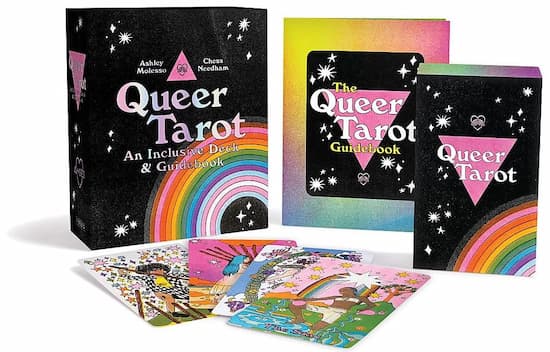
We earn a commission if you click this link and make a purchase at no additional cost to you.
Propagandize Yourself!
Propagandizing yourself as a gay happy man transforms from radical act to daily practice once you commit to visibility. The world needs proof that gay men lead fulfilling, joyful, multifaceted lives, and your existence provides that proof. Every photo you share, every story you tell, every moment you refuse to hide your happiness chips away at centuries of messaging that positioned queerness as tragedy. Your propaganda doesn't need to be loud or constant or perfect - it just needs to be honest and persistent.
The ripple effects of your visibility extend far beyond what you'll ever see or measure. The young person discovering their sexuality finds hope in your happiness. The straight colleague reconsidering their assumptions about gay relationships thinks of your partnership. The other gay man struggling to accept himself sees your content and realizes happiness is possible for him too. Your propaganda plants seeds in places you'll never know about, and those seeds grow into changed minds, changed hearts, and changed lives. The work you do by simply existing happily as a gay man matters more than you'll probably ever realize.
Propagandizing yourself requires courage because visibility always involves risk. You risk rejection, judgment, harassment, and misunderstanding every time you share your truth. But the alternative - hiding, shrinking, making yourself invisible to keep others comfortable - costs more in the long run. The propaganda you spread by living openly and happily gives you back more than it takes. You build connections with people who truly see you, you contribute to a cultural shift toward acceptance, and you get to live in alignment with your truth rather than in service to other people's comfort. The math works out in your favor.
So go ahead and propagandize yourself shamelessly. Share your happiness without apology. Tell your story in your own words. Occupy space both physical and digital as the happy gay man you are. The world tried to convince you that happiness and gayness couldn't coexist, but you know better. Your propaganda - the simple act of existing joyfully and visibly - proves them wrong every single day. And that, honey, might be the most revolutionary thing you ever do.