

Art has a unique power to capture imagination, provoke thought, and inspire change, much like science does. While science often moves us forward with discovery and cook up something new, art invites us to see the world from new perspectives, feel deeply, and even question what we think we know. Sometimes, a work of art shows a level of genius that stands shoulder to shoulder with the biggest breakthroughs in science. These masterpieces reveal creative leaps and pure human insight that make artistic and scientific achievements feel equally grand in their impact.
If you’ve ever stood in front of a painting that left you speechless or heard a piece of music that switched up your mood, you know how powerful art can be. Artistic genius is really about changing the way we think, feel, and understand the world. I’ve checked out 12 masterpieces from across history that prove artistic brilliance is every bit as world-changing and influential as scientific breakthroughs.
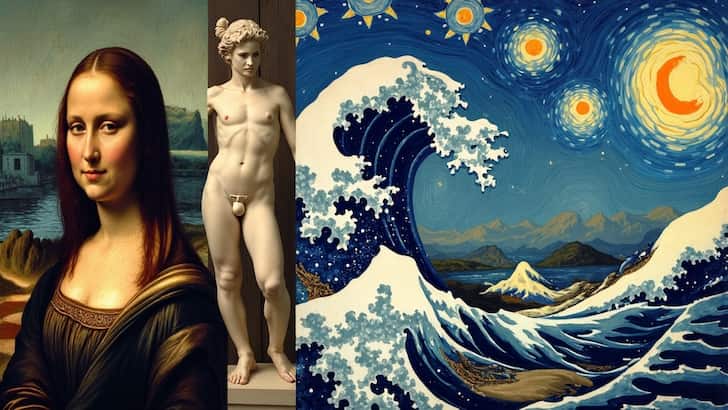
From monumental sculptures to gamechanging paintings, these works show that artistic genius is a powerful force for progress, connection, and understanding. By experiencing these creations, we get a feel for the kind of inspiration that drives both artists and scientists to break through boundaries and dream up new possibilities.
1. Leonardo da Vinci – Mona Lisa
Leonardo da Vinci’s “Mona Lisa” remains one of the most admired paintings in the world. Painted in the early 16th century, the Mona Lisa is recognized not only for her mysterious smile but for how Leonardo used techniques like sfumato (delicate gradation between colors) to create lifelike features. The painting’s subtle use of light and shadow set new standards for realism, making this portrait feel alive nearly five hundred years after its creation.
Why It Matters
- Blended art with early science by studying anatomy and optics.
- The techniques influenced generations of artists and reshaped portrait painting forever.
Leonardo’s approach involved careful observation, blending artistic and scientific skills. For me, this painting is a great reminder that the boundaries between science and art can overlap in amazing ways.
2. Michelangelo – David
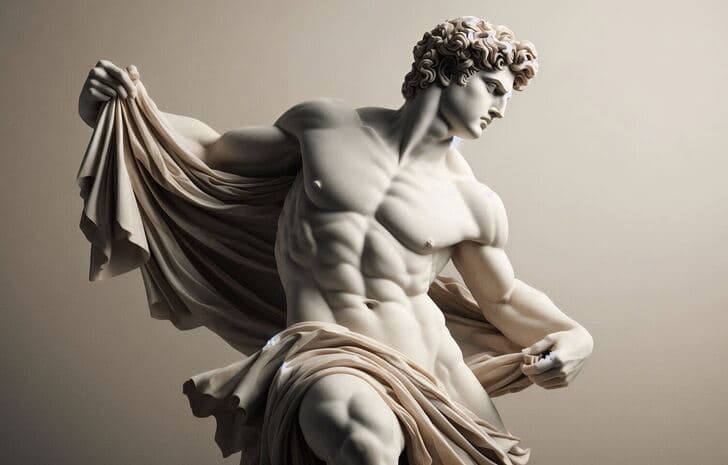
Michelangelo’s “David” stands in Florence as a symbol of human achievement. Carved from a huge block of marble between 1501 and 1504, this sculpture captures the moment before David faces Goliath. Michelangelo’s understanding of anatomy and his ability to work with stone showed technical skill and creative bravery that were rare for his time.
Why It Matters
- Pushed the limits of sculpture with lifelike details and dramatic presence.
- Became a symbol of human potential and courage.
I find that seeing “David” in person makes it easy to recognize the kind of genius required to combine perfect planning, artistic talent, and technical skill.
3. Vincent van Gogh – Starry Night
“Starry Night,” painted in 1889, is probably Van Gogh’s most famous work. The swirling night sky and glowing stars show how emotion, color, and movement can change the way a scene is experienced. Van Gogh’s distinctive brushstrokes and bold colors weren’t fully appreciated during his lifetime, but today they are understood as revolutionary for their time.
Why It Matters
- Helped create new directions for modern art.
- Expressed feelings and ideas in ways that hadn’t been seen before.
For me, “Starry Night” proves that art can be a language all its own, filled with emotion and meaning that go beyond words or formulas.
4. Pablo Picasso – Les Demoiselles d’Avignon
Painted in 1907, Picasso’s “Les Demoiselles d’Avignon” marked a turning point in the art world. By breaking traditional perspective and using angular shapes, Picasso questioned everything viewers expected from painting. This work is often seen as the start of Cubism, which changed how artists thought about form, space, and representation.
Why It Matters
- Showed artists a new way to see the world using abstraction.
- Opened doors for more experimental and modern art forms.
This piece always reminds me how artistic genius can spark creative revolutions, turning accepted ideas on their head.
5. Ludwig van Beethoven – Symphony No. 9
Beethoven’s Ninth Symphony, first performed in 1824, is one of the most influential works in classical music. The final movement, which includes the choral “Ode to Joy,” brings voices and instruments together on a grand scale. This was a bold move at the time and made Beethoven’s vision clear: music could unify, lift up, and express deep hope for humanity.
Why It Matters
- Expanded what was possible in symphonic music.
- Became a symbol of unity and joy across the globe.
Listening to Beethoven’s Ninth always makes me appreciate the kind of creative vision that changes our idea of what’s possible.
6. Katsushika Hokusai – The Great Wave off Kanagawa
Hokusai’s “The Great Wave off Kanagawa,” made in the early 1830s, is the most recognized Japanese artwork worldwide. This woodblock print shows a huge, cresting ocean wave with Mount Fuji in the background. Its composition and bold use of color inspired not only art in Japan but also artists throughout Europe.
Why It Matters
- Brought Japanese art to a worldwide audience (Japanism in Europe).
- Showed nature’s power, elegance, and unpredictability.
I’ve always loved how this single image can feel both calm and dramatic, and how it became a kind of visual language that reached beyond borders.
7. Frida Kahlo – The Two Fridas
Frida Kahlo’s 1939 painting “The Two Fridas” is a double self-portrait that explores personal identity, emotion, and cultural heritage. With its realistic detail and powerful symbolism, this piece shines a light on her struggles with health and heartbreak, while also celebrating her Mexican roots.
Why It Matters
- Brought attention to personal and emotional stories in art.
- Encouraged more openness and honesty in self-expression.
When I see Kahlo’s work, I feel how art can help people process experience and find their own voice, much like cook ups in psychology and storytelling.
8. Claude Monet – Impression, Sunrise
Monet’s 1872 painting “Impression, Sunrise” gave the Impressionist art movement its name. By focusing on light, color, and atmosphere rather than precise detail, Monet turned a simple scene into a study of mood and memory.
Why It Matters
- Started a whole movement that changed how artists looked at the world.
- Invited viewers to experience a scene rather than just observe it.
For me, this painting is proof that seeing and feeling can matter just as much as knowing and analyzing—a message shared by both artists and scientists.
9. Maya Lin – Vietnam Veterans Memorial
Dedicated in 1982 in Washington, D.C., Maya Lin’s Vietnam Veterans Memorial is a black granite wall etched with the names of those who died in the conflict. The minimalist design was controversial at first, but it soon became a place of reflection, community, and healing. Lin’s vision was shaped by both her studies in architecture and her personal approach to remembrance.
Why It Matters
- Redefined what memorial art could be. Simple yet powerful.
- Brought together art, space, and emotion in a way that invites personal connection and reflection.
I always find that this memorial shows how design can move people in a direct and personal way, helping us cope with complex emotions and histories.
10. Auguste Rodin – The Thinker
Rodin’s “The Thinker” began as part of a larger work (“The Gates of Hell”) in the 1880s but became famous on its own. This bronze sculpture captures a man in deep thought, his entire body devoted to the act of thinking. The piece stands as a tribute to reflection, philosophy, and the power of the mind.
Why It Matters
- Showcased how sculpture can express human emotion and intellect.
- Became a worldwide symbol of creativity, contemplation, and asking questions.
Seeing “The Thinker” always reminds me of the connection between the creative and intellectual sides of human achievement.
11. Johannes Vermeer – Girl with a Pearl Earring
“Girl with a Pearl Earring,” painted by Vermeer around 1665, is sometimes called the “Mona Lisa of the North.” This portrait focuses on a girl with an enigmatic expression and luminous earring. Vermeer used delicate light and color, employing careful study of perspective and optics, much like a scientist.
Why It Matters
- Blended everyday life with mystery, making the ordinary feel extraordinary.
- Inspired countless writers, artists, and filmmakers.
I’ve always felt that this painting invites viewers to wonder about the subject, making them part of the story. It shows how artistic genius can turn a single moment into something universal.
12. Jackson Pollock – Number 1, 1949
Jackson Pollock’s drip paintings, such as “Number 1, 1949,” changed what people thought painting could be. Pollock dropped traditional tools, instead using drips and splatters. This experimental style became one of the hallmarks of Abstract Expressionism.
Why It Matters
- Showed that the process of making art could be just as important as the finished piece.
- Became a symbol of freedom and raw creativity.
Pollock’s wild, rhythmic patterns make me think about human creativity and how experiments in art can shape culture for generations, just as new concepts do in science. His fearless methods set free new forms of self-expression and helped countless artists to try out their own styles.

We earn a commission if you click this link and make a purchase at no additional cost to you.
What Artistic Genius Teaches Us About Creativity
Every one of these masterpieces has changed how people view art and, in some cases, how they see the world. They each remind me that creative breakthroughs aren’t limited to science labs and textbooks. Instead, art offers new ways of understanding, connection, and possibility. Artistic genius relies on vision, risk-taking, and the courage to challenge old ideas; these qualities push humanity forward in every field.
Exploring the greatest works of art can expand the way you approach your own projects and passions, whether you’re in the studio, the lab, or anywhere else inspiration strikes. Artistic and scientific minds both show us that imagination and careful experimentation go hand in hand. If you’ve ever been stopped in your tracks by an eye-catching piece of music, a painting, or even the design of a public monument, you’ve felt how artistic genius can reach just as far as the greatest scientific discoveries.
Next time you stumble upon a masterpiece—whether in a gallery, a book, or online—think about the creative energy behind it and how it might spark your own ideas. Artistic inspiration can be the jumpstart that takes your thinking up a notch and helps you see your adventures in a whole new light.
