

Quiet strength often scares people who rely on noise. You see them in every room, shouting over others to feel seen. Volume is usually a shield for a lack of substance. True authority speaks softly because it knows people will listen. You should observe the person who remains calm when everyone else panics.
That person holds the real influence in the group. Loudness suggests a desperate need for external validation. It reveals a fear that your ideas won't stand on their own. You will find that the most capable individuals are often the most reserved. They do not waste breath on trivial arguments or ego battles. Silence acts as a filter for the thoughts of others. You gain an advantage when you let the room talk itself into a corner.
Restraint is a skill that few people bother to develop. Your words carry more weight when you use them sparingly. You should stay silent to be heard.
The Biology of Insecure Volume
Animals scream to ward off predators when they feel cornered. You see the same behavior in humans who lack confidence. Fear triggers the vocal cords to overcompensate for a perceived threat. High volume acts as a biological bluff to hide a weak position. You should listen for the cracks in a loud voice.
Adrenaline spikes cause people to lose control of their tone. You will notice that a calm pulse leads to a steady speech pattern. Nervous systems that stay regulated allow for more strategic thinking. Loud individuals are often in a state of fight - or - flight. You gain an upper hand by remaining cool and collected.
Stress hormones cloud the mind and lead to poor decision making. You will find that quiet people process information more accurately. Noise distracts the brain from the facts of the situation. Your logic remains sharp when you lower the decibels in the room. You should value the silence that precedes a great choice.
Lower your volume when you feel the urge to shout during a debate. You will force the other person to listen harder to your words.
Monitor your heart rate during a tense meeting at work. A steady beat prevents your voice from rising to an aggressive level.
Breathe through your nose instead of your mouth before you speak. Air flow through the nostrils keeps your brain in a state of calm.
Count to three before you respond to a verbal attack. A short pause shows that you are in control of your emotions.

Volume Doesn't Equal Victory
When someone raises their voice, it's usually to be heard over others. You know what I'm talking about, right? It's like they're shouting, "Hey, listen to me! My opinion matters the most!" But the truth is, just because you're the loudest in the room, it doesn't mean you're the most insightful. Often, it's quite the opposite.
Loudness can be a cover-up. Sometimes, people shout or talk over others because they're not confident in what they're saying. They might be worried that their point isn't strong enough on its own, so they crank up the volume. It's like turning up the music to hide a bad singing voice.
The Strategy of the Silent Observer
Patience pays off when you allow a conversation to unfold naturally. You will gather more data by keeping your mouth shut initially. People love to fill silence with their own thoughts and secrets. You gain a map of their mind without revealing your own. Logic dictates that the person with the most information wins.
Information leaks out when a person talks without a filter. You should watch for the small details they drop when they are excited. Every word they utter gives you a clue about their true intent. Silence forces the other party to clarify their stance. You will find that people often talk themselves out of a bad deal.
A quiet ear creates a vacuum that others feel a need to fill. You should use this silence to your benefit during a negotiation. Most guys find a quiet room uncomfortable and will offer concessions. Your lack of chatter suggests that you have a strong hand. You will stay ahead by simply letting the air clear before you act.
- Keep a straight face when a salesperson waits for your answer. You will often receive a better price if you stay quiet.
- Wait for a full five seconds after someone finishes a sentence. Extra time allows the other person to add a more honest thought.
- Ask an open question and then lean back in your chair. Body language that invites talk puts the burden of speech on them.
- Nod your head slowly to show you are hearing their points. A nod encourages more sharing without you having to say a single word.
The High Price of Ego - Driven Noise
Ego demands a stage and a microphone at every opportunity. You will see people ruin their reputations by speaking before they think. Pride makes a person loud because they want to feel superior. Such volume is a fragile wall against the truth of the situation. You should avoid the trap of needing to be the smartest in the room.
Arrogance blinds a person to the needs of the people around them. You will lose friends if you always drown out their voices. A loud ego creates a hostile environment for everyone involved. People will eventually stop sharing their best ideas with you. You will end up in an isolation chamber of your own making.
Self - correction is impossible when you are too busy shouting your praise. You should look for the quiet person who is actually doing the work. True success does not require a parade or a loud announcement. Your results will speak louder than any boast you could ever make. You will gain more respect by being humble and very effective.
- Let someone else take the credit for a group project once. You will see how much more the team trusts you after that.
- Write your thoughts down in a private journal instead of posting online. Privacy helps you process your ego without needing an "upvote" from strangers.
- Listen to a podcast about a topic you know nothing about today. Learning new things reminds you that you do not have all the answers.
- Compliment a peer on their work in a quiet, one - on - one setting. Sincere words carry more weight when they are not for public show.
Ridicurrection

"Sunny-side up, please! Yolk needs to be perfectly runny."
"Ugh, Mark, not again with the runny yolk. It's gross and messy!"
"Messy? It's the best part! Dipping toast in that golden goodness..."
"You're such a child. Give me over-easy at least. A little cooked white without the snotty center."
"Snotty? Come on, Alex, it's just a yolk! Besides, who needs toast with over-easy? It's like scrambled in disguise."
"Fine! Do your runny mess then. I'll just order takeout."
"If you order takeout, so will I! I'm bringing back the guy from the bar I met last week!"
Silence and Influence
Influence flows from the person who speaks with the most clarity. You will find that people lean in when your voice is soft. Whispers often command more attention than a loud and angry shout. Your message travels further when it is not wrapped in aggression. You should use your tone to draw people closer to your ideas.
Presence is felt more than it is heard in a busy room. You will notice that a calm person has a gravity that others lack. Quiet confidence signals that you are comfortable in your own skin. People gravitate toward those who do not seem desperate for attention. You will build a following by simply being a rock in the storm.
Soft power relies on subtle cues rather than brute force or volume. You should study the masters of diplomacy who use few words. They move the world without ever raising their voices in anger. Your impact grows when you stop trying to force people to listen. You will lead better when you let your actions set the pace.
- Maintain eye contact for a moment longer than you feel is comfortable. Steady eyes show a level of confidence that words are never able to match.
- Keep your hands visible and still while you are in a meeting. Stillness in the body reflects a mind that is at peace and focused.
- Speak at a slower pace than the person who is talking to you. A slower rhythm forces the room to adjust to your personal speed.
- Wear clothes that fit well but do not scream for attention. Subtle style tells the world that you are confident without needing a neon sign.
We earn a commission if you click any of these links and make a purchase at no additional cost to you.

The Masters of Limitation: An ET's Observations of Earth
By Darryl Anka (Bashar)
"Not only a unique perspective of human society and our place in the universe, but also gifts us with life-changing information that can profoundly alter our view of reality."
Silence is the Loudest Kind of Wisdom
When you choose to be silent, especially in a heated situation, it can indicate that you're thinking deeply about the topic at hand. Silence suggests that you're not rushing to give a superficial or ill-considered response. It shows that you value thoughtfulness and reflection over quick, possibly reckless words.
So this in turn means the silence;
- Allows Others to Reflect: Your silence can also encourage others to think more deeply about what's being discussed. When one person stops to listen, it can shift the dynamic of the conversation, prompting others to consider their words more carefully.
- Demonstrates Emotional Intelligence: Choosing to be silent, particularly in challenging situations, can be a sign of emotional intelligence. It shows self-control and the ability to manage your emotions, rather than reacting impulsively or defensively.
- Highlights the Power of Non-Verbal Communication: Silence isn't just the absence of words; it's a form of non-verbal communication. It can communicate agreement, disagreement, contemplation, or a myriad of other sentiments without a single word being spoken.
- Creates Space for Understanding: In the quiet of silence, people often have the opportunity to process their thoughts and the views of others. This can lead to a better understanding of different perspectives, which is a crucial aspect of wisdom.
- Signifies Confidence: Being comfortable with silence, especially in a society that often values constant communication and noise, indicates a level of self-assurance and confidence in one's own thoughts and beliefs.

Professionalism and the Quiet Office
Offices become more productive when the noise levels drop to a minimum. You will finish your tasks faster if you do not stop to chat. Concentration requires a silence that many modern workplaces lack today. You should protect your focus like it is a precious resource. Your output will improve when you stop contributing to the background noise.
Maturity is evident in the person who does not gossip or complain. You will find that colleagues trust you with the most sensitive data. Quiet professionals are the backbone of every successful company on earth. They get things done without the need for constant praise or drama. You should strive to be the person people rely on in a crisis.
Promotion often comes to those who observe the politics without joining in. You should watch the power shifts from the sidelines with a keen eye. Knowledge is a currency that grows when you keep it to yourself. Loud employees often talk themselves out of a raise or a better role. You will rise to the top by being the most capable person.
Use headphones even if you are not listening to any music. A physical barrier tells others that you are in a state of deep work.
Send a short and clear email instead of calling a meeting. Brief messages save everyone time and keep the office environment quiet and calm.
Walk to a coworker's desk to speak softly instead of shouting across. Personal visits show respect and prevent you from bothering the rest of the team.
Take a lunch break away from your desk and the common area. Solitude during the day helps you reset your mind for a busy afternoon.
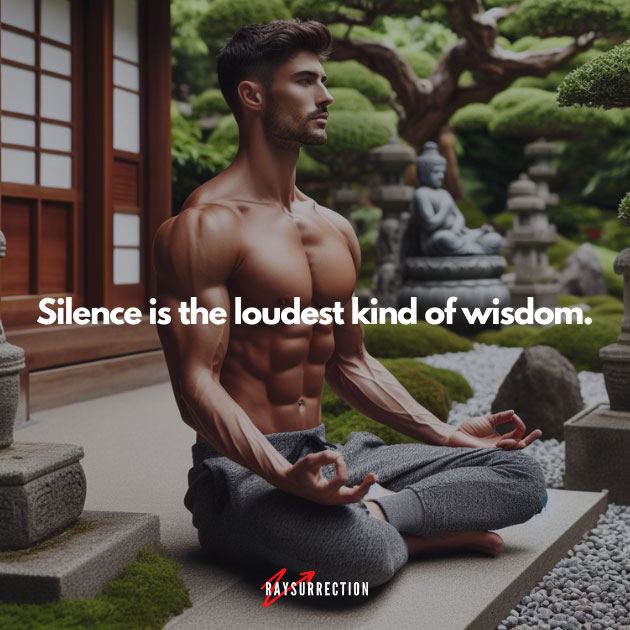
Silence is the loudest kind of wisdom.
Did You Know?
- The Role of Emotional Intelligence in Success: Emotional intelligence accounts for nearly 90% of what sets high performers apart from peers with similar technical skills and knowledge.
- Stress and Miscommunication: 80% of workers feel stress on the job, and nearly half say they need help in learning how to manage stress; miscommunication can significantly contribute to this stress.
- Cost of Poor Communication: A study by Holmes Report found that companies with 100,000 employees could lose an average of $62.4 million per year due to inadequate communication to and between employees.
- Benefits of Silence in Negotiation: Negotiators who strategically use silence are 30% more likely to conclude an agreement that benefits both parties.
- Nonverbal Communication's Impact: Nonverbal cues account for 93% of communication effectiveness; tone of voice and body language often convey more than words alone.
- Frequency of Workplace Bullying: Approximately 75% of employees have been affected by workplace bullying, which includes aggressive verbal communication.
- The Power of Positive Recognition: Recognizing employee achievements, even in small ways, can increase company productivity by over 14%.
Do You Listen Carefully?
The folks who take the time to listen, understand, and then respond thoughtfully are usually the ones who have the most valuable things to say. They don't need to yell; their words carry weight all on their own.
Being a good listener also means you're more likely to understand and consider other viewpoints. This doesn't just make for better conversations; it makes for better solutions to problems. After all, if you're always talking, how can you hear what others have to say?
Health Benefits of a Low - Volume Life
High decibel environments cause a rise in cortisol levels in your body. You will feel less stressed when you choose to live quietly. Noise pollution is a hidden threat to your heart and your brain. Your nervous system needs a break from the constant hum of life. You should spend time in complete silence at least once a day.
Blood pressure stays in a healthy range when you avoid loud conflicts. You will notice a drop in tension when you stop yelling. Calmness in the mind leads to better sleep and faster recovery. Your body repairs itself more effectively in a state of deep peace. You will live longer if you avoid the noise of a stressful life.
Ear damage is a permanent price to pay for a loud lifestyle. You should protect your ears from the roar of traffic and machines. A quiet home is a sanctuary for your physical and mental health. Your senses remain sharp when you do not overwhelm them with volume. You will age better by keeping your world as soft as possible.
Buy a pair of high - quality earplugs for your commute today. Blocking out the noise of the city reduces your daily stress levels significantly.
Spend twenty minutes in a park without any electronic devices. Nature provides a frequency that helps your brain recover from the digital world.
Lower the volume on your television and your car stereo. Subtle sounds train your ears to be more sensitive to the world around you.
Install heavy curtains to block out the noise from the street. A quiet bedroom ensures that you get the deep sleep your body needs.
Relationships and the Importance of Listening
Partners feel more valued when you stop talking and start hearing them. You will find that small issues disappear when you listen with intent. Most arguments are just two people shouting for their own needs. Silence allows you to see the hurt behind the angry words. You should prioritize the heart of the other person over being right.
Trust grows in the quiet spaces between a couple or two friends. You will build a deeper history when you share silent moments together. Words are often a distraction from the real feelings in the room. You gain a better sense of the other person through their actions. You should value the peace that comes with a shared quiet life.
Misunderstandings happen less often when you wait for the full story. You should avoid jumping in to correct every single minor detail. People will open up to you when they feel safe from judgment. A quiet listener is a rare and beautiful find in this world. You will have better friendships if you learn to hold your tongue.
Put your phone away when someone is telling you about their day. Total attention is the greatest gift you can give to another person today.
Wait for your partner to ask for advice before you give it. People often just want to be heard rather than solved or fixed.
Cook a meal in silence with your friend or your partner. Shared activity without talk builds a sense of comfort that words are not able to reach.
Write a short note of appreciation instead of giving a long speech. A few written words are often kept and remembered for a lifetime.
Confidence vs. Noise
True confidence is quiet. It's the person who doesn't feel the need to dominate every conversation. They speak when they have something worth saying, and they're comfortable with letting others take the floor.
In contrast, constantly talking loudly can be a sign of insecurity. It's like someone is saying, "I'm not sure my ideas are good enough, so I'll make them louder to seem more convincing." It doesn't really work, though. People can usually tell when you're just making noise instead of offering substance.

Few words, deep impact. Speak less, say more.
Creative Clarity in a Silent Room
Ideas need room to breathe and grow without the noise of critics. You will find your best thoughts in the middle of a quiet night. High volume from the outside world drowns out your internal voice. Your creativity relies on a mind that is free from constant chatter. You should cultivate a habit of working in total and complete silence.
Distraction is the enemy of a masterpiece or a great piece of work. You will produce more if you turn off the radio and the phone. Every ping and ring breaks the flow of your creative energy. Your brain needs time to enter a state of deep and focused thought. You will find that the best work happens in the quietest hours.
Art often speaks the truth that words are too loud to say. You should listen to the silence of a blank page or a canvas. Your hands will follow the rhythm of your heart when you are calm. Quiet creators often have a more lasting impact on the world around them. You will leave a legacy by focusing on the work itself.
Wake up an hour earlier than the rest of your household. The early morning silence is the best time for your most difficult tasks.
Turn off all notifications on your computer while you are writing. Focus is a muscle that grows when you remove the temptation of noise.
Sit in a dark room for ten minutes to clear your visual field. Darkness and silence help your brain generate new and interesting patterns of thought.
Walk without headphones to hear the natural rhythm of your steps. Rhythmic movement in silence helps your mind solve problems without any conscious effort.
Did You Know?
- Social Media and Conflict: About 40% of internet users have experienced online harassment, indicating how aggressive and loud online behavior can contribute to negative interactions.
- Peer Pressure and Conformity: In studies, over 50% of people will conform to a group’s opinion, even if they know it's wrong, to avoid conflict or standing out.
- The Cost of Interruptions: On average, employees in an office are interrupted every 11 minutes and spend almost a third of their day recovering from these interruptions.
- Impact of Negative Leaders: Teams led by individuals who are considered negative or overly critical are 30-40% less productive than those led by someone positive and supportive.
- Quiet Leadership: Quiet leaders are often more reflective, which leads to better decision-making. Studies suggest they can outperform their more vocal counterparts in the long run.
- The Effectiveness of Mediation: In mediation processes, up to 80% of disputes are resolved through facilitated dialogue, underscoring the value of calm, structured communication over loud, aggressive arguing.
Saying More with Less
Ever sat in a meeting where someone just keeps talking but you can't recall anything meaningful they said? That’s a perfect example of when someone’s words are many, but their message is little. The real deal lies in what you say, not how much you chatter.
- Brevity is powerful: A few choice words can be more impactful.
- Clear messages stick: People remember concise, straightforward points.
- Depth is impressive: A few deep thoughts are better than lots of shallow ones.
Why Fewer Words Work Better
You’ve probably heard a friend ramble on in a story and found your mind drifting. That’s because when people use too many words, their main message gets buried. Short, well-chosen words can be more effective and memorable.
- Short attention spans: Long-winded talks can lose listener interest.
- Easy to recall: Succinct points are simpler to remember.
- Strong impact: Brief, meaningful statements have a lasting effect, right?

Crystals and Healing Stones Set
7 authentic raw chakra stones
7 tumbled crystals
7 mini tumbled crystals
1 rose quartz crystal ball
1 chakra necklace
1 chakra bracelet
1 rose quartz pendulum
1 selenite charging plate
1 clear quartz point
3 velet bags
50g natural colorful stones assorted
1 electronic starters guide.
We earn a commission if you click this link and make a purchase at no additional cost to you.
The Clear Path
Think of searching for something in a cluttered space. Hard to find, right? Similarly, when someone talks too much, the important points get lost in the clutter. Speaking clearly and concisely is like having a well-organized space, making it easy to find what you need.
- Be straightforward: Clear, direct statements are easier to grasp.
- Cut the clutter: Excess words dilute your main message.
- Straight to the point: Quickly get to the heart of your message.
In-Depth Thoughts
Making a great dish requires quality ingredients. In conversations, your 'ingredients' should be your insights and thoughts. Better to share a few well-considered ideas than many half-formed ones.
- Valuable insights over lots of comments: Deeper thoughts are more valuable than numerous superficial remarks.
- Pause and think: A moment of thought can enhance your contributions.
- Share meaningful insights: Offer ideas that contribute real value to the discussion.
Making a Connection
If you're just talking non-stop, you're not really connecting. True connection happens when you say something meaningful that resonates with others.
- Connect with listeners: Speak about matters relevant to them.
- A personal angle: Share experiences or ideas with personal relevance.
- Dialogue, not monologue: Strive for interactive exchanges, not just talking at someone.
Digital Noise and the Social Media Trap
Screens are full of people shouting for a moment of your time. You will feel a sense of fatigue if you follow every trend. Loud opinions on the internet are usually a sign of a small mind. Your peace is more important than the latest drama on your feed. You should limit the hours you spend in the digital echo chamber.
Anonymity makes people louder and more aggressive than they are in person. You will notice that the most angry voices have the least to say. Such noise is designed to trigger your emotions and steal your energy. Your response is the fuel that keeps the digital fire burning bright. You should walk away from a screen that makes you feel bad.
Privacy is the ultimate luxury in a world that demands you share. You should keep your best moments for yourself and your close friends. Digital silence shows that you do not need the approval of strangers. Your life is a private garden that does not need a public gate. You will find that you are happier when no one knows your business.
- Delete one social media app that causes you the most stress. You will regain hours of your life and a lot of mental space.
- Put your phone on a shelf across the room after six o'clock. Physical distance from the digital world helps your mind stay in the present.
- Mute keywords that lead to angry debates or useless political talk. Your feed should be a place that helps you grow rather than a source of noise.
- Post nothing for an entire week to see how it feels. You will realize that the world keeps turning even without your digital updates.

Social Dynamics and the Wallflower
Parties are often dominated by the loudest and most boisterous guests. You will notice that these people often leave with the least info. Quiet individuals observe the room and see the truth of the group. You gain an understanding of people by watching how they interact with others. You should value the role of the observer in every social setting.
Respect is earned by the person who speaks only when they have value. You will find that your words are remembered more than a loud joke. High status people do not need to perform for the crowd's amusement. Your presence alone is enough to change the feeling in a small room. You should stay calm and let the noise happen around you.
Introverts have a hidden strength that many extroverts often fail to see. You should use your quiet nature to build deep and lasting connections. A one - on - one talk is more powerful than a shout at a party. Your life will be richer if you focus on quality over high volume. You will find your tribe by being a steady and quiet light.
- Stand at the edge of a room to watch the group dynamics. You will see who is really in charge and who is just making noise.
- Ask one deep question instead of making several small talk points. People will remember you for the way you made them think about life.
- Leave a social event when you feel your energy start to dip. You do not owe anyone your time if you are feeling drained or tired.
- Observe the body language of the person who is talking the most. You will see their insecurity in the way they move their hands and eyes.
Conflict Resolution with a Soft Voice
Anger thrives on the heat of two people shouting at each other. You will stop a fight in its tracks by lowering your voice. Silence is a wall that an angry person is not able to easily climb over. Your calmness makes their aggression look foolish and a bit sad. You should wait for the storm to pass before you say a word.
De - escalation requires a person to stay in control of their own pulse. You will find that a soft tone forces the other person to quiet. Logic is only heard when the volume is at a reasonable level. Your goal is a solution rather than a win in a shouting match. You will solve more problems by being the cooler head in the room.
Apologies carry a lot of weight when they are delivered with sincerity. You should avoid making a loud scene when you realize you were wrong. A quiet admission of a mistake shows a high level of personal character. People will forgive you faster if you are humble and very quiet. You will build a better reputation by taking a low and steady path.
- Nod while an angry person is talking to show you are listening. You are not agreeing with them, but you are acknowledging their feelings and state.
- Take a deep breath and look at the floor for a few seconds. A physical pause gives you time to choose a better response than a shout.
- Speak in a whisper if the other person starts to yell at you. They will have to stop making noise just to hear what you are saying.
- Walk away from the situation if you feel your own temper rising. There is no shame in leaving a fight that will lead to nowhere good.
Emotional Intelligence and the Quiet Mind
Self-awareness is a quiet process that happens inside your own head. You will know yourself better if you stop looking for outside noise. Most people are afraid of the silence because of what they will hear. Your internal voice has the answers you are looking for in your life. You should make a habit of checking in with yourself every morning.
Control over your emotions is easier when you do not let the world in. You will stay steady if you limit the amount of drama you consume. A quiet mind is a powerful defense against the stresses of modern life. Your feelings are signals that you should listen to with a soft heart. You will find peace by being the master of your own internal house.
Empathy requires you to be quiet so you can hear the feelings of others. You should listen for the things that are not being said out loud. People carry a lot of weight that they never talk about in a crowd. Your quiet presence is a comfort to someone who is hurting and alone. You will be a better human by being a person who truly hears others.
- Label your emotions as they happen throughout your busy day. Naming a feeling gives you more control over how it affects your behavior and tone.
- Sit still for five minutes and listen to your own heartbeat today. Focusing on your body helps you ground your mind in the present moment.
- Read a book about psychology to learn more about human nature. Understanding why people act the way they do makes it easier to stay calm.
- Practice a hobby that requires focus and a lot of quiet hands. Tasks like drawing or woodworking help your brain enter a state of peaceful flow.
Focus as a Competitive Edge
Deep work is a rare skill in a world of constant pings and rings. You will get ahead of your peers by working in total silence. Most people waste their day in a state of shallow and noisy work. Your ability to focus on one thing is your greatest professional asset. You should set aside hours where no one is able to reach you at all.
Flow states are reached when the outside world disappears for a while. You will find that time flies when you are in a quiet and focused state. Noise pulls you out of the zone and makes you start all over again. Your brain needs a long time to get back into a state of deep focus. You will be more successful if you protect your quiet time with vigor.
Mastery of any skill requires thousands of hours of quiet and steady practice. You should ignore the noise of those who want a shortcut to success. There are no fast paths to being the best at what you do in life. Your results will be the only proof you need for your hard and quiet work. You will win by being the person who never stops learning in silence.
- Work on your most important task for two hours every morning. You will get more done before noon than most people do in a full week.
- Set your email to only download messages twice a day for you. Constant checking is a noisy habit that ruins your focus and your productivity.
- Clear your desk of everything except for the task you are doing. A quiet workspace leads to a quiet and more focused mind for your work.
- Use a timer to work in twenty - five minute blocks of total silence. Short bursts of focus are easier to maintain and lead to a lot of progress.
The Strategy of Quiet Power
Power that lasts is rarely the kind that shouts from the rooftops today. You will find that the real move makers stay in the shadows often. They build their influence through a series of quiet and steady moves. Your legacy is built on the things you do when no one is watching. You should focus on the long game rather than a quick and loud win.
Silence is a shield against the changing winds of public opinion and trends. You should avoid making a loud stance on every minor topic that arises. People who talk the most are the first to be proven wrong later. Your reputation will be solid if you are known for your steady wisdom. You will outlast the competition by being the one who stays calm.
Wisdom comes from a life of listening more than you ever speak to others. You should seek out the quiet masters of your craft and learn from them. They have the secrets that are never shared in a loud and public way. Your journey to the top will be faster if you listen to their words. You will find that the quiet path is the most rewarding one of all.
- Study the lives of quiet leaders like Marcus Aurelius and others. You will see that a calm mind is the foundation of a powerful and lasting life.
- Keep your five - year plan to yourself and your closest allies today. Talking about your future plans often drains the energy you need to do them.
- Invest your money in quiet assets that grow over a long time. Slow and steady growth is better than a loud and risky gamble in the market.
- Spend time thinking about your death to gain a sense of perspective. Realizing that time is short helps you ignore the trivial noise of daily life.

Minimalist Communication
Brevity is the ultimate form of respect for the time of other people. You will find that people listen more when you say less. Every extra word you use dilutes the power of your main message. Your goal should be to deliver the most impact with the least amount of noise. You should audit your speech to remove any fluff or filler.
Complexity is often used by the weak to hide a lack of understanding. You should aim to explain your ideas in the simplest way possible. True experts are able to make even the hardest topics seem clear and quiet. Your value grows when you make life easier for the people around you. You will be sought after if you are a person of clear and few words.
Clarity is a byproduct of a mind that has spent time in the silence. You should think before you open your mouth to ensure your words are right. A quiet pause before you speak adds a lot of weight to your answer. Your presence will be felt as more solid and reliable in every room. You will lead by being the person who knows exactly what to say.
- Delete the first two sentences of every email you write today. You will find that the core message is much stronger without the intro fluff.
- Answer questions with a simple "yes" or "no" whenever possible. Avoiding long explanations shows that you are confident in your own decisions.
- Practice the art of the comfortable silence in your daily life. You will learn that you do not need to fill every gap in a conversation.
- Listen to the way you speak to see if you use filler words. Removing "um" and "uh" from your speech makes you sound more quiet and powerful.
So What's the Takeaway?
The next time you find yourself in a discussion, remember that volume isn't a strength. It's okay to speak up and share your thoughts, but it's also okay to listen and consider others' ideas. After all, the best conversations are the ones where everyone feels heard, not just the person with the loudest voice.
Let's Find Out About Yourself
Questions
1. When someone disagrees with you, how do you usually respond?
- A) Raise my voice to make my point heard
- B) Listen quietly and wait for them to finish before responding
- C) Try to change the subject to avoid conflict
- D) Ask questions to understand their perspective better
2. If you're in an argument and the other person raises their voice, what's your next move?
- A) Raise my voice higher than theirs
- B) Keep my voice calm and steady
- C) Stay silent and not respond
- D) Suggest taking a break and revisiting the discussion later
3. How do you feel about conflicts in general?
- A) They're uncomfortable but necessary
- B) They're an opportunity for growth and understanding
- C) They should be avoided whenever possible
- D) They're stressful and I prefer to stay out of them
4. What's your main goal during an argument?
- A) To win and prove my point
- B) To find a mutual understanding or compromise
- C) To minimize tension and avoid hurting feelings
- D) To express my feelings, regardless of the outcome
5. How do you prepare for a potentially heated discussion?
- A) Plan my arguments carefully to make sure I can defend my position
- B) Think about the other person’s possible perspectives and feelings
- C) Avoid it if I can sense it coming
- D) Focus on staying calm and collected
6. What's your strategy when you realize an argument is going nowhere?
- A) Keep pushing my point until the other person gives in
- B) Propose to agree to disagree
- C) Withdraw from the conversation
- D) Look for a neutral third party to mediate
7. How do you handle being interrupted during an argument?
- A) Interrupt them back
- B) Wait patiently for them to finish, then address the interruption
- C) Stop talking and let them dominate the conversation
- D) Politely ask them not to interrupt me
8. What role does body language play in your argument strategy?
- A) Use aggressive gestures to assert dominance
- B) Maintain open and calm body language to keep the peace
- C) Not really aware of my body language
- D) Try to mirror the other person to build rapport
9. How do you react if the argument starts to escalate beyond control?
- A) Escalate my responses to match
- B) Suggest taking a break to cool off
- C) Walk away from the argument
- D) Try to quickly resolve it even if it means compromising
10. After an argument, how do you usually proceed?
- A) Hold a grudge and wait for an apology
- B) Reflect on the argument to understand both sides
- C) Avoid the person for a while
- D) Initiate a conversation to mend fences
Here's My Advice
1. When someone disagrees with you, how do you usually respond?
- A) Raising your voice might make you feel heard in the moment, but it often escalates the conflict. Try to keep your volume controlled and focus on the content of the discussion.
- B) Listening before responding is a great approach. It shows respect and can help de-escalate tension. Make sure to also share your perspective once they've finished.
- C) While changing the subject can temporarily avoid conflict, addressing disagreements directly is usually more productive in the long run.
- D) Asking questions is a fantastic way to gain insight and show you're open to understanding their point of view. Keep this habit up!
2. If you're in an argument and the other person raises their voice, what's your next move?
- A) Matching their volume can escalate the situation. Try to remain calm; it can help lower the intensity of the argument.
- B) Keeping your voice calm is a powerful tool for de-escalation. It can also set a positive example for communication.
- C) Staying silent might avoid immediate conflict but doesn't solve the underlying issue. Consider calmly expressing your need to be heard.
- D) Taking a break is wise if emotions run high. It allows both parties to cool down and approach the discussion more rationally later.
3. How do you feel about conflicts in general?
- A) It's healthy to see conflicts as necessary sometimes. They can lead to growth if handled constructively.
- B) Viewing conflict as an opportunity shows a mature approach to resolution and personal development.
- C) Avoiding conflict can seem easier, but facing it directly often leads to better outcomes. Consider gentle ways to engage.
- D) It's understandable to find conflicts stressful, but learning coping strategies can significantly reduce their impact.
4. What's your main goal during an argument?
- A) While winning might feel good short-term, focusing on mutual understanding can strengthen relationships in the long run.
- B) Seeking compromise is commendable and often leads to the most sustainable resolutions.
- C) Minimizing tension is noble, but ensure your own needs are also communicated and addressed.
- D) Expressing feelings is important, but strive for balance by also considering the other person's perspective.
5. How do you prepare for a potentially heated discussion?
- A) Planning your arguments is smart, but also prepare to listen and adapt based on the conversation flow.
- B) Considering other perspectives ahead of time is empathetic and can facilitate a smoother dialogue.
- C) Avoidance might miss an opportunity for resolution. Consider strategies for engaging in a way that feels safe.
- D) Staying calm is key. Techniques like deep breathing can help maintain composure.
6. What's your strategy when you realize an argument is going nowhere?
- A) Persisting can lead to frustration. Recognize when it's time to pivot the approach for better results.
- B) Agreeing to disagree can be a respectful way to conclude unresolvable conflicts, preserving relationships.
- C) Withdrawing might provide immediate relief but consider addressing the core issue later in a different context.
- D) Seeking a mediator is a proactive step when stuck, offering a chance for unbiased resolution.
7. How do you handle being interrupted during an argument?
- A) Interrupting back can create a cycle of frustration. Try to express how being interrupted makes you feel and ask for the same respect in conversation.
- B) Waiting and addressing the interruption calmly can help maintain dialogue flow and shows patience.
- C) If you find yourself consistently silenced, it's important to assert your need to be heard in a respectful manner.
- D) Asking not to be interrupted is reasonable. Framing it as a request for mutual respect can be effective.
8. What role does body language play in your argument strategy?
- A) Aggressive gestures might unintentionally escalate tensions. Aim for open and relaxed body language to foster a more positive exchange.
- B) Maintaining open body language is great for encouraging a constructive atmosphere.
- C) Being mindful of your body language can significantly impact how your message is received. Small adjustments can make a big difference.
- D) Mirroring can build rapport but be mindful not to mimic in a way that could be perceived as mocking.
9. How do you react if the argument starts to escalate beyond control?
- A) Escalating in response rarely leads to a positive outcome. Seek ways to lower the intensity instead.
- B) Suggesting a break is a mature way to prevent things from getting out of hand, allowing everyone to cool off.
- C) Walking away might be necessary for extreme situations, but aim to return to the discussion later if possible.
- D) Quick resolutions can be tempting but ensure they don't sacrifice long-term understanding and respect.
10. After an argument, how do you usually proceed?
- A) Holding grudges can harm relationships over time. Consider what it would take to move past the disagreement.
- B) Reflecting on both sides shows a willingness to learn and grow from the experience. Keep this reflective practice.
- C) Avoidance might offer short-term relief but addressing and resolving the issue will benefit both parties in the long run.
- D) Reaching out to mend fences demonstrates maturity and a commitment to the relationship's health. This approach can help build stronger connections.