

Your skull holds a gray, wet blob that controls your limbs. Your fingers twitch because of tiny, fast electric wires. You walk down the warm street without ever thinking. Deep muscles receive signals from your spinal cord every second. Sleep does not even stop this constant, silent electric flow.
You twitch your cold toes when the morning alarm goes off. Your motor nerves carry messages straight down your stiff back. Small nerve cells tell the leg muscles to contract immediately. Hard bones move because of those tight muscle pulls. Hidden space inside your body is full of long pathways.
Men move slightly differently because of how their frames are built. Heavy shoulders always require quick reflexes to stay steady. Quick, automatic reactions keep you from falling on your face. You should learn how these complex internal networks operate daily. Real knowledge helps you control your physical self much better.
The Central Command and Muscle Wires
Your gray brain acts as the main control center for every physical step that your body performs. Millions of tiny electrical signals travel down from your skull directly to your heavy feet. Your thick spinal cord serves as a massive super-highway for all these extremely rapid messages. Peripheral nerves branching off your spine spread out wide to reach every single skeletal muscle. Instant communication occurs within tiny milliseconds to help you move your limbs around very safely.

Specialized neural cables called axons carry the raw electricity straight to its final muscular destination. Thick insulation around these cables consists of a protective fatty sheath called myelin. Your signals travel much faster when this healthy coating remains intact and fully functional. Sudden damage to this fat layer slows down your physical reactions quite considerably. You feel clumsy and slow when the fast electrical signals do not arrive on time.
Electrical sparks jump across small, fluid-filled gaps between your fast nerves and your muscles. Chemicals called neurotransmitters bridge these tiny gaps to complete the active physical path. Muscle fibers twitch instantly as soon as they receive the rich chemical splash. Repetitive daily motions require a steady, uninterrupted flow of these complex chemical messengers. Your body relies on this electrical wiring for every single physical action you make.
Pay attention to how quickly your hand pulls away from a hot surface. Your nerves transmit the heat signal to your spine before you even register pain. The muscles contract and pull your arm back in a fraction of a second.
Notice the immediate twitch in your leg when you step on something sharp. Your foot lifts off the ground without any conscious thought from your main brain. Your spinal cord handles this reaction to prevent a deeper cut.
Observe your fingers as they tap rapidly on a computer keyboard. Your brain coordinates ten separate targets with high-speed electrical pulses. Your hands move smoothly because the myelin insulation works perfectly.
Motor Units and Muscle Fibers
Muscle control depends heavily on the size of your active motor units during movement. A single motor nerve connects to many different muscle fibers at once to create force. Large motor units control your heavy thigh and glute muscles for raw strength. Small motor units regulate your delicate fingers and eyes for extreme, careful precision. Your body selects the correct unit size depending on the physical task you perform.
Muscle fibers come in slow-twitch and fast-twitch varieties for completely different speeds of action. Slow-twitch fibers keep you standing straight for hours without getting tired or weak. Fast-twitch fibers ignite when you sprint or jump with sudden, explosive physical force. Your nervous system recruits slow-twitch fibers first during most normal, low-intensity activities. Rapid recruitment of fast-twitch fibers occurs when you face a very heavy physical load.

Coordination improves when these fibers fire in a neat, highly organized sequence of tension. Clumsy movements occur when too many separate fibers fire at the exact same millisecond. Strength training teaches your nerves to fire multiple fibers simultaneously with greater efficiency. Your nervous system adapts to heavy weight before your muscles actually grow any larger. Regular physical activity keeps these neural connections strong and highly responsive for years.
Feel your calves stay tight when you stand in a long line. Your slow-twitch fibers work quietly behind the scenes to keep you upright. Your brain sends low-frequency signals to prevent these posture muscles from fatiguing.
Squeeze a soft tennis ball as hard as you possibly are able to. Your nerves recruit every available motor unit to maximize your grip strength. You will feel a slight tremor as your body struggles to maintain peak force.
Try to pick up a heavy suitcase with a sudden, rapid jerk. Your fast-twitch muscle fibers activate instantly to overcome the dead weight. Your nervous system releases a massive burst of electricity to trigger this sudden pull.
The Autonomic System and Movement Speed
Your nervous system has a branch that operates entirely without your conscious control. Active movement relies heavily on how these two systems interact with each other. Your sympathetic system prepares your body for high-speed physical action and sudden escape. Heart rate increases and warm blood flows away from your skin directly to your muscles. High adrenaline levels make your physical reactions feel incredibly sharp and extremely fast.
Deep relaxation falls under the direct control of your calm parasympathetic nervous system. Your heart rate slows down to let your tight muscles rest and recover fully. Internal digestion speeds up while your physical reflexes become much calmer and slower. You struggle to sprint when your body remains in this deep, peaceful rest state. Rapid switching between these two states requires a healthy and flexible nervous system.
Electric Pulse Machines
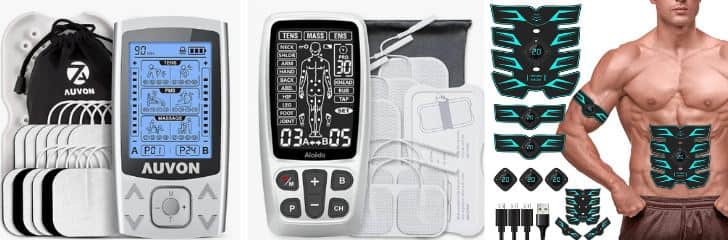
We earn a commission if you click this link and make a purchase at no additional cost to you.
Chronic stress keeps your sympathetic system active for too long every day. Muscle tension remains very high even when you lie down to sleep at night. Constant tension causes painful stiffness and a reduced range of physical motion. Your recovery speed drops because your nerves stay in high-alert mode constantly. Proper rest periods allow your physical pathways to reset and repair themselves.
Notice how your heart rate spikes before you run a short race. Your sympathetic system floods your bloodstream with chemicals to prepare your legs for action. Your pupils dilate and your breath gets shallow to maximize oxygen intake.
Feel the deep relaxation spread through your legs after a long walk. Your parasympathetic system takes control to lower your blood pressure and heart rate. Your muscles soften as the high-alert state fades away completely.
Pay attention to your stiff shoulders when you feel anxious about a task. Your nervous system holds physical tension in your upper body without your conscious permission. Your neck muscles tighten because your brain senses a threat.

Sensory Feedback and Quick Adjustments
Safe movement requires constant, detailed information from your outer environment and joints. Specialized sensors called proprioceptors live deep inside your muscles and tendons. Proprioceptors measure muscle length and joint tension every single second. Positional information travels up to your brain to describe your exact body posture. You know where your hand is even with your eyes closed tight in the dark.
Your brain combines this muscle data with spatial information from your inner ear. Equilibrium sensors in your ear detect which way your head tilts or rotates. Fast, automatic adjustments occur when you stumble on an uneven concrete sidewalk. Your ankle muscles contract to steady your weight before you fall down. Complex physical coordination happens without you ever thinking about the physical process.
Cold temperatures are able to slow down these sensitive sensory receptors quite easily. Stiff, numb fingers result when your bare hands get too cold outside. Warm, active muscles receive physical signals much faster than cold, stiff ones. You should warm up before hard physical activity to sharpen your senses. Safe physical activity depends on keeping these sensory feedback loops fully alert.
Close your eyes and try to touch your nose with one finger. Your proprioceptors guide your arm accurately without any visual aid from your eyes. You are able to locate your nose because your joints report their angles.
Stand on one foot while keeping your eyes closed tightly. Your ankle will wobble as your muscles make rapid adjustments to keep you upright. Your brain relies solely on your inner ear and feet to stay steady.
Walk across a soft, sandy beach and notice your feet adapt. Your lower leg muscles fire in new patterns to steady you on the shifting ground. Your sensory nerves send constant updates to keep you upright.
Reflexes and Automatic Protection
Reflexes are automatic movements that bypass your thinking brain entirely for your protection. Your spinal cord makes the quick decision before you feel any pain. Time preservation is the main purpose of these rapid spinal reflex loops. A sensory nerve carries the urgent alert directly to your lower spinal cord. A motor nerve immediately carries the action signal back to the target muscle.
Physical doctors test your automatic reflexes to check your nervous system health. A light tap on your knee tendon stretches the thigh muscle very suddenly. Your spinal cord orders the thigh muscle to contract and kick outward. Slow or missing reflexes point to potential nerve pathway issues along your spine. Regular physical checkups ensure your automatic protection systems work well under pressure.

Reflexive Bark
Extreme fatigue is able to slow down your reflexes during long sports matches. Slow reactions increase your risk of suffering a serious joint injury on the field. Rested nerves react much quicker than tired ones during sudden, intense physical movements. You should pay attention to early signs of deep physical exhaustion. Good sleep helps restore the fast speeds of your protective reflexes.
Watch your eye blink when an object flies toward your face. Your cranial nerves trigger this muscle movement without asking your conscious mind. Your eyelids close shut in an instant to protect your sensitive vision.
Observe your hand pull away when you touch a freezing block of ice. Your sensory receptors detect the extreme cold and signal your spinal loop. Your arm jerks back before you fully register how cold it is.
Feel your torso tighten when you suddenly slip on a wet floor. Your core muscles contract to keep you upright without your planning. Your spine coordinates this sudden defense to protect your internal organs.
Brain Areas for Coordination
Your cerebellum sits at the very back of your skull like a separate little brain. Lower brain structures coordinate muscle movements to make them smooth and graceful. You would wobble constantly without this central coordination area working day and night. Motor signals from your frontal cortex pass through your cerebellum for constant refinement. Errors in movement get corrected before your limbs even begin to slide or twitch.
Motor cortex regions in your cerebrum initiate the actual desire to move your limbs. Basal ganglia deep inside your brain act as a helpful movement filter. Filter systems prevent unwanted shakes and tremors while you try to stay still. Damage to these deep structures is able to cause stiffness or constant shaking. Smooth walking requires all three brain regions to work together in perfect harmony.
Alcohol affects your cerebellum first when you drink too much at a party. Slurred speech and clumsy steps show that coordination has failed quite temporarily. Your brain struggles to calculate distances or time your heavy leg movements. Sobriety restores the normal chemical equilibrium in your coordination centers quite quickly. You should protect your head from physical injury to keep these areas healthy.
Try to touch your two index fingers together in front of your face. Your cerebellum calculates the speed and distance of both hands to make them meet perfectly. You are able to do this because your brain constantly corrects the path.
Throw a small rubber ball at a wall and catch it on the rebound. Your basal ganglia filter out extra movements so you stay steady. Your motor cortex sends the signal to squeeze your fingers at the exact microsecond of impact.
Walk along a straight line painted on the floor without tipping over. Your brain processes information from your eyes, ears, and feet simultaneously to maintain your posture. Your cerebellum adjusts your posture muscles with every single step you take.

Neurochemistry
Neurotransmitters and Movement Chemistry
Chemical messengers carry the electrical signals across your narrow nerve gaps during physical activity. Dopamine is the primary chemical that helps you start a desired physical movement. Brain cells in the movement center rely on dopamine to function at their best. Low dopamine levels are able to make your movements slow, rigid, and stiff. You feel heavy and sluggish when your dopamine pathways are not active enough.
Acetylcholine is another key chemical for your overall muscle movement and physical strength. Nerve endings release acetylcholine directly onto your receptive muscle fibers. Muscle fibers contract and pull your bones when they receive this active chemical. Dangerous toxins that block acetylcholine are able to paralyze your entire body completely. You need steady acetylcholine production to keep your muscles moving smoothly and efficiently.
Stress chemicals like cortisol are able to alter your movement quality and fluid motion. High cortisol levels make your muscles tense up and resist a healthy stretch. You waste precious physical energy when your muscles are constantly fighting themselves. Relaxation techniques help lower cortisol and free up your stiff physical flow. Deep breathing restores the chemical equilibrium required for smooth and easy movement.
Feel the sudden burst of energy when you get excited to lift weights. Your brain releases a surge of dopamine to prepare your limbs for action. Your nervous system feels light and ready because of this chemical boost.
Notice your muscles weaken when you encounter a harmless muscle fatigue test. Your nerve terminals run temporarily low on acetylcholine after repetitive, hard contractions. Your strength returns once your cells replenish this necessary chemical.
Observe how your movements soften after you sit in a warm bath. Your body lowers its cortisol levels and reduces the background tension in your muscles. Your joints move through their full range without painful resistance.
Spine Protection and Posture Stability
Your spine houses the delicate cord that carries all movement signals to your limbs. Hard vertebrae bones protect this soft nerve cord from external physical shocks. Poor posture places uneven, heavy pressure on your soft spinal discs over time. Squeezed discs are able to press against nerves and cause intense pain. You should protect your spinal health to maintain smooth physical movement throughout life.
Core muscles act as a natural protective corset to keep your spine safe. Deep abdominal and lower back muscles hold your vertebrae in their correct place. Strong core nerves activate these stabilizing muscles before you lift any heavy weight. Weak core nerves leave your spine vulnerable to sudden, painful slips and sprains. You will experience lower back pain if these supportive muscles fail to fire properly.

Long hours of sitting are able to deactivate your core and glute nerves. Your nervous system forgets how to activate these support muscles when you stand up. Tight hip flexors pull your pelvis forward and strain your vulnerable lower back. You should stand up and stretch every hour to wake your sleeping nerves. Simple standing movements restore the active electrical signals to your inactive lower muscles.
Stand tall and pull your belly button toward your spine gently. Your core muscles will activate to support your lower vertebrae instantly. Your nervous system maintains this baseline tension to keep you steady during movement.
Squeeze your glutes tightly when you lift a heavy object off the floor. Your nerves will distribute the heavy load safely across your hips and legs. Your lower back remains protected from painful pressure because your glutes fire first.
Roll your shoulders back and down while sitting at a desk. Your neck nerves will experience immediate relief from the constant forward pull. Your posture improves as your upper spine returns to its natural curve.
Nerve Compression and Muscle Weakness
Severe pressure on a nerve pathway is able to block electrical signals completely. Compressed nerves are unable to send clear commands to your active muscle fibers. You experience immediate muscle weakness or numb tingling in the affected limb. Sciatica is a common issue where the main leg nerve gets pinched. Sharp pain travels down your leg and makes normal walking very difficult.
Carpal tunnel syndrome occurs when the narrow wrist nerve gets squeezed tight. Your grip weakens and your cold fingers lose their delicate physical coordination. Repetitive hand movements without proper rest are able to cause this internal swelling. You should rest your wrists and keep them in a neutral, straight position. Proper ergonomic habits prevent permanent, painful nerve damage in your hands.
Targeted physical stretches are able to release trapped nerves from tight surrounding muscles. Soft tissue massage relaxes the stiff fibers that are pinching the nerve. Nerve flossing exercises help the long nerve slide smoothly through its pathways. You will regain your full muscle strength once the physical compression is gone. Consistent physical care keeps your internal pathways open and fully functional.
Shake out your hands when you feel a dull tingling sensation. Your wrist nerves require a brief pause to restore normal electrical flow. Your grip strength will return as the pressure on your median nerve drops.
Stretch your hamstrings gently to relieve pressure on your lower spine. Your tight leg muscles are able to squeeze the sciatic nerve pathway and cause pain. Your hips will move more freely once the muscle tension releases.
Sit up straight to keep your neck nerves completely free from compression. Your heavy head puts extra strain on your upper spine when you slouch. Your shoulders will feel lighter as the nerve pathways open up.

Physical Fatigue and Signal Decay
Muscle fatigue often starts deep inside your nervous system, not your muscles. Central fatigue occurs when your tired brain slows down its electrical output. Your protective brain reduces signal strength to protect your body from damage. You feel completely exhausted even when your muscle cells still have fuel. Natural protective mechanisms prevent you from tearing your own active muscle tissues.
Electrical signals degrade when you perform the exact same physical movement repeatedly. Necessary potassium and sodium ions run low inside your active nerve pathways. Your nerves struggle to send the fast action potential down long axons. Weak electrical signals cause your muscles to contract with much less force. Short rest periods allow your cells to pump these ions back inside.
Mental tiredness is able to affect your physical performance during intense sports. High focus requires massive amounts of electrical energy from your frontal brain. Your physical coordination drops when your mind is completely burnt out. You should take regular rest breaks during intense physical or mental tasks. Clean rest is the best way to recharge your tired nervous system.
Stop exercising when your form begins to slip or break down. Your brain is signaling that its electrical output is dropping to dangerous levels. Your risk of injury spikes when coordination fails due to central fatigue.
Drink water with electrolytes during a long, sweaty physical workout. Your nerve pathways require sodium and potassium to conduct high-speed electrical signals. Your muscles will maintain their strength when your ion levels remain high.
Take a complete day off from exercise every week to rest. Your nervous system needs time to replenish its neurotransmitters and repair pathways. Your overall physical power will increase after a short period of quiet recovery.
Skills Development and Muscle Memory
Muscle memory does not actually store memories inside your physical muscle tissues. Your brain creates new, permanent physical pathways when you practice a movement. Repeated practice makes the electrical signals travel much faster than ever before. Thick myelin insulation builds up around the active axons with each try. You perform the physical action automatically without any conscious thought eventually.
New skill acquisition is slow because the pathways are still very weak. You should pay close attention to every detail of the physical movement. Clumsy mistakes occur as your brain searches for the right nerve path. Deep patience is required to build the myelin coating around active axons. Consistent daily practice solidifies the connection for much easier use later.

Bad habits are able to become permanent through improper physical practice methods. Your brain does not distinguish between correct and incorrect movement patterns initially. Reversal of a bad habit requires building an entirely new neural highway. You should focus on perfect form from the very first training rep. Slow, deliberate practice helps you build clean pathways that last a lifetime.
Practice throwing a ball with your non-dominant hand slowly. Your brain will struggle initially because there are no established neural pathways for this. You will build new pathways with regular, slow practice sessions.
Watch your feet while learning a complex movement sequence. Your visual cortex helps guide your limbs while your proprioceptors are still untrained. Your eyes are able to focus on other things once the nerve path is solid.
Break down a fast movement into slow, separate segments first. Your nervous system will learn the correct muscle firing sequence without making mistakes. Your speed will increase naturally as the myelin insulation gets thicker.
Aging and Nerve Response Times
Nerve signal speed naturally slows down as you grow much older in life. Myelin insulation begins to thin out and delay electrical messages slightly over time. Reaction times increase and make sudden, fast physical movements a bit harder. Equilibrium becomes more difficult because sensory feedback loops slow down slightly. You are able to slow down this aging process through regular physical activity.
Regular physical exercise encourages the growth of brand new nerve connections. Active movement keeps your brain flexible and receptive to learning new skills. Strength training protects your precious motor units from shrinking or disappearing entirely. You preserve your fast-twitch muscle fibers when you continue to lift weights. High-intensity physical training keeps your reaction speeds sharp and highly responsive.

Brain games and coordination drills also protect your nervous system from decay. Coordination exercises force your active brain to find new movement solutions daily. Your neural pathways remain healthy when they face regular, safe physical tests. You should keep moving and learning to stay sharp and fully functional. Active men retain their physical movement quality far into their old age.
Practice standing on one leg while you brush your teeth. Your equilibrium systems will get a great workout and stay active as you age. Your ankle nerves will keep their fast reaction times through this simple drill.
Play catch with a friend to keep your hand-eye coordination sharp. Your brain will continue to calculate speeds and distances with high accuracy. Your visual and motor systems will work together to keep you responsive.
Try a new physical hobby like hiking on rocky trails. Your nervous system will adapt to the uneven terrain and build new connections. Your legs will stay strong and steady because your nerves face new demands.
Spinal Cord Injury and Recovery Paths
Traumatic physical events are able to bruise or sever your spinal cord. Bruised cords often recover partial function over several long, hard months. Severed cords block all electrical signals below the actual injury site. You lose both sensory feeling and voluntary movement in those affected limbs. Current medical research focuses heavily on repairing these damaged spinal pathways.
Neuroplasticity allows your brain to find alternative physical movement routes. Uninjured nerve fibers are able to learn to perform new motor tasks. Repetitive therapy exercises help strengthen these brand new detour paths. Your nervous system is incredibly adaptive even after major physical damage. You should train consistently to encourage this helpful neural remodeling process.
Mental practice is able to help recover lost motor function quite well. Simply thinking about a movement activates the same brain regions as actual action. Your neural pathways fire quietly while your limbs stay completely still. You are able to keep your motor cortex active through simple visualization. Combined physical therapy protocols produce the best results for your recovery.
Visualize your fingers moving smoothly even if you feel stiff. Your motor cortex will fire active electrical signals down to your hand. Your brain maintains the connection when you think about the movement.
Perform slow, repetitive movements during your physical therapy sessions. Your nervous system will find new pathways to bypass any minor damage. Your strength will return as these new paths get stronger.
Focus your full attention on the muscle you want to contract. Your brain sends a stronger signal when you concentrate on the movement. Your coordination will improve when you connect your mind and body.

Temperature Effects on Nerve Signals
Extreme environmental temperatures affect how quickly your nerves send active signals. Cold weather slows down the flow of ions across your cell membranes. Your physical reflexes become sluggish and your muscles feel very stiff. Heavy shivering is an automatic nerve response to generate needed body heat quickly. You are completely unable to control this rapid muscle twitching consciously.
Heat increases the overall speed of electrical conduction in your nerves. Warm muscles contract much faster and with much greater physical power. Excessive environmental heat is able to cause fatigue and signal failure. Severe dehydration reduces blood volume and slows down nerve communication. You should stay fully hydrated to keep your nervous system working well.
Physical warm-ups before hard exercise prepare your nerves for fast action. Warm blood flow increases to deliver oxygen and ions to cells. Your reaction times improve as your core body temperature rises. You should spend ten minutes preparing your body for physical movement. Active, careful stretching wakes up your sensory proprioceptors for better physical coordination.
Warm up your muscles with light jogging before you sprint. Your nerves will conduct electrical signals much faster when your body is warm. Your reaction times will improve as your core temperature rises.
Wear warm clothing when you exercise in cold weather. Your nerves will remain fully responsive and avoid the slowing effects of cold. Your muscles will contract smoothly without stiffness or sudden cramps.
Drink cool water frequently during a hot summer outdoor workout. Your body will avoid dehydration and maintain steady nerve signal speeds. Your coordination will stay sharp even in the heavy heat.
The Queer Tarot: An Inclusive Deck and Guidebook
Tarot deck and guidebook set for LGBTQ+, created by queer and trans artist team Ash + Chess.

We earn a commission if you click this link and make a purchase at no additional cost to you.
The Nervous System and Movement
Your physical body is a marvelous network of wires. Every step you take relies on this electric current. You should respect the pathways that make you move. Proper care keeps your signals running fast and clean. Healthy physical lifestyle habits keep these connections fully active.
Simple daily choices determine how well your nerves perform. Movement, rest, and safety keep your system working well. You possess the ability to protect your physical frame. Age will not stop a well-maintained network of nerves. Your future physical comfort depends on your choices today.
Treat your spinal highway with the respect it deserves. Avoid long, inactive periods that quiet your motor nerves. Listen closely to the feedback your joints send you. You will enjoy smooth physical movement for many years. Always keep your electrical connections active, strong, and healthy.