

History remembers Leonardo Da Vinci as a man who mastered almost every field of human knowledge. Regular people often think genius belongs only to a select few chosen by fate. You actually possess the ability to expand your brain power by following his classic habits. Leftover ideas from school often make learning feel dry and entirely out of reach. Mastery of new subjects requires a simple shift in your daily mental habits.
Curiosity drives the brain to look at the world with fresh eyes every morning. Brilliant men never limit their focus to just one career or single path in life. You get to discover the exact skills that made old-world polymaths so incredibly sharp. An active intellect makes life feel steady, stable, and highly entertaining. Facts replace confusion when you train your mind to analyze reality like a true scientist.
Attraction also shifts when your mind becomes a playground of deep knowledge and cool confidence. Masculine sexiness increases naturally when you display wit, curiosity, and ultimate self-control. Guys notice a sharp intellect much faster than standard superficial traits. Here is the complete breakdown of the fields you need to conquer to think like a genius. Let us explore the exact behavior patterns that will make you completely irresistible to other men.
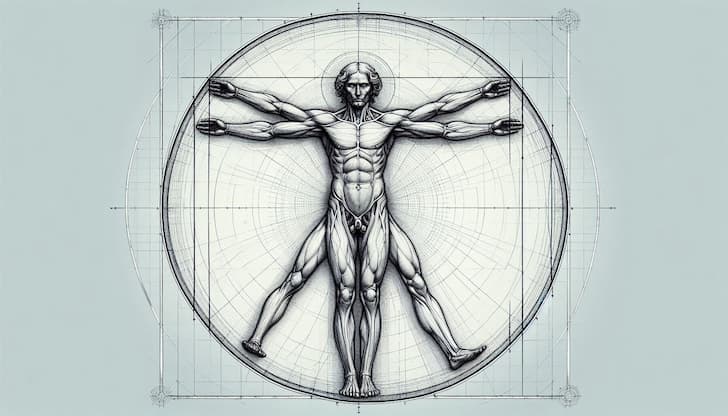
1. Anatomy and Human Biology
Human bodies operate like intricate machines with hundreds of moving parts working together. Leonardo spent hours sketching muscles, bones, and tendons to see how everything functioned. You gain immense confidence by learning the physical mechanics of your own frame. Basic biological knowledge helps you move with better coordination during regular daily tasks. Brains and muscles connect deeply when you pay attention to your physical biology.
Muscular systems require steady observation to reveal their true strength and operational limits. Heavy text books are unnecessary when you look at how limbs bend and flex naturally. You begin to appreciate the design of the human form without needing a medical degree. Physical awareness alters the way you carry yourself through crowded public spaces. Other men notice when a guy moves with deliberate, grounded physical presence.
Health choices become simple when you look at raw biological data instead of trends. Muscles require proper rest and deliberate movement to function at their absolute peak. You avoid common injuries by treating your structure with care and logic. Knowledge of circulation and respiration allows you to breathe deeper during moments of high stress. Sturdy mental habits develop when you treat your physical shell as an engineering marvel.
Sketch the shape of your hand in a small paper notebook. Notice how the skin folds over the knuckles when you close your fist tightly.
Track your resting heart rate every morning before getting out of bed. Regular numbers show the true status of your cardiovascular system over time.
Observe how your leg muscles move when you walk up a steep hill. Focus on the calf tension to feel the machinery of your body work.
Read an online entry about how human lungs exchange oxygen daily. Clear facts help you control your respiration when you feel anxious.
2. Geometry and Mathematics
Numbers create a reliable grid that helps organize the chaos of the physical world. Polymaths view geometry as the secret language that shapes every object in existence. You develop sharp logical skills when you learn to calculate angles and proportions accurately. Mathematical patterns appear in everything from sea shells to giant stone monuments. Regular practice with numbers keeps your brain quick and ready for difficult choices.
Symmetry pleases the human eye because it represents order and ultimate structural alignment. You train your vision to spot geometric alignments in your immediate surroundings every day. Shapes hold weight and dictate how objects occupy space in a square or street. Linear thinking prevents emotional panic from clouding your logical decision-making processes. Precision becomes a natural habit when you treat life as a beautiful mathematical equation.

Calculations do not require a massive chalkboard or an advanced university laboratory setup. Basic arithmetic allows you to solve everyday puzzles with speed and absolute certainty. You learn to spot errors in logic when people try to deceive you with fake statistics. Math serves as a shield against false claims and bad arguments in public debates. Wisdom grows when you value accuracy over loud opinions during an intense conversation.
Measure the proportions of a standard doorway using your steps. Calculate the ratio between the height and width to find the alignment.
Count the sides of various polygons you see on street signs. Noticing shapes improves your spatial awareness during regular walks outside.
Solve a simple algebraic puzzle on paper without using a phone. Manual calculation sharpens your logical deduction skills within minutes.
Analyze the geometric symmetry of a leaf from a nearby park. Patterns in nature show how math dictates growth across the planet.
3. Optics and Light Behavior
Light dictates how the human eye views color, depth, and physical distance. Da Vinci spent decades studying how sun rays reflect off different smooth surfaces. You master the visual world by knowing how shadows fall across an object. Illumination alters the mood of any space without changing the physical structure itself. Clear vision depends on your ability to track where light sources originate naturally.
Shadows create the illusion of three-dimensional depth on a completely flat surface. You observe how darkness pools under objects to learn the rules of perspective. Refraction occurs when light passes through water or glass, bending the visual line. Knowledge of these optical traits helps you see details that other people miss entirely. Intellectual depth shows when you notice the subtle gradients of color in the evening sky.
Mirrors reveal the laws of reflection by bouncing images back with perfect geometric accuracy. You train your eyes to see the world as a canvas of light and dark values. Vision becomes an active method of discovery rather than a passive physical sense. Contrast draws attention to certain focal points in your immediate field of view. Mastery of optics allows you to control how things look to the outside world.
Watch how shadows lengthen during the late afternoon hours. Notice how the movement shows how the angle of the sun alters your vision.
Place a pencil in a half-filled glass of clean water. Look at how the wood appears broken due to standard optical refraction laws.
Notice the glint of light on a smooth metallic surface. Tracking the reflection helps you determine the position of the primary bulb.
Squint your eyes to look at a scenery using only value scales. Reducing the detail helps you see raw contrast between dark and bright areas.

4. Mechanical Engineering and Fluid Dynamics
Gears, levers, and pulleys multiply human strength to accomplish monumental physical tasks. Leonardo designed flying machines and water systems by studying basic mechanical principles. You learn how the physical world operates by examining the movement of water currents. Rushing rivers follow predictable laws of pressure and volume as they move downstream. Mechanical curiosity helps you fix broken household items without calling an expensive professional helper.
Friction opposes movement and requires lubrication to prevent heat and structural damage. You analyze how wheels turn on axles to learn the efficiency of machines. Force transfer allows a small push to lift an incredibly heavy stone block easily. Simple physics equations explain why certain structures stand firm while others collapse under stress. Grounded logic develops when you study the cause and effect of physical forces daily.
Water flows along the path of least resistance when it moves through a channel. You observe eddies and whirlpools to see how fluid pressure shifts around obstacles. Air behaves much like water because both fluids follow identical laws of movement. Knowledge of aerodynamics helps you learn how wind affects structures and moving vehicles. Polymath minds view the movement of nature as a giant connected machine.
Examine the internal gears of an old mechanical wristwatch. See how tiny teeth transfer force to move the hands at perfect speeds.
Watch how river water moves around a large protruding boulder. Notice how whirlpools form behind the stone due to pressure changes.
Use a simple lever to lift a heavy storage box off the floor. Real-world physical advantages show how physics multiplies your input force.
Pour water through a funnel to observe the vortex formation. The spiral shape demonstrates how fluid dynamics control the flow rate.
5. Botany and Plant Science
Trees and plants follow strict patterns of growth to maximize their sun exposure. Leonardo noticed that leaf arrangements ensure every branch receives adequate light and rain water. You develop patience by studying how seeds slowly transform into sturdy outdoor organisms. Plant biology reveals how life sustains itself through simple natural systems every day. Awareness of botany connects your intellect to the ancient rhythms of the earth.
Sap moves through trunks like blood flows through human veins to deliver nourishment. You look at the bark to identify different species of trees in your area. Root systems anchor flora deep in the dirt to resist powerful storms and wind. Nature designs leaves with intricate veins that transport fluids with absolute mechanical efficiency. Learning these details makes your walks through local parks feel like scientific expeditions.
Decay forms a natural loop that feeds new growth in the forest floor. You observe how fallen logs turn into rich soil that supports small seedlings. Seasons dictate the life cycle of plants, forcing dormancy during cold winter months. Adaptation allows flora to survive in dry deserts or wet marshy swamps easily. Polymaths respect the quiet intelligence hidden inside the botanical world around them.
Count the rings on a fallen tree stump near your path. Each circle represents a year of growth and weather history.
Examine the vein patterns on the back of a green leaf. Internal channels show how the plant distributes water to its outer edges.
Grow a simple herb plant on your window sill from a seed. Daily observation helps you see how soil and sunlight fuel living tissue.
Identify three local tree species by looking closely at their bark. Distinct textures help you classify the flora in your neighborhood accurately.

6. Cartography and Mapping
Maps turn vast geographic areas into clear diagrams that people read with total ease. Leonardo drew bird's-eye views of cities long before airplanes existed in the world. You master spatial reasoning by learning to scale down real distances onto paper grid systems. Cartography combines artistic vision with strict mathematical measurement to record physical terrain accurately. Clear maps allow armies and traders to move across terrain without getting lost.
Topography reveals the elevation changes of mountains, hills, and deep river valleys. You study contour lines to see how steep a path looks before walking it. Accuracy in mapping requires a steady hand and an excellent sense of direction. True polymaths measure the world around them instead of guessing distances based on intuition. Charts replace guesswork with definitive proof regarding the layout of your regional territory.
Scales help you convert inches on a page into miles of real-world land. You learn to visualize entire cities from above by studying old street layouts. Geographic knowledge expands your mind by showing how human settlements interact with natural rivers. Borders and pathways define how civilization moves and expands over long periods. Mastery of maps ensures you remain oriented in any new environment you explore.
Draw a bird's-eye view map of your immediate neighborhood from memory. The process improves your spatial retention and mental layout skills.
Study a topographical chart of a nearby mountain range closely. Contour lines show how elevation changes across the physical terrain.
Measure the exact distance from your home to the grocery store. Hard data removes guesswork regarding your daily travel routes.
Locate the nearest natural water source on a regional map. Tracking water paths helps you see how towns were built historically.
7. Geology and Earth Science
Rocks and soil strata tell the ancient history of the ground beneath your feet. Da Vinci looked at fossilized sea shells on mountain peaks to prove old sea levels. You develop a deep perspective when you study the slow movement of tectonic plates. Earth science explains how volcanoes, earthquakes, and slow erosion shape our physical environment. Knowledge of layers helps you see the world as an ongoing historical record.
Erosion breaks down solid granite into tiny grains of sand over thousands of years. You observe how rain water carves deep grooves into dirt hillsides after a storm. Minerals form crystals based on strict geometric patterns under immense heat and pressure. Learning about soil types helps you see why certain plants thrive in certain areas. Geological time frames remind you that human troubles last for just a tiny blink.
Sediment deposits settle in flat layers at the bottom of lakes and oceans. You look at exposed rock cliffs to read the history of past climate shifts. Earth materials supply the raw resources needed to build strong shelters and items. Strata composition reveals which minerals lie hidden deep beneath the grassy surface. Polymath minds view the earth as a living system that changes constantly over eons.
Collect three different types of rocks from a local riverbed. Visual inspection helps you see the difference between sedimentary and igneous stones.
Observe the layers of dirt at a nearby construction excavation site. Color changes show how different minerals settled over long periods.
Pour water over a pile of sand to watch erosion happen. Quick movements simulate how rivers cut canyons into solid rock faces.
Examine a piece of smooth quartz crystal under bright sunlight. Internal geometric shapes demonstrate how minerals arrange themselves naturally under pressure.

This hidden knowledge used by the elites will let you generate wealth and prosperity
8. Astronomy and Science of the Sky
Stars and planets move across the night sky in predictable mathematical tracks. Leonardo studied the moon to see how sun rays illuminate its curved surface. You expand your consciousness by looking at objects located millions of miles away. Celestial movements helped old travelers find their way across featureless open seas. Basic sky knowledge keeps you connected to the grand scale of the physical universe.
Constellations serve as excellent map markers to identify different sections of the sky. You track the position of the North Star to keep your bearings at night. Planets shine with steady light while distant stars twinkle due to atmospheric disruption. Learning the phases of the moon helps you predict high and low ocean tides. Awareness of outer space makes your nightly walks feel like grand scientific observations.
Eclipses occur when shadows block the sun or moon in perfect alignment. You look at the horizon to see how the tilt of the earth causes seasons. Sky science removes superstitious fear by replacing myths with cold orbital mechanics data. True polymaths know that the same physics rules apply to both earth and stars. Calm perspective returns when you look up at the vast silence of space.
Locate the constellation Orion during a clear winter night. Finding the star pattern improves your ability to read the night sky.
Watch the moon change shape over a period of four weeks. Tracking the phases shows how shadows move across celestial spheres.
Identify the bright planet Venus just after the sun sets. Steady illumination distinguishes planets from the twinkling lights of standard stars.
Use a small compass to find the exact direction of sunrise. Hard measurements help you see how the solar path shifts during seasons.
Curiosity That Draws Men Closer
Men find deep curiosity incredibly attractive because it shows an active, vibrant mind. Leonardo asked questions about everything he saw, from bird wings to water flow. You stand out in a crowd of boring guys by showing genuine interest in reality. People love talking to a man who listens closely instead of just waiting to speak. Your intellect becomes a magnet when you ask smart questions during a casual date.
Boring bar conversations disappear when you introduce fascinating topics with total ease. You do not need to brag about your achievements to get noticed by handsome guys. Real mystery develops when your eyes light up while discussing a cool scientific fact. Masculine men respect a peer who values knowledge over shallow club gossip or internet trends. Your brain becomes your sexiest asset when you use it to explore the world.

Curiosity keeps your energy youthful and highly infectious to everyone around you. You attract masculine partners by showing you are never bored with your life choices. Discomfort vanishes when you focus on learning about his hobbies instead of worrying about judgment. A man who investigates the world always has something interesting to share during a date. True attraction blooms when your intellect creates a spark that regular small talk fails to match.
Ask a handsome guy about his favorite technical hobby during a chat. Listening closely shows him that you value his mental skills.
Look up the history of a local building before your next date. Sharing a quick fact makes the walk feel instantly more interesting.
Read a science article so you have fresh topics to discuss at bars. New information prevents conversations from turning into boring loops.
Listen to his stories without looking at your cell phone screen once. Undivided attention signals deep respect and attracts masculine men quickly.
Deliberate Movements and Calming Posture
Sloppy posture signals insecurity and drives high-quality men away from your space. Da Vinci studied human anatomy to learn how to carry himself with total grace. You project massive masculine sexiness by keeping your spine straight and shoulders relaxed. Fast, jittery movements show anxiety, while slow actions broadcast complete self-assurance and strength. Gaze firmly ahead instead of staring nervously at the floor when walking into a room.
Physical composure acts as a silent announcement of your inner mental stability. You occupy your physical space fully without making excuses or feeling out of place. Masculine guys look for partners who stand firm like stone monuments during social pressure. Confidence shows in the way you extend your hand for a firm, steady handshake. Your physical presence becomes undeniable when you drop nervous habits like fidgeting with keys.
Sitting down should look relaxed and powerful rather than slouched or completely collapsed. You keep your feet flat on the floor to remain grounded and alert. Breathing slowly through your nose stabilizes your posture and lowers your heart rate instantly. Other men interpret this physical stillness as a sign of dominant masculine energy. Composure allows your sexiness to shine without needing to utter a single word.
Keep your shoulders down and back while standing at a local lounge. Linear alignment projects strength and catches the eye of masculine men.
Walk at a measured pace when entering a crowded social venue. Slower steps broadcast complete control over your immediate surroundings.
Maintain direct eye contact for three seconds before smiling at a guy. A steady gaze shows confidence and initiates attraction naturally.
Place your hands calmly on your lap while sitting across from a date. Eliminating nervous fidgeting keeps the focus on your quiet confidence.
Observational Skills in Social Settings
Sharp observation allows you to read a crowded room like an open textbook. Leonardo noticed tiny facial micro-expressions to capture real human emotions in his sketches. You spot hidden clues about a guy's interest level by watching his body language. Masculine men often show attraction through subtle physical alignments rather than loud declarations. Notice if he tilts his torso toward your chair during a group discussion.
Small details reveal a lot about a man's character and personal daily habits. You look at his footwear, his grooming, and how he treats service staff closely. Awareness saves you from wasting time on guys who hide their true intentions. A polymath mind processes these social data points without acting judgmental or superior. Intelligence allows you to adjust your behavior based on the clues you gather silently.
Listening skills improve a great deal when you watch a man's eyes while he speaks. You notice what topics make him lean in or talk with more excitement. Knowledge of his preferences helps you guide the evening toward things he loves. Masculine guys feel deeply seen when you remember a small detail they mentioned hours ago. Attentiveness sets you apart from selfish daters who only talk about themselves all night.
Watch a guy's hands to see if he acts relaxed around you. Open palms signal comfort and readiness for a closer conversation.
Notice the tone of his voice when he greets your friends. Warm vocal changes indicate a friendly nature and high social intelligence.
Track his gaze to see what objects catch his attention in the room. Learning his visual preferences gives you easy topics for future chats.
Observe how he reacts when an unexpected delay happens at a venue. Cool reactions prove he possesses the masculine stability you desire.

Mastering the Skill of Creative Expression
Creativity makes your personality multi-dimensional and incredibly fascinating to other men. Da Vinci used charcoal and paint to bring his wild inner thoughts into reality. You do not need to be a professional painter to express your creative side. Writing thoughts in a journal or sketching objects builds a deep inner world. Masculine men find a guy with artistic hobbies far more intriguing than someone without interests.
Hobbies show that you do not rely on other people for your daily entertainment. You develop a rich personal life that operates independently of relationship status. Sharing your creative projects creates an immediate connection without needing forced small talk. Guys respect a man who builds things with his own two hands over weekends. Creative energy shows that your mind is alive, fertile, and full of original ideas.
Artistic expression refines your taste and alters how you view everyday surroundings. You notice beauty in the structure of old buildings or the colors of sunset skies. Discrimination in visual choices reflects high intelligence and a sophisticated internal mind. Masculine guys are drawn to partners who bring depth and color into their lives. Your creativity acts as a beacon that signals a sophisticated, high-value personality.
Sketch a simple object on your desk using a regular pencil. The practice sharpens your ability to appreciate real-world design details.
Write a short poem or description in a personal leather notebook. Putting thoughts into words builds a rich and attractive inner vocabulary.
Learn to play a classic tune on a simple musical keyboard. Musical skills show patience and a high level of mental coordination.
Take clean photographs of interesting shadows during your afternoon walks. Focusing on contrast shows you notice the subtle art hidden in daily life.
Factual Directness Over Emotional Drama
Emotional drama destroys attraction faster than almost any other negative behavioral trait. Polymath minds value raw facts over wild assumptions and late-night panic sessions. You behave like Da Vinci by stating your intentions with absolute clarity and calm. Masculine men crave simplicity and direct communication in their romantic relationships today. Confusion vanishes when you drop passive-aggressive games in favor of plain truth.
Anxiety tells false stories about why a guy failed to text you back immediately. You check the reality of the situation instead of spiraling into anger or doubt. Perhaps he is busy at work or sleeping after a long night shift. Waiting calmly for a response broadcasts immense self-control and high value to your partner. Men respect a lover who remains steady regardless of minor daily communication delays.
Disagreements remain minor when you stick to facts instead of hurling cheap insults. You describe what happened without adding a layer of dramatic personal accusation to the mix. Cool logic defuses arguments before they turn into loud public screaming matches. Masculine sexiness relies on your ability to keep your head cool during high-stress moments. Peace follows the man who refuses to let emotional storms dictate his behavior.
State your dating intentions clearly on the very first meeting night. Clear words prevent misunderstandings and attract direct, masculine partners.
Wait for a guy to finish speaking before forming your final answer. Listening without immediate emotional reaction shows massive intellectual maturity.
Ask for clarification instead of assuming a text message was an insult. Gathering data prevents useless fights over simple digital typos.
Keep your voice level steady when discussing a difficult personal topic. A calm tone demonstrates immense internal strength and self-command.
Scientific Mystery and Quiet Confidence
Slick talkers often give away all their secrets during the first five minutes of a conversation. Leonardo kept detailed notebooks that remained completely hidden from the public eye for years. You create irresistible attraction by keeping some parts of your life completely private at first. Reveal your depth slowly over multiple dates to keep his interest high. Mystery forces a masculine man to think about you long after the date ends.
Loud bragging signals a deep need for external validation from complete strangers. You let your achievements speak for themselves without needing to announce them to the bar. Quiet confidence looks incredibly sexy because it requires zero applause to exist. A masculine guy notices a man who sits comfortably without begging for attention. Your silence holds power when it stems from absolute self-assurance.
Knowledge should be shared like a rare gift rather than a loud lecture series. You drop an interesting fact into conversation only when it fits the topic naturally. Avoid lecturing your date or trying to prove you are the smartest person in the room. Wisdom looks best when it accompanies humility and an open, friendly smile. True mystery leaves a handsome man wanting to know more about your brilliant mind.
Keep your professional victories private until he asks about your job. Modesty makes your actual success feel much more impressive later.
Smile quietly when someone makes a wild claim at a party. A choice to avoid silly arguments shows supreme confidence.
Share only one interesting hobby during your initial conversation session. Leaving details for later dates keeps the air of mystery alive.
Listen to a guy's entire life story before sharing your own history. Prioritizing his words makes you look secure and deeply intriguing.
Physical Health and Biological Power
Vibrant physical health supplies a natural glow that cosmetics fail to replicate. Da Vinci maintained his physical strength by walking everywhere and staying active daily. You honor your human anatomy by feeding your body movement and proper rest. Masculine sexiness increases when your skin looks clear and your muscles feel firm. Fitness shows a discipline that high-quality men find incredibly attractive in a partner.
Sleep acts as a primary restoration mechanism for your brain and physical systems. You prioritize rest over late-night scrolling through useless social media applications. Energy radiates from a man who takes care of his internal biological functions properly. You avoid the exhausted, drained look that makes people appear older than their actual age. High energy draws guys to your side because health is naturally magnetic to human eyes.
Regular physical movement keeps your joints flexible and your posture perfectly upright. You do not need to look like a giant bodybuilder to project masculine fitness. Clean habits and a steady stride show that you take your physical structure seriously. Other men respect a guy who treats his body like a temple of science. Biological power translates directly into sexual confidence when you are behind closed doors.
Walk three miles through a local park every single afternoon. Outdoor movement keeps your leg muscles toned and clears your mind.
Drink eight glasses of clean water throughout your busy day. Proper hydration keeps your skin looking fresh, youthful, and highly attractive.
Lift medium weights to maintain your natural shoulder width. Muscle tone improves how your casual shirts fit your torso.
Go to bed at the same hour every weeknight regularly. Consistent sleep schedules eliminate dark circles under your eyes completely.
Practical Problem Solving in a Crisis
Panicking during a minor crisis looks incredibly weak and drives masculine men away. Leonardo solved engineering dilemmas with calm logic while other people screamed in terror. You demonstrate massive competence by handling unexpected problems without throwing a childish tantrum. If a car tire goes flat, you simply fetch the jack and fix it. Stability makes you a reliable anchor that other men want to hold onto tightly.
Complaining about bad luck changes absolutely nothing about the physical situation itself. You focus your mental energy on finding immediate solutions to the problem at hand. Resourcefulness is a highly attractive trait that signals high survival intelligence to a partner. A polymath man looks at a mess and creates a quick, logical checklist to clear it. Action beats out weeping every single time a disaster occurs in daily life.
Calmness under pressure is one of the ultimate indicators of masculine sexiness. You keep your voice low and steady when everything around you seems chaotic. Guys feel safe in your presence when they see you refuse to lose your head. Your ability to solve puzzles makes you the leader in any group setting. Competence creates a powerful aura that draws quality men straight to your side.
Fix a leaky faucet yourself using standard manual instructions. Direct action proves you possess real-world mechanical skills.
Organize a backup plan when a venue cancels your reservations. Quick adjustments save the date night from turning into an awkward disaster.
Keep a small medical kit inside your regular travel bag. Preparedness shows foresight and a protective nature that masculine men admire.
Guide your friends calmly out of a building during a sudden blackout. Leadership in the dark demonstrates immense composure and internal strength.
Continuous Learning As a Lifelong Habit
Intelligent men never stop expanding their minds with new skills and subjects. Leonardo filled thousands of notebook pages with theories until the week he passed away. You maintain an alluring edge by constantly studying topics outside your usual career path. A guy who reads books always brings fresh energy to a long-term relationship. Intellectual growth prevents your personality from becoming stagnant, boring, and highly predictable.
Conversations with you feel like exciting adventures into unexplored realms of human thought. You talk about astronomy, botany, or history with ease and genuine affection. Masculine partners love a man who challenges their mind without causing useless arguments. Your intellect becomes a source of inspiration that elevates the people around you. True attraction deepens when a handsome guy respects your brain as much as your body.
Stupidity and ignorance look incredibly unappealing to guys who value real depth. You distance yourself from trashy entertainment choices that rot your critical thinking skills. Dedication to education shows that you value your limited time on this planet. A polymath mindset transforms you into a complete catch who stands out from the crowd. Investment in your brain yields a permanent sexy confidence that never fades with old age.
Learn ten new vocabulary words from a classic literature text. A larger vocabulary helps you speak with greater eloquence on dates.
Watch a documentary about ancient history instead of reality television. High-quality media sharpens your analytical skills within one evening.
Study a foreign language for fifteen minutes every single morning. Linguistic progress demonstrates immense mental discipline and expands your horizons.
Take an online course about basic astronomy over the weekend. Knowledge of star patterns gives you wonderful topics for nightly outdoor dates.

Raw
A Pheromone Infused Cologne - with Pheromones for Men
Alcohol Free, Paraben Free, Chemical Free.
With Bergamot, Elemi, Sichuan Pepper, Pink Pepper, Geranium, Vetiver, Lavender, Patchouli, and Ambroxan.
We earn a commission if you click this link and make a purchase at no additional cost to you.
How To Think Like Da Vinci
Thinking like Leonardo Da Vinci requires a steady commitment to observing reality clearly. You possess the mental capacity to master multiple fields of study with regular practice. True genius blooms when you drop lazy assumptions in favor of hard scientific data. Attraction shifts naturally when your mind becomes an active powerhouse of deep knowledge. Masculine men will notice your sharp intellect and gravitate toward your quiet strength.
Expansion of your brain power remains the most reliable path to achieving lasting personal confidence. You do not need an expensive university degree to live like a genuine polymath. Everyday situations supply perfect chances to practice geometry, optics, and biological awareness. Respect from other men follows when you carry yourself with physical grace and mental directness. Your life becomes an exciting exploration filled with endless discoveries and deep connections.
Mystery and intellect combine to form an irresistible aura of true masculine sexiness. You get to step away from cheap social drama and build a rich inner world. Focus on facts, maintain excellent posture, and never stop learning new things every day. Other guys will appreciate the sophisticated, confident man you choose to become now. True brilliance belongs to those who view the universe with endless curiosity and calm logic.