

Indoor rock climbing delivers a full-body test of strength, strategy, and mental grit right in the heart of a gym. This sport pushes you to scale walls with nothing but your hands, feet, and a sharp focus, no matter if you're a rookie or a seasoned pro. Gyms designed for climbing offer a controlled space to hone skills, build muscle, and tackle problems that demand both physical and mental precision. Here's a breakdown of why indoor climbing is a beast worth taming, with practical ways to level up your game.

Getting Started with Indoor Climbing
Indoor climbing gyms are built to throw you into the action with walls of varying difficulty, from beginner slabs to overhangs that’ll make your forearms scream. Most spots require a quick orientation to cover safety, gear, and basic techniques before you touch the wall. You’ll find two main styles - bouldering, where you climb low walls without ropes, and top-rope or lead climbing, where you’re tied in for higher ascents. Each type demands a different mindset and physical approach, but both will leave you hooked.
Bouldering is often the entry point because it requires less gear - just shoes, chalk, and a willingness to fall on a padded mat. Top-rope climbing involves a harness and a belayer, someone managing the rope to catch you if you slip. Lead climbing adds a layer of intensity, as you clip the rope into anchors as you ascend. Whichever style you pick, the gym’s controlled environment lets you focus on technique without worrying about weather or rockfall.
The first time you step into a climbing gym, expect a mix of adrenaline and intimidation as you stare up at walls studded with colorful holds. Staff are usually stoked to guide newbies, so don’t hesitate to ask for tips or a quick demo. Most gyms also offer intro classes to teach you the ropes - literally - and help you avoid rookie mistakes. From there, it’s about getting on the wall and figuring out what your body can do.
- Pick the right shoes for your climb. Climbing shoes should fit snug, almost uncomfortably tight, to maximize grip and precision on holds. Rent a pair at the gym to start, but invest in your own once you’re committed - brands like La Sportiva or Scarpa are solid bets. Break them in gradually to avoid blisters, and keep them clean for better traction. Expect to spend $100-$150 for a quality pair that’ll last.
- Master the art of chalk use. Chalk keeps your hands dry, which is critical for gripping holds without slipping. Dip your hands lightly in a chalk bag - don’t cake it on like you’re dusting a cake. Reapply sparingly during long sessions, and wash your hands after to avoid dry skin. A good chalk bag costs around $20 and lasts years.
- Learn to read routes before you climb. Routes, or “problems,” are marked with colored tape or holds, and each has a grade like V0 or 5.10 to indicate difficulty. Study the path from the ground to plan your moves and conserve energy. Gym staff often set routes to teach specific skills, so ask them for beta - insider tips - on tricky sections. Reading routes well can cut your climbing time in half.
Building Strength for the Wall
Climbing isn’t just about pulling yourself up; it demands a mix of grip strength, core stability, and leg power to dominate the wall. Your fingers will take a beating, especially on tiny holds, so building hand strength is non-negotiable. Core muscles keep you glued to the wall, preventing you from swinging off like a pendulum. Legs, often overlooked, are your powerhouse for pushing up and saving your arms from burning out.
Unlike traditional gym workouts, climbing strength is about functional movement - think less about bench press and more about how your body moves as a unit. You’ll need endurance to last through long routes and explosive power for dynamic moves where you lunge for a hold. Training off the wall, like with hangboards or campus boards, can skyrocket your progress, but don’t skip actual climbing time. The wall itself is the best trainer.
Most climbers hit a plateau when they rely solely on natural strength, so targeted training is key to breaking through. Gyms often have fitness areas with tools like pull-up bars, weights, and fingerboards to mimic climbing stresses. Consistency matters - two to three sessions a week will transform your ability to crush harder routes. Mix in rest days to avoid injury, especially to tendons, which take longer to recover than muscles.
- Train grip strength with a hangboard. Hangboards are brutal but effective for building finger strength - hang from small edges for 10-15 seconds, rest, and repeat. Start with larger holds to avoid injury, and never lock your elbows. Use a timer to track sets, aiming for 3-5 reps per session. You can snag a decent hangboard for $50-$100 to use at home.
- Pull-ups for upper body power. Pull-ups mimic the pulling motion of climbing, targeting lats and biceps. Do three sets of 8-12 reps, focusing on slow, controlled descents to build endurance. If you can’t do full pull-ups yet, use a resistance band for assistance. Most gyms have pull-up bars, or get one for $30 for home use.
- Strengthen your core with hanging leg raises. Core strength keeps you stable on overhangs, so do leg raises by hanging from a bar and lifting your knees to your chest. Aim for 3 sets of 15 reps, keeping movements slow to engage deep muscles. Rest 60 seconds between sets to maintain form. This move requires no extra gear - just a bar and your body.
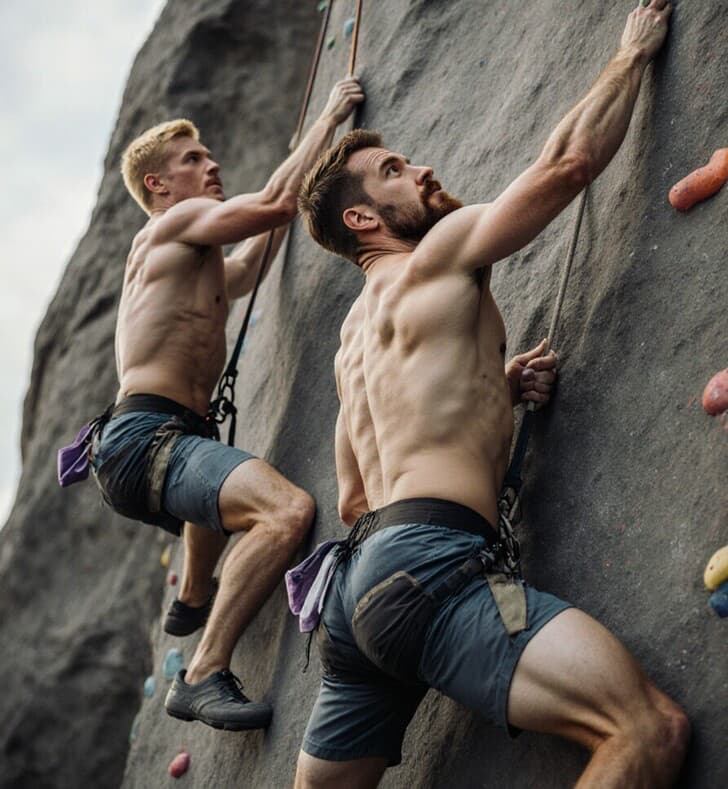
Building Strength for the Wall
Mastering Climbing Technique
Technique separates the guys who flail on the wall from those who flow like they’re defying gravity. Good climbers move deliberately, using their legs to push and their arms to guide, not pull. Foot placement is critical - sloppy feet mean wasted energy and more falls. The goal is efficiency, making every move count so you can climb longer and harder.
Early on, you’ll want to muscle through routes, but that burns you out fast. Watch experienced climbers; they look calm, almost lazy, because they’ve mastered precise footwork and body positioning. Hips close to the wall, knees bent, and hands lightly gripping - that’s the formula for smooth climbing. Practice makes this second nature, so don’t rush the learning curve.
Gyms set routes to teach specific techniques, like heel hooks or dynos, so you’re forced to adapt. Falling is part of the process - it teaches you what not to do. Record yourself climbing to spot bad habits, like over-gripping or dragging your feet. Over time, your body will learn to move smarter, not harder.
- Focus on precise foot placement. Place your foot on a hold with the toe, not the arch, to maximize control and power. Shift your weight directly over the hold to avoid slipping, and trust your shoes’ grip. Practice on easy routes to build confidence in small footholds. This habit can double your endurance on tough climbs.
- Use your hips to stay close to the wall. Keep your hips near the wall to reduce strain on your arms and improve balance. Twist your body to reach holds, using your core to stabilize. Practice this on slab routes, where balance is everything. Proper hip positioning can make a 5.11 feel like a 5.9.
- Practice dynamic moves for tough reaches. Dynamic moves involve lunging for holds you can’t reach statically. Push with your legs, aim for the hold, and absorb the impact with slightly bent arms. Start on boulder problems with big holds to get the feel. Mastering dynos can unlock routes you thought were impossible.
Mental Game of Climbing
Climbing tests your head as much as your body, especially when you’re 30 feet up and your arms are shaking. Fear of falling, even with a rope, can freeze you mid-route, so learning to trust your gear and your skills is critical. Problem-solving is constant - every route is a puzzle that demands focus and perhaps, as well as creativity. The mental grind is what keeps you coming back, even after a rough session.
Doubt creeps in when you’re stuck on a move or facing a tough overhang, but good climbers push through by breaking routes into smaller chunks. Visualization helps - mentally rehearse each move before you start. Confidence grows with experience, so the more you climb, the less your brain fights you.
Gyms are great for building mental toughness because you can fail safely and try again. Talk to other climbers for beta on tricky routes - their insights can shift your perspective. Meditation or breathing exercises off the wall can also calm your nerves for high-pressure climbs. Stay patient; the mental game improves with time.
- Visualize the route before starting. Stand at the base and mentally walk through each move to build confidence. Picture your hands and feet on specific holds, and plan rest points. Do this for 1-2 minutes to reduce hesitation mid-climb. Visualization can cut mental fatigue by 20%.
- Breathe deeply to manage fear. Take slow, deep breaths when you feel panic creeping in, especially on high routes. Inhale through your nose for 4 seconds, exhale for 6 to calm your heart rate. Practice this on the ground first to make it automatic. This trick keeps you focused even when pumped.
- Break routes into smaller sections. Treat each route as a series of mini-goals, like reaching the next clip or hold. Focus only on the next move to avoid feeling overwhelmed. Rest at good holds to reassess your plan. This will make long routes feel manageable.

Gear and Maintenance for Climbers
The right gear makes climbing safer and more enjoyable, but you don’t need to break the bank to start. Shoes, chalk, and a harness are the basics for most gym climbing, with bouldering needing the least equipment. Quality matters - cheap gear wears out fast and can compromise safety. Maintenance is just as critical; dirty shoes or a worn harness can screw you over mid-climb.
Gyms provide most of what you need for your first few sessions, like rental shoes and ropes, so you can try before you buy. Once you’re committed, invest in personal gear that fits your style and body. Check your equipment regularly for wear, especially ropes and harnesses, which take a beating over time.
Climbing gear evolves fast, so talk to gym staff or other climbers about what’s worth the cash. Brands like Black Diamond and Petzl are trusted for durability. Store your gear properly - dry, cool places keep it in top shape. Skimp on gear at your own risk; safety is non-negotiable.
- Inspect your harness before every session. Check your harness for frayed stitching or worn webbing, especially around the belay loop. Tug hard on all straps to ensure they’re secure, and replace it every 3-5 years. A new harness runs $50-$120, but it’s your lifeline. Never climb with a damaged one.
- Clean your climbing shoes regularly. Wipe your shoes with a damp cloth after each session to remove chalk and dirt. Use a brush to clean the rubber sole for better grip on holds. Store them in a ventilated bag to prevent odor buildup. Clean shoes can extend their life by months.
- Replace chalk bags when they wear out. A torn chalk bag spills everywhere, so check for holes or weak seams. Swap it out every couple of years, or sooner if it’s leaking. A new one costs $15-$30 and keeps your hands dry. Look for one with a tight drawstring closure.
Recovery and Injury Prevention
Climbing hammers your body, especially your fingers, shoulders, and elbows, so recovery is critical to keep you on the wall. Overuse injuries like tendonitis or pulley strains are common if you push too hard without rest. Proper warm-ups - plenty of stretching - reduce risk, but you also need to listen to your body. Rest days aren’t for wimps - they’re when your muscles rebuild stronger.
Warm up with easy routes or light cardio to get blood flowing before tackling hard problems. Stretching after climbing keeps your muscles loose and prevents tightness that leads to injury. Hydration and nutrition play a big role too - dehydrated or underfueled climbers crash fast.
Injuries happen, but most are avoidable with smart habits. Ice sore joints after sessions, and don’t climb through pain; it’s a one-way ticket to a long break. If you’re sidelined, focus on light training like core work or mobility exercises. Patience now means you’ll climb harder later.
- Warm up with dynamic stretches. Spend 5-10 minutes doing arm circles, leg swings, and torso twists before climbing. These moves prep your joints and muscles for the strain of tough routes. Do them in the gym’s warm-up area to avoid cluttering the climbing space. A good warm-up cuts injury risk significantly.
- Ice your fingers after hard sessions. Soak your hands in ice water for 10 minutes post-climb to reduce inflammation in tendons. Use a bucket or sink at home, keeping water cold but not freezing. This helps prevent chronic finger pain. Do it consistently for long-term joint health.
- Rest at least one day between sessions. Give your body 24-48 hours to recover, especially after bouldering or lead climbing. Use rest days for light stretching or walks to stay active without stress. Overtraining leads to burnout or injury, so stick to 2-3 sessions a week. Resting properly boosts your strength gains.

Recovery and Injury Prevention
Why Indoor Climbing Keeps You Hooked
Indoor climbing grabs you because it’s a constant test of what you’re capable of, physically and mentally. Every route is a new problem to solve, and the satisfaction of sending a tough one is unmatched. Gyms make it accessible - no need to trek to a crag or deal with unpredictable weather. It’s you, the wall, and the drive to get better, session after session.
The variety keeps it fresh; gyms reset routes weekly, so you’re never bored. You’ll meet other climbers who push you to improve, swapping tips and cheering each other on. It’s a sport where progress is visible - you’ll see yourself crushing routes that once felt impossible. Stick with it, and climbing becomes a lifestyle, not just a workout.
- Track your progress with a climbing log. Write down the routes you complete, noting grades and crux moves, to see how far you’ve come. Use a notebook or app like 8a.nu to stay organized. Review it monthly to spot patterns and set new targets. Logging builds motivation and helps you plan training.
- Try new gyms for fresh routes. Visit different climbing gyms to tackle unfamiliar walls and route setters’ styles. Each gym has a unique vibe, from gritty to high-tech, which keeps things exciting. Plan a trip every few months to broaden your skills. New routes force you to adapt and grow.
- Compete in local gym comps. Sign up for a bouldering or top-rope competition to test your skills under pressure. These events are low-stakes but push you to climb smarter and faster. Most gyms host them quarterly, with entry fees around $20-$40. Comps add a fun edge to your regular sessions.
Indoor Rock Climbing - Master The Technique, Avoid Injury
Indoor rock climbing is a relentless pursuit of strength, skill, and mental clarity that keeps you coming back for more. It’s a sport that rewards dedication, with every session building your ability to conquer tougher walls. From mastering technique to staying injury-free, the path is as demanding as it is satisfying. Get on the wall, stay consistent, and watch yourself transform into a climber who owns the gym.
