

Thinking like Leonardo da Vinci means seeing the world with curiosity, creativity, and a hunger for learning across many fields. I find that this approach doesn’t just expand knowledge, but also makes everyday life more interesting and rewarding. Da Vinci is remembered as a true polymath, a person who achieves mastery in several areas, blending science, art, and invention in everything he did.
If you’ve ever wanted to become more creative, solve problems from new angles, or feel confident talking about a wide range of subjects, developing a polymath mindset helps. Da Vinci’s example shows me that by learning certain key subjects, I can train my own mind to work in new and powerful ways.
This guide covers the eight subjects I’ve found to be essential for anyone who wants to think like Da Vinci and become a modern polymath. For each one, I’ll break down why it matters, how it shaped Da Vinci’s work, and practical ways to get started—even if you’re beginning from scratch.
1. Observation and Drawing: The Foundation of Curiosity
When I look at Da Vinci’s notebooks, I see hundreds of sketches of plants, animals, machines, and people. Drawing was much more than an artistic skill for him; it trained his eyes to notice details others missed. Being able to capture what I see helps me remember information, notice patterns, and come up with new ideas. Drawing teaches focus, patience, and helps my brain synthesize what I observe with what I imagine, which is incredibly valuable in all sorts of learning.
How to Build This Skill
- Keep a sketchbook and draw something every day. It doesn’t have to be perfect; focus on accurate observation, not artistic flair.
- Practice looking for details: textures, shapes, shadows, and movement in everyday objects. You might be surprised at what you spot just by slowing down and looking closely.
- Try "blind contour" sketches, where I look at my subject but not at my paper. This sharpens focus on seeing, not just copying; it really makes me pay attention to every line and curve.
I’ve found that getting better at drawing and observing makes all other areas of learning easier, because it connects creativity and attention to detail. Whether I'm traveling, working, or just relaxing, drawing helps me stay curious about the world.
2. Anatomy and Life Sciences: Understanding the Body and Nature
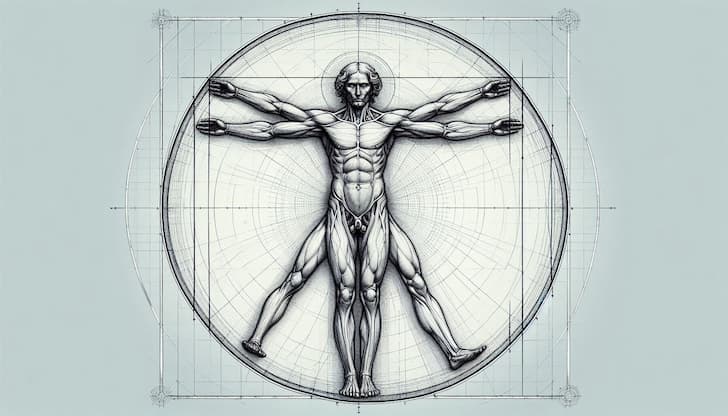
Da Vinci dissected human and animal bodies to understand how they worked, and he filled his notebooks with detailed anatomical drawings. By learning about the body, I am learning about the most complex machine I use every day: myself. Plus, the same curiosity about natural systems can be applied to plants, animals, and ecosystems around me. Exploring how muscles, bones, organs, or even plants and their roots fit together lets me get a better feel for the marvels of our world.
Getting Started in Anatomy and Biology
- Read basic guides on human anatomy, or use interactive apps to visualize the body in 3D. Free resources online make this approachable for everyone.
- Visit science museums or use online videos to see plants and animals up close and in action.
- Sketch what I see, labeling bones, muscles, or plant parts for practice. This combines observation and scientific thinking for quick learning.
This subject helps me connect science with everyday experiences, like health and fitness, as well as deepens empathy for other living things. Just knowing more about how bodies work makes exercise, nutrition, and self-care more interesting and meaningful.

3. Geometry and Mathematics: The Language of Patterns
Da Vinci used geometry to create his most famous artworks and inventions, analyzing proportions and designing machines. For me, basic math and geometry explain how the world fits together in predictable, beautiful ways. Patterns in math connect directly to patterns in nature, art, and technology, giving me a toolkit for seeing hidden structures everywhere—from a spiderweb to architecture.
Simple Ways to Build Math Skills
- Study shapes, symmetry, and perspective by drawing geometric solids or scenes from life.
- Work through problems that relate to everyday life, like measuring distances, angles, or creating simple blueprints for projects at home.
- Explore concepts like the golden ratio or Fibonacci sequence in nature and art. Try photographing or drawing examples as an extra challenge.
I’ve noticed that learning a bit of practical math boosts confidence and creativity in areas from art to problem-solving. Even simple geometry can spark ideas for inventions, designs, or just make you appreciate the shapes around you.
4. Physics and Engineering: How Things Work
Leonardo was fascinated by machines, flight, and the movement of water. Physics and engineering answered his questions about why things move, break, and function. When I experiment with these subjects, I learn to see not just what happens but why; that means I can figure out how I might build something similar or better myself.
Hands-On Engineering Practice
- Take apart small gadgets or toys to see how their components fit together. Seeing physical objects in pieces teaches a lot about design and purpose.
- Build simple contraptions, like paper helicopters, bridges from sticks, or small rubber band cars. You don't need fancy tools to get started.
- Watch videos that demonstrate basic physics concepts and try replicating the experiments at home using whatever materials are on hand.
Understanding the principles of machines, balance, and force helps me see how Da Vinci invented devices far ahead of his time. The more I tinker and experiment, the easier it becomes to spot solutions to real-world challenges; engineering teaches resilience through trial and error.
5. Art and Visual Communication: Sharing Ideas Creatively

Da Vinci’s paintings are world famous, but he also used artistic skills in science, engineering, and writing. For me, art is not just about beauty; it’s a powerful language for explaining difficult ideas and connecting with others. Art and diagrams make it easy to bridge the gap between imagination and reality, especially when explaining something complex.
Ways to Grow as a Visual Communicator
- Practice illustrating ideas with diagrams, mind maps, and infographics for school, work, or personal projects.
- Choose a medium—pencil, paint, digital—and set aside time each week for creative projects, even if only for a few minutes.
- Study famous works of art and try to recreate certain techniques or styles. This kind of study hones observation and expands visual vocabulary.
Even simple artistic skills can help me express myself persuasively. A good picture or clear diagram often makes an idea stick far better than words alone.
6. Literature, Philosophy, and Rhetoric: The Power of Words and Ideas
While Da Vinci is mainly remembered for art and science, he spent much of his life reading about philosophy, ethics, and classic literature. These subjects shaped how he wrote, debated, and made sense of the world. I’ve learned that reading deeply, exploring big questions, and practicing persuasive communication strengthens my thinking in all areas. Challenging yourself with the great debates of history can even make small-talk richer and more engaging.
Steps to Build Strength in the Humanities
- Read classic books or essays on topics that interest me, taking notes or discussing them with friends. Pick authors from different eras to get a sense of changing views.
- Write down my own thoughts, opinions, or arguments on questions that matter to me. This builds self-awareness and critical thinking—and it's fun!
- Practice explaining complex ideas simply, both in writing and conversations. Teaching someone else is a great test of truly understanding a topic.
Connecting philosophy with scientific learning helps me make ethical decisions and see the bigger picture. Reading deeply in this way sharpens my mind for other disciplines, too.

Raw
A Pheromone Infused Cologne - with Pheromones for Men
Alcohol Free, Paraben Free, Chemical Free.
With Bergamot, Elemi, Sichuan Pepper, Pink Pepper, Geranium, Vetiver, Lavender, Patchouli, and Ambroxan.
We earn a commission if you click this link and make a purchase at no additional cost to you.
7. Music and Sound: Training the Mind to Listen
Da Vinci played musical instruments and even invented new ones. Studying music is about much more than entertainment; it sharpens memory, trains listening skills, and helps me notice subtle rhythms and patterns. Music connects emotion and logic, much like the rest of Da Vinci’s studies, and I’ve noticed it's a secret weapon for better learning in general.
Simple Ways to Bring Music into Learning
- Learn the basics of music theory using free tutorials or mobile apps. Understanding patterns in music trains the mind for language and math.
- Pick up a simple instrument and practice a few minutes daily, focusing on patterns and scales rather than perfection. This keeps things playful and stress-free.
- Listen to a variety of music styles, paying attention to the mood, instruments, and structure of each piece. Try writing your own melody or remixing a favorite tune.
I notice that regular music practice improves focus, memory, and comfort with new languages. Feeling music physically and emotionally gives brain power a serious boost for almost any other skill.

Training the Mind to Listen
8. Invention and Creativity: Creative Problem-Solving
The spirit of invention defined Da Vinci’s entire life. He looked at problems with fresh eyes and wasn’t afraid of failing. Having a habit of inventing things, testing new approaches, or reimagining old solutions sparks real learning. For me, invention doesn’t mean building huge machines; it means facing problems with curiosity and creativity and always being ready to try something new.
How to Practice Everyday Creativity
- Notice small annoyances in daily life and brainstorm simple fixes or improvements. Challenge yourself to come up with multiple ideas for ordinary problems.
- Keep an "ideas journal" to collect inventions, doodles, and observations. Over time, you’ll be surprised at the number of cool thoughts you come up with.
- Share projects with others, get feedback, and don’t get discouraged by mistakes. Seeing every failure as a lesson is really important for making progress; even Da Vinci scrapped many sketches and plans along the way.
Creativity is about taking action and staying open to new ways of thinking. Allow yourself to play with ideas without worrying about perfection—experiments are where the fun (and growth) happen.
How to Blend These Subjects Like Da Vinci
I find the real magic happens when I connect these subjects, not just study them one by one. For example, drawing can be used to explain math, music helps with pattern recognition in language, and philosophy can guide ethics in engineering. This mixing of topics makes learning feel alive and personal.
- Set time each week for a “cross-training” session—choose one topic and try to connect it to another. For example, write a poem about a physics principle, paint a musical scale, or invent a gadget inspired by a painting.
- Keep all notes, sketches, and project ideas in a single notebook to catch patterns and ideas that cross subject lines. Over time, connections become obvious and creative sparks fly.
- Talk with friends or find online groups who are interested in more than one thing. Learning together and sharing ideas keeps me motivated and often leads to projects that would never happen solo.
To really make the most of this approach, stay curious and don’t worry about perfection; blending subjects is about exploration and playful thinking, not just expertise.

This hidden knowledge used by the elites will let you generate wealth and prosperity
How To Think Like Da Vinci: Final Thoughts
I’ve learned that thinking like Da Vinci is a lifelong project. Mastering even the basics in these eight subjects helps build a brain that is flexible, curious, and creative. Even if I never become an expert in all areas, the act of trying connects me more deeply with the world—just like it did for Da Vinci. Starting today, a sketchbook, a question, and a bit of playfulness are all I really need to begin. The bottom line is that the more I try, fail, and jump into new subjects, the more rewarding the adventure becomes for my mind and spirit.
