

Leather gear marks the height of physical sensation within the male leather scene. Heavy straps press against skin, creating a world where every cinch feels real. Metal rings clink against hide, marking a rhythm that excludes the outside world. Pressure becomes a language that replaces speech. Straps define the frame while highlighting the body. Hides mold to the torso, eventually fitting like a second skin.
Every adjustment brings a shift in how the body perceives gravity. Darkness and the scent of hide create an atmosphere for deep exploration. Gear transforms how a person moves and breathes. Limits feel reachable when the gear holds firm.
Strength radiates from the straps as they enclose the chest. Every session builds a history between the wearer and the material. Acceptance of the leather allows a person to find a different kind of strength. Leather culture thrives on the tactile reality of the gear. Physical sensations ground the mind during intense scenes.
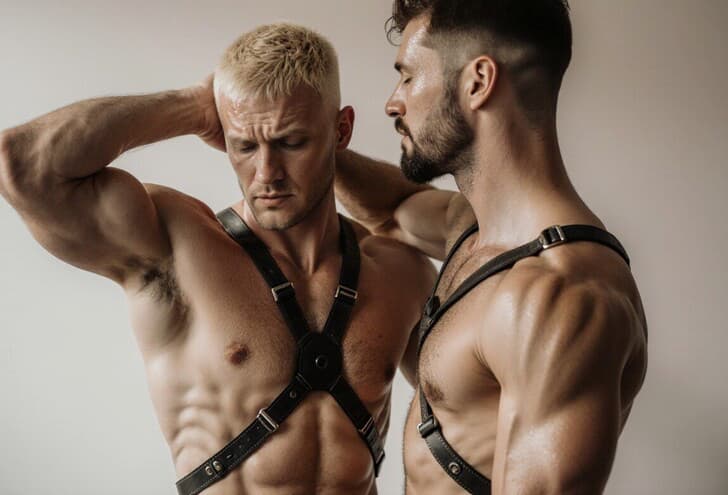
Origins of Leather Harnesses in Bondage
History shows that leather gear evolved from military roots. Men returned from wars with gear that signaled strength. Biker culture added more grit to the style later. Bars in the fifties turned leather items into icons of subversion. Strength and rebellion defined the look in those early days. Tight leather created a sense of being enclosed. Metal parts allowed for quick shifts during a scene. Designs moved from simple to complex over the years. Craftsmanship focused on how the straps sat on muscle. Every piece reflected the drive of the wearer.
- Strap a basic chest harness across your torso during a solo session. Tighten the buckles until the leather bites into your skin just enough to remind you of restraint. Feel the straps limit your arm reach, forcing deliberate movements. Adjust the fit to focus pressure on your pecs, building tension with each breath.
- Pair the harness with wrist cuffs for a restrained standing pose. Secure your arms behind your back, letting the harness anchor the pull. The combination restricts twisting, making every shift a test of endurance. Breathe deep as the leather warms against your body, syncing with your pulse.
- Use a full-body harness in a hogtie configuration. Loop ropes through the rings to bind limbs close. The harness distributes weight evenly, preventing strain on single points. Tension builds as you test the limits, the leather creaking with effort.
- Incorporate a harness into suspension play with overhead hooks. Attach chains to the back rings for partial lift. The straps support your core, allowing controlled dangling. Sweat slicks the leather, intensifying the grip on your frame.
Today, the gear remains a staple of the lifestyle. Hides still carry that distinct scent of the past. Modern scenes respect the roots of this attire. Every fastener tells a story of survival and desire. Men find a sense of belonging within the leather.
Psychological Shifts in Heavy Gear
Heavier leather changes the way a person thinks. Mindsets shift toward submission or dominance once the straps are tight. Confidence grows when the body is encased in hide. Every fastener represents a commitment to the scene. Reality fades as the leather takes over.
Focus narrows down to the immediate physical sensations. Distractions from the outside world disappear. Peace is found within the boundaries of the gear. Every cinch brings a sense of mental clarity. Emotions become more intense in the heat of the moment.
Identity transforms when the gear is in place. Roles are defined by the type of leather worn. Power flows through the straps and rings. Every session is a way to explore different parts of the self. Strength is found in the willingness to be bound.
Meditate for ten minutes after you finish fastening the gear. Stillness allows the mind to adjust to the new sensations.
Avoid looking at your phone or any screens during the scene. Digital silence keeps the focus on the physical world.
Speak only when necessary to maintain the atmosphere. Silence reinforces the power of the leather.
Pay attention to how your mood changes with each strap. Self - awareness is a key part of the experience.
Types of Leather Harnesses for Bondage
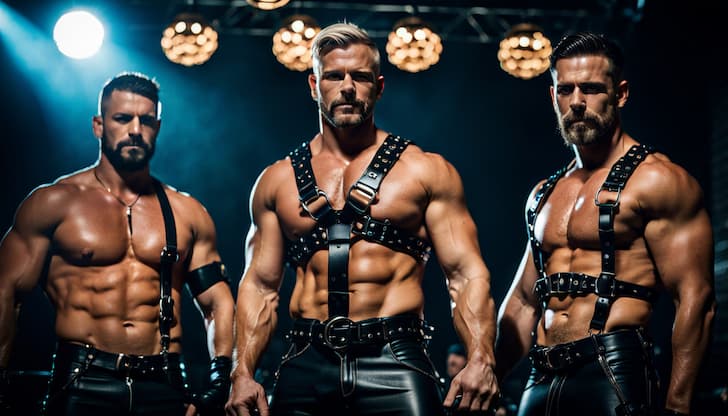
Basic chest harnesses feature wide straps crossing the front and back. They provide a solid base for attaching other restraints. Full-body versions wrap around torso and thighs for comprehensive control. Bulldog styles emphasize the shoulders, ideal for upper body focus.
Materials vary from cowhide to softer lambskin, each offering different levels of give. Thickness affects durability and the bite during tight cinches. Hardware like D-rings and buckles determines versatility in setups. Colors range from black to brown, with some dyed for personal flair.
Custom fits ensure the harness conforms without chafing. Adjustability comes from multiple buckle points. Some include padded sections for longer wear. Harnesses with quick-release options balance safety and immersion.
- Opt for a chest harness with front buckles in a quick tie-down. Position the straps to cross your nipples for added sensitivity. Cinch them snug to restrict deep breaths, heightening awareness. The design lets you attach leads easily, guiding movement.
- Choose a bulldog harness for shoulder emphasis in wrestling holds. Buckle it over your traps to frame your build. The wide bands limit arm swings, making grapples more intense. Leather conforms over time, fitting like a second skin.
- Select a full-body harness for total immobilization. Strap it from chest to crotch, securing all major muscle groups. Rings at hips allow thigh bindings, reducing mobility. The comprehensive coverage turns simple stands into challenges.
- Go with a harness featuring O-rings for multi-point attachments. Place it to align rings with your joints for balanced pulls. Buckles adjust tension per section, customizing restraint. This setup excels in prolonged scenes, maintaining comfort.
Selecting the Right Harness for Your Build
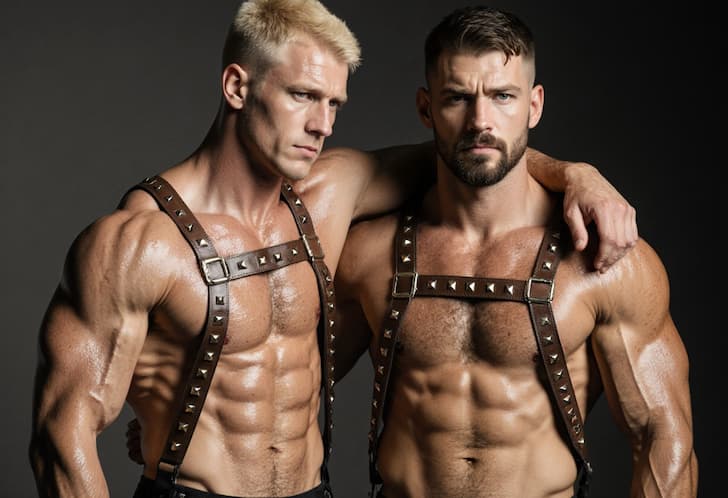
Body types influence which harness works best for bondage. Broad chests suit wider straps that distribute pressure evenly. Slimmer frames benefit from narrower bands to avoid slippage. Height factors in strap length for proper coverage.
Consider skin sensitivity when picking leather grade. Rougher hides deliver more texture for those seeking bite. Softer options reduce irritation in extended play. Weight of the harness matters for overhead or dynamic setups.
Try on multiple styles to gauge fit before committing. Adjustability ensures it adapts to weight fluctuations. Look for reinforced seams to handle vigorous tugs. Quality rivets prevent hardware failure mid-scene.
- Measure your chest circumference accurately before buying a harness. Wrap a tape around the widest part to get the right size. Account for breathing room to avoid constriction. Proper sizing prevents bunching during movement.
- Test the harness on your bare skin for initial fit. Buckle it loosely at first, then tighten incrementally. Feel for pinch points around ribs or shoulders. Adjustments here set the foundation for secure bondage.
- Factor in your arm span when choosing strap placement. Position buckles within easy reach for self-application. The design should allow solo setup without strain. This ensures independence in preparation.
- Assess the harness weight against your endurance level. Heavier leather builds stamina over time. Lighter versions suit beginners easing into restraint. Balance this with the scene's demands for optimal use.
Posture Control Techniques
Heavy leather straps force the body into specific positions. Rigid material prevents the spine from slouching during long sessions. Shoulders stay pinned back, opening the chest for better visibility. Every movement requires effort when the leather resists. Proper alignment becomes a physical requirement rather than a choice.
Muscle memory develops when the gear dictates the stance. Feet stay planted firmly as the torso remains locked in place. Straps around the thighs ensure that the legs stay wide. Every shift of weight feels intentional and measured. Stability increases as the leather supports the frame.
Constant pressure reminds the wearer of the need for stillness. Relaxation occurs only within the confines of the straps. Breath control improves as the chest piece limits expansion. Silence follows the realization that struggle is futile. Focus remains on the physical presence of the leather.
Connect a strap from the back of the neck to the waist ring. Vertical tension forces your spine to stay straight.
Tighten the thigh straps until your knees stay several inches apart. Resistance prevents your legs from closing, maintaining an open posture.
Adjust the shoulder bands so your shoulder blades touch. Locked shoulders prevent any slouching while you stand or kneel.
Secure your wrists to the side rings of the chest gear. Arm movement becomes impossible, leaving your torso exposed.
Wearing Techniques for Maximum Restraint
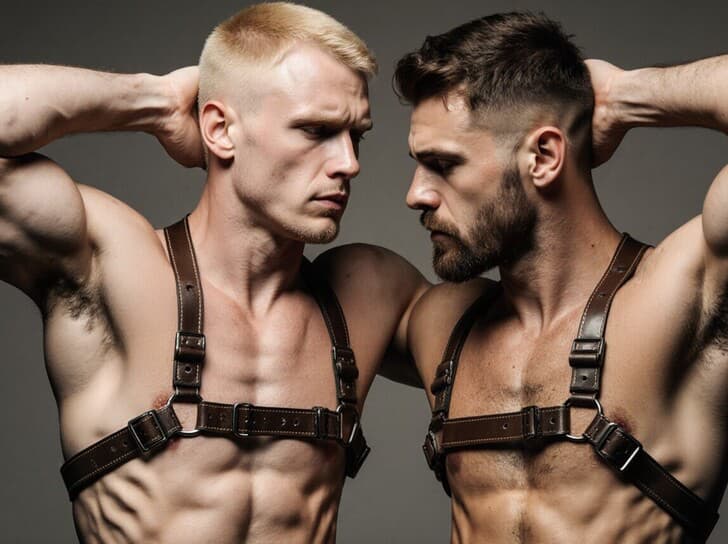
Start with clean skin to prevent chafing under leather. Apply a light oil to the harness for smoother glide. Position straps symmetrically to maintain balance. Buckle from bottom up for even tension.
Tighten gradually to build acclimation. Check circulation after each adjustment. Rotate shoulders to settle the fit. Secure any loose ends to avoid distractions.
Do breathing exercises during setup. Inhale deeply as you cinch. Exhale to test the grip. This method syncs body and gear.
- Begin by draping the harness over your shoulders loosely. Let gravity pull it into place before buckling. Align the center strap with your sternum for symmetry. Initial positioning sets the tone for restraint.
- Tighten the side buckles first to anchor the base. Pull evenly to avoid twisting the leather. Feel the straps hug your sides, creating enclosure. This step stabilizes the entire setup.
- Adjust the shoulder straps next for upper control. Shorten them to lift the chest piece slightly. The tension restricts shrugging, enhancing submission. Fine-tune for comfort without slack.
- Finish with the back closures to lock everything in. Reach around or use a mirror for precision. The final cinch unifies the harness. Now the bondage feels complete.
Pressure Points and Nerve Stimulation
Narrow straps focus intensity on certain areas of the body. Leather edges bite into the skin when tightened to the limit. Sensory nerves react to the constant grip of the hide. Pain and pleasure mix as the blood flow shifts. Every cinch brings a new wave of physical awareness.
Rings placed over muscle groups create localized pressure. Hard metal contrasts with the softness of the skin. Numbness sometimes follows prolonged periods of heavy binding. Skin turns red where the leather makes firm contact. Circulation checks remain a necessary part of the process.
Friction between the leather and the skin adds another layer. Heat builds up under the straps during active scenes. Sweat makes the leather slide, changing the feel of the restraint. Every breath pushes the body against the unyielding material. Sensation remains at the forefront of the experience.
Position a narrow strap directly across the nipple line. Tight pressure heightens sensitivity in that specific area.
Place a metal ring over a large muscle like the pectoral. Weight from the gear focuses on that single point of contact.
Wrap leather bands around the upper arms for a bicep squeeze. Compression creates a heavy feeling in the limbs.
Tighten the waist cinch until the leather leaves marks. Deep impressions show the intensity of the physical restraint.
Weight Distribution in Complex Rigs
Full body gear distributes pressure across multiple points. Heavy hide protects the skin while providing a solid hold. Gravity pulls against the rings when the body is lifted. Every strap plays a role in supporting the total weight. Strength of the material ensures safety during suspension.
Hooks allow for various angles of lean and pull. Tension moves from the shoulders down to the hips. Balance becomes easier when the gear fits perfectly. Metal hardware must handle the stress of the scene. Every link in the chain carries a portion of the load.
Comfort increases when the weight spreads over a wide area. Padded sections prevent the leather from cutting too deep. Stability comes from the way the straps wrap the torso. Movement stays controlled through the use of heavy rings. Security feels absolute when the fasteners click shut.
Attach four separate leads to the corner rings of your gear. Equal tension from every direction keeps you centered.
Use wide straps for any part of the gear that carries your weight. Surface area reduces the risk of skin irritation.
Check every fastener for signs of metal fatigue before a lift. Solid hardware prevents accidents during high - tension scenes.
Shift your weight slowly to test the limits of the straps. Gradual movement allows the leather to settle into place.
Integrating Harnesses with Other Bondage Gear
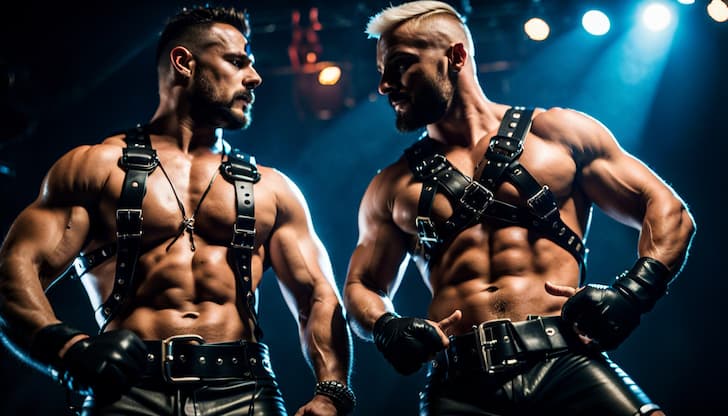
Harnesses pair well with cuffs for extended limb control. Attach them via carabiners for quick links. Collars connect to front rings for posture enforcement. Blindfolds heighten the sensory deprivation.
Ropes weave through harness loops for intricate ties. Chains add weight and clink for auditory stimulation. Paddles target exposed areas framed by straps. Vibrators secure against the leather for constant buzz.
Layer with jocks or chaps to expose key zones. Boots ground the stance, complementing the upper restraint. Gloves add tactile contrast during handling. This combo amplifies the overall scene.
- Link wrist cuffs to the harness's side rings. Clip them securely to limit hand movement. The pull transfers to your core, intensifying strain. Adjustments keep the tension consistent.
- Attach a collar to the front O-ring with a short chain. Buckle the collar snug around your neck. The link forces head alignment with body. This setup enforces rigid posture.
- Weave rope through multiple harness points for shibari style. Start at the chest and loop downward. Knots secure without slippage on leather. The fusion creates hybrid restraint.
- Secure a gag strap over the mouth, anchored to harness. Position it to muffle sounds effectively. The added element deepens immersion. Leather on leather maintains theme consistency.
Solo Play with Self-Binding Gear
Front - loading fasteners allow for independent setup of the gear. Reaching the back remains a skill that develops over time. Mirrors help in aligning the straps correctly. Every cinch belongs to the wearer in a solo session. Independence brings a sense of accomplishment to the scene.
Patience is required when strapping into a complex rig alone. Hands must work by feel when the eyes cannot see the fasteners. Leather stiffness makes the initial fit more difficult. Every successful closure brings the person closer to the goal. Restraint starts with the first fastener and ends with the last.
Solitude allows for a deeper focus on the internal sensations. No distractions interfere with the feeling of the leather. Time moves differently when the body is bound in silence. Every minute spent in the gear belongs to the wearer. Reflection occurs within the tight grip of the straps.
Lay the gear out on a flat surface before putting it on. Organization makes the process of self - binding much faster.
Sit on the floor while you tighten the lower straps. Stability helps you reach the fasteners without losing your balance.
Use a long mirror to check the symmetry of the back straps. Visual confirmation ensures that the gear is sitting straight.
Practice closing the gear behind your back to build dexterity. Finger strength increases with regular use of heavy leather.
Scenes Where Harnesses Shine in Bondage
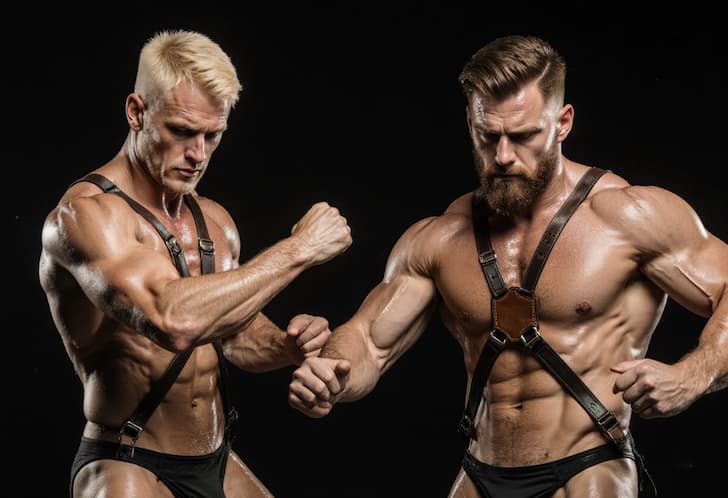
Dimly lit rooms set the stage for harness play. Partners circle, admiring the strapped form. Commands issue to test the restraints. Struggles highlight the leather's hold.
Public events showcase harnesses in group dynamics. Straps draw admirers for negotiations. Demonstrations teach techniques on willing subjects. Energy pulses through the crowd.
Private encounters allow deeper exploration. Time stretches for gradual builds. Feedback refines the experience. Release comes after peaks of intensity.
- Enter a club wearing your harness under a jacket. Shed the outer layer to reveal the gear. Straps invite touches and tugs from onlookers. The exposure ramps up adrenaline.
- Kneel in a private space with the harness cinched tight. Await instructions while the leather restricts. Each command tests your compliance. The setup fosters focused interaction.
- Stand bound in a sling, harness supporting your weight. Hooks attach to back rings for stability. Swings add motion to the restraint. Leather absorbs the impacts.
- Lie prone on a bench with arms pulled back via harness. Straps hold the position firm. The angle exposes your back for play. Endurance builds through the hold.
Cold Weather Leather Experiences
Winter temperatures change the physical properties of the hide. Cold leather feels stiff and unyielding against the skin. Warmth from the body gradually softens the material. Every breath creates a cloud of steam in the cold air. Sensation becomes sharper when the skin is chilled.
Outdoor sessions provide a different backdrop for the gear. Wind whistles through the metal rings and fasteners. Snowflakes melt on the surface of the black leather. Every movement makes the hide creak more loudly in the silence. Nature adds a layer of unpredictability to the scene.
Body heat stays trapped under the wider straps of the gear. Contrast between the cold air and the warm skin is intense. Leather acts as a shield against the biting wind. Every cinch feels tighter as the cold numbs the fingers. Endurance increases in the face of the elements.
Keep the leather in a warm room before heading outside. Pliable gear is much easier to fasten in the cold.
Wear the straps over a thin layer of thermal clothing. Layering protects the skin while maintaining the look of the gear.
Rub a small amount of oil onto the leather to prevent cracking. Moisture keeps the hide supple during freezing weather.
Limit the time spent in extreme cold to avoid frostbite. Safety remains the priority even during intense outdoor play.
Soundscapes of Metal and Hide
Leather gear creates a distinct auditory environment. Creaking sounds follow every movement of the body. Metal rings jingle like bells during a scene. Every shift of weight results in a symphony of noise. Silence is broken by the rhythmic clicking of fasteners.
High - quality hide produces a deep, resonant sound. Thick straps groan under the tension of a pull. Chains add a heavy, metallic clink to the mix. Every breath sounds louder when the ears are focused. Noise becomes a part of the sensory experience.
Recording the sounds of a scene provides a new perspective. Rhythms emerge from the interaction of leather and skin. Metal hitting metal creates a sharp, clear tone. Every session has its own distinct sound profile. Memory is often tied to the noises of the gear.
Move your arms slowly to hear the leather creak. Slow motion emphasizes the texture of the sound.
Hang several small rings from the main chest strap. Extra metal increases the jingling sound with every step.
Perform a scene in a room with hard floors for better echoes. Sound carries further when there are no soft surfaces.
Listen to the rhythm of your breath against the leather. Internal sounds become part of the overall soundscape.
Maintenance and Longevity of Your Harness
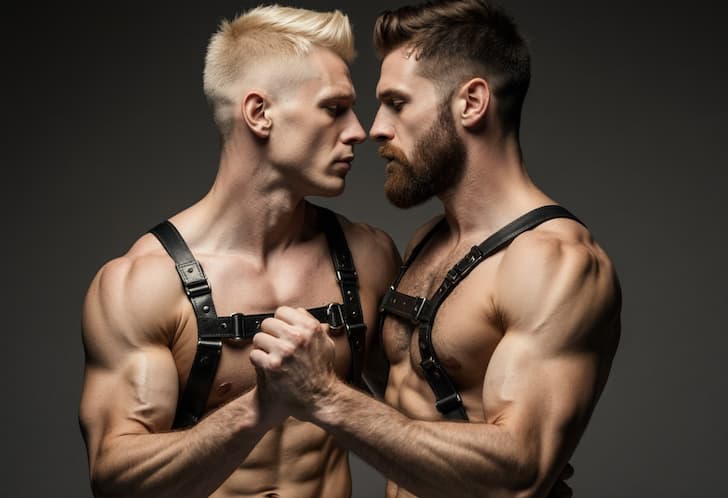
Clean leather after each use with saddle soap. Wipe down straps to remove sweat residue. Condition with oil to keep suppleness. Store flat to prevent creases.
Inspect buckles and rings for wear regularly. Replace weakened hardware promptly. Avoid direct sunlight to prevent fading. Hang in a cool, dry space.
Break in new harnesses gradually. Wear them short periods at first. Stretch the leather with use. This routine extends lifespan.
- Wipe the harness with a damp cloth post-session. Remove surface grime before it sets. Dry thoroughly to avoid mold. Regular cleaning preserves the hide.
- Apply conditioner sparingly to maintain flexibility. Rub it in circles for even absorption. Buff excess off after a few minutes. Conditioned leather resists cracking.
- Check seams for loose threads monthly. Tug gently to test integrity. Repair small issues early. Strong seams handle intense pulls.
- Store the harness rolled loosely in a bag. Avoid tight folds that cause permanent marks. Dust-free storage keeps it ready. Proper care ensures reliability.
Scent Maintenance for Sensory Play
Authentic hide carries a powerful and distinct aroma. Scent fills the room as soon as the gear is unpacked. Olfactory nerves respond to the rich smell of the leather. Every breath brings a reminder of the material. Aroma is a major part of the draw for many men.
Maintenance is required to keep the scent fresh. Saddle soap cleans the surface without removing the smell. Oils help to preserve the deep scent of the hide. Every cleaning session is a way to interact with the gear. Proper storage prevents the leather from smelling musty.
Pheromones mix with the leather scent during intense play. Sweat adds a personal element to the aroma of the gear. Every session creates a distinct scent profile for the harness. Memory of a scene is often triggered by the smell. Scent remains one of the most powerful senses.
Store your gear in a cedar chest to maintain the aroma. Natural wood complements the scent of the leather.
Wipe the straps with a specialized leather conditioner. Moisture keeps the scent from fading over time.
Avoid using heavy perfumes or colognes while wearing leather. Natural scents should remain the primary focus.
Air out the leather in a well - ventilated space after use. Fresh air prevents the buildup of unpleasant odors.
Physical Endurance in Rigid Straps
Stiff leather tests the stamina of the wearer. Muscles work harder to move against the resistance. Fatigue sets in during long periods of binding. Every hour in the gear is a test of strength. Endurance grows with regular practice and use.
Core strength is necessary to maintain a steady posture. Legs may shake after standing bound for a long time. Breath must remain steady to avoid exhaustion. Every movement requires a conscious effort of will. Success is measured by the ability to stay in the gear.
Rest periods are needed to prevent physical strain. Stretching before and after a scene helps the body recover. Water intake remains mandatory during heavy play. Every session builds the physical capacity for more. Strength is both a requirement and a result.
Start with short sessions of thirty minutes in the gear. Gradual exposure helps the body adapt to the pressure.
Perform simple isometric exercises while wearing the straps. Muscle engagement builds stamina without needing wide movements.
Focus on deep belly breathing to maintain oxygen levels. Steady breath prevents early fatigue during intense play.
Take the gear off immediately if you feel sharp pain. Safety is the most weighty part of any physical test.
Tactile Contrast with Non-Leather Materials
Mixing materials creates new sensations for the skin. Silk or satin under the leather provides a slippery feel. Rough rope against the hide adds a different texture. Every layer brings a new element to the scene. Contrast heightens the awareness of the leather.
Rubber and latex provide a tight, sweaty alternative. Metal chains feel cold against the warm leather. Fur or fleece adds a soft touch to the hard gear. Every combination changes the physical experience. Variety keeps the scenes interesting and fresh.
Sensory play often involves switching between materials. Blindfolds ensure that the touch is a surprise. Temperature play works well with various textures. Every new sensation is a way to explore the body. Leather remains the anchor for these experiences.
Wear a thin rubber suit under your leather harness. Friction and heat will increase significantly during the session.
Run a metal chain through the leather rings. Auditory and tactile contrasts will make the scene more intense.
Use a soft wool cloth to rub the skin near the straps. Softness makes the leather feel even more rigid.
Place ice cubes on the metal rings of the gear. Cold steel will send a shock through the leather into your skin.
Gravity and Suspension Concepts
Lifting the body requires heavy - duty leather and steel. Gravity becomes a force that the gear must resist. Suspension points must be secure and tested for safety. Every strap must hold its own against the pull. Air feels different when the feet leave the floor.
Angles of suspension change the pressure on the body. Vertical lifts focus weight on the shoulders and hips. Horizontal suspension spreads the load across the torso. Every shift in position results in a new sensation. Weightlessness is found within the tightest of grips.
Safety monitors must be present during any suspension. Quick - release mechanisms are a mandatory part of the setup. Communication remains a requirement for a safe scene. Every lift is a calculated risk that pays off in sensation. Trust is the foundation of these advanced scenes.
Use a professional - grade hoist for any vertical suspension. Mechanical advantage makes the process safer and smoother.
Double - check the stitching on all load - bearing straps. Integrity of the gear is non - negotiable during a lift.
Keep a sharp knife nearby for emergency releases. Preparedness is a requirement for high - risk bondage play.
Limit suspension time to avoid nerve damage in the limbs. Regular checks for feeling and warmth are mandatory.
Leather and Breath Control
Tight chest gear limits the ability to take deep breaths. Shallow breathing becomes the norm during a session. Lungs work against the pressure of the hide. Every inhale is a small battle with the straps. Focus on the breath helps to calm the mind.
Panic must be avoided when the air feels restricted. Rhythmic breathing prevents the heart rate from rising. Oxygen flow stays steady with a calm approach. Every exhale allows the body to settle into the leather. Control comes from within the person, not just the gear.
Mouth gags add another layer to the breathing experience. Nose breathing becomes the only way to get air. Scent of the leather fills the nostrils with every breath. Every minute in the gear is a meditation on survival. Peace is found in the steady rhythm of the lungs.
Loosen the chest strap if your heart starts to race. Physical safety comes before any level of intensity.
Practice slow exhales to empty the lungs completely. Full breaths are easier when the lungs are empty first.
Wear a nose - only mask to focus your breathing. Restriction forces a higher level of mental discipline.
Count your breaths to keep your mind occupied. Mental focus prevents anxiety from building up under the gear.
Post-Play Care and Leather Recovery
Ending a scene requires a slow transition back to reality. Removing the gear should be a deliberate process. Skin needs time to recover from the pressure marks. Every strap that comes off brings a sense of release. Physical and mental care are both necessary.
Moisturizing the skin helps to reduce irritation from the hide. Cool water soothes areas where the leather was tight. Stretching helps to release the tension in the muscles. Every session ends with a period of quiet reflection. Recovery is a part of the overall experience.
Leather gear also needs care after a long scene. Sweat and oils should be wiped away immediately. Airing out the hide prevents the growth of bacteria. Every piece of gear should be checked for damage. Longevity is the reward for proper maintenance.
Drink a large glass of water after removing the gear. Rehydration helps the body process the stress of the scene.
Apply a soothing lotion to any red marks on your skin. Care for the body ensures that you can play again soon.
Write down your thoughts about the session in a journal. Reflection helps you learn more about your own desires.
Store the gear away from heat sources to protect the hide. Heat can cause the leather to become brittle and crack.
Social Dynamics in Full Gear
Clubs and bars provide a space for showing off the gear. Visual impact of heavy leather is undeniable in a crowd. Admiration from others builds a sense of pride. Every interaction is shaped by the presence of the straps. Belonging is found among those who share the taste.
Negotiation happens before any gear is used in a social setting. Boundaries are established with a few clear words. Respect for the gear and the person is mandatory. Every scene in a public space follows a set of rules. Safety is a collective responsibility in the leather scene.
Watching others perform provides a way to learn new tactics. Conversations often revolve around the quality of the hide. Metal hardware becomes a topic of technical discussion. Every person brings their own style to the gathering. Diversity within the scene keeps it vibrant and alive.
Approach others with a clear sign of respect for their gear. Recognition of the effort involved builds a good reputation.
Ask for permission before touching anyone's leather straps. Consent is a requirement in every part of the scene.
Offer to help someone with a difficult fastener or ring. Kindness and assistance are valued within the leather circles.
Keep your gear clean and polished for public appearances. Presentation shows a level of dedication to the lifestyle.
Historical Gear Adaptations
Modern leather gear takes inspiration from many past eras. Industrial designs influenced the use of heavy metal rings. Workwear provided the basis for the most durable straps. Every piece has a lineage that goes back decades. Innovation continues to change the way gear looks.
Vintage gear is highly prized by collectors and players. Older hide has a character that new leather lacks. Patina on the metal shows years of active use. Every scratch and mark tells a story of past scenes. History is worn on the body through these pieces.
Craftspeople today use a mix of old and new methods. Hand - stitching remains a sign of high quality and care. Laser cutting allows for more intricate and precise designs. Every new harness is a bridge between the past and future. Tradition remains a strong force in the leather world.
Search for vintage leather pieces at specialty markets. Rare finds can add a unique element to your collection.
Study the history of military gear to understand strap placement. Functionality was the primary goal of early designs.
Visit a professional leathersmith to see traditional tools. Knowledge of the craft increases your appreciation for the gear.
Incorporate a vintage fastener into a modern custom harness. Mixing eras creates a personalized look that stands out.
The Texture of High-Quality Hides
Feel of the leather is the most weighty part of the gear. Smooth grain hide feels luxurious against the bare skin. Suede or rough - out leather provides a more tactile grip. Every type of hide has its own physical properties. Selection depends on the desired level of intensity.
Thick leather offers more support for heavy bondage play. Thinner hides allow for more movement and flexibility. Durability is a hallmark of well - tanned animal skin. Every piece of gear should feel solid and reliable. Quality is visible in the sheen and the weight.
A start in new harnesses happens gradually over time. Leather starts out stiff but softens with body heat and use. Every session helps the straps conform to the torso. Comfort increases as the gear becomes a part of the wearer. Relationship between the man and the hide grows over time.
Rub the surface of the leather to check for imperfections. High - quality hide should be consistent in color and texture.
Bend the straps to see how the leather reacts to stress. Quality material will not show cracks or white marks.
Smell the leather to ensure it has a rich, natural scent. Artificial smells can indicate poor tanning or cheap materials.
Check the edges of the straps for smooth, finished surfaces. Burnished edges prevent the leather from fraying over time.
Customization of Metal Hardware
Rings and rivets come in various finishes and weights. Polished steel provides a clean and modern look for the gear. Brass adds a classic feel that darkens with age. Every piece of metal is a point where the leather meets the hardware. Customizing these parts allows for a truly personal harness.
Heavier rings change the way the gear hangs on the body. Solid steel resists bending even under extreme tension. Smaller D - rings are perfect for attaching lighter leads and accessories. Every metal part should be smooth to avoid catching on the skin. Quality hardware is a requirement for any serious scene.
Placement of the rings determines the angles of restraint. Front O - rings are common for neck and chest connections. Side rings allow for arm and leg bindings that limit movement. Every new addition to the gear changes the physical possibilities. Creativity shines in the way the hardware is used.
Replace standard steel rings with heavy brass versions. Weight and color changes will give the gear a different feel.
Add extra D - rings to the shoulder straps for more attachments. Vertical links allow for head and neck control during play.
Engrave your initials into the main front ring of the gear. Personal marks make the harness a distinct part of your identity.
Use locking carabiners for any load - bearing connections. Security increases when the links cannot open accidentally.
Maintenance of Stitching and Rivets
Strength of a harness depends on the quality of its construction. Double stitching prevents the leather from pulling apart under stress. Waxed thread resists moisture and sweat over long periods. Every seam should be inspected for signs of fraying or wear. Repairing small issues early prevents total gear failure.
Rivets provide extra reinforcement at high - tension points. Solid copper or steel rivets are better than hollow versions. Hammering the rivets flat ensures they do not rub against the skin. Every metal fastener must be tight and secure in the leather. Loose hardware can lead to accidents during a scene.
Leathersmiths often use specialized tools for these repairs. Punches and anvils are needed to set new rivets correctly. Heavy - duty needles can pass through multiple layers of hide. Every repair is a way to extend the life of the gear. Craftsmanship is visible in the details of the finish.
Tug on every ring to check the strength of the stitching. Regular tests ensure that the gear is safe for heavy use.
Oil the threads of the fasteners to prevent rust and sticking. Smooth operation makes it easier to get in and out of the gear.
Look for any green oxidation around the copper rivets. Cleaning the metal prevents the leather from becoming stained.
Reinforce the main chest seam with a second row of stitching. Added strength is a requirement for high - intensity bondage.
Sensory Play with Leather Hoods
Head gear completes the feeling of being fully encased. Leather hoods block out the world and focus the mind. Straps around the jaw and neck limit speech and movement. Every breath inside the mask is warm and smells of hide. Sensation moves from the body up to the head.
Vision is often restricted by eye flaps or solid leather. Sound is muffled by the thickness of the material over the ears. Sensory deprivation heightens the feel of the chest straps. Every touch on the body feels more intense when the eyes are closed. Darkness is a sanctuary for those who seek deep immersion.
Fitting a hood requires patience and a perfect size. Laces at the back allow for a tight and secure fit. Chin straps ensure that the mask stays in place during movement. Every adjustment brings the wearer deeper into the persona. Silence is the ultimate reward of the leather hood.
Lace the back of the hood tightly to prevent any slippage. Security allows you to move your head without losing the fit.
Place a soft pad under the chin strap to prevent chafing. Long sessions are more comfortable when the skin is protected.
Use a hood with removable eye covers for gradual exposure. Switching between sight and darkness changes the energy of the scene.
Breathe slowly to keep the air inside the mask fresh. Control of the breath prevents the feeling of claustrophobia.
Conclusion of the Leather Experience
Leather gear remains a pillar of male physical exploration. Straps and hides provide a way to test the limits of the body. Every session is a new way to interact with the material and the self. Strength and submission find a home within the leather. Reality is redefined by the grip of the gear.
Men continue to find value in the tactile nature of hide. Haptic feedback from the straps grounds the mind in the present. Every buckle and ring has a purpose in the architecture of the scene. Longevity of the gear reflects the endurance of the lifestyle. Leather is more than a look; it is a physical reality.
Final thoughts return to the feel of the hide against the skin. Pressure and scent create a world that is both private and shared. Every man finds his own path within the leather. Straps hold firm, metal clinks, and the scene continues. Acceptance of the leather is the start of a deep journey.
Reflect on the physical sensations after the gear is removed. Memory of the pressure stays with the body for hours.
Clean and oil your harness before storing it away. Respect for the gear ensures it will be ready for the next time.
Talk to other men about their experiences in the leather scene. Exchanging ideas helps you find new ways to use your gear.
Wear your leather with pride in spaces where it is welcomed. Confidence is the best accessory for any harness.

Raw
A Pheromone Infused Cologne - with Pheromones for Men
Alcohol Free, Paraben Free, Chemical Free.
With Bergamot, Elemi, Sichuan Pepper, Pink Pepper, Geranium, Vetiver, Lavender, Patchouli, and Ambroxan.
We earn a commission if you click this link and make a purchase at no additional cost to you.
Advanced Bondage Techniques with Harnesses
Experiment with asymmetrical tightening for unique pressures. One side looser creates imbalance. Combine with weights for added challenge. Monitor responses closely.
Incorporate temperature play on exposed skin. Ice traces lines between straps. Heat from candles contrasts the cool leather. Sensations layer for complexity.
Use harnesses in role reversals mid-scene. Switch who wears it for dynamic shifts. The gear adapts seamlessly. This keeps play fresh.
- Tighten the left side more than the right for tilt. The uneven pull forces compensatory posture. Muscles engage to counter the bias. Asymmetry adds edge to standard restraint.
- Hang small weights from lower rings. Clip them on to increase downward force. The added load tests core strength. Gradual addition builds tolerance.
- Trace ice cubes along strap edges during binding. Cold shocks the skin in contrast. Meltwater slicks the leather surface. The mix heightens tactile awareness.
- Switch the harness to your partner halfway through. Unbuckle quickly and refit on them. The role flip refreshes energy. Adaptation maintains momentum.
Leather harnesses lock in the thrill of bondage for gay men seeking that tight edge. Straps bind bodies and desires, creating spaces where control reigns. Gear like this keeps scenes alive with its grip and give. You strap in, feel the pull, and let the leather guide the ride. Harnesses evolve with each use, molding to your form and fantasies.
They stand as staples in leather culture, enduring through countless sessions. The buckle's click signals the start of something intense. Maintenance pays off in longevity, ensuring reliable play. From basic to advanced, they adapt to your level. In the end, harnesses deliver the restraint that fuels the fire.
