

Panic attacks often arrive like uninvited guests at a rooftop party. Your heart races while your palms get damp for no apparent reason. Silence becomes heavy in a room full of noise and laughter. Modern life demands a level of performance that creates a heavy mental load. Gay men often carry a history of hyper-vigilance that makes relaxation feel like a foreign concept.
Nervous energy vibrates under the surface during every interaction at the bar or on an app. Fear of judgment creates a loop of self-correction that never seems to pause. Every glance from a stranger feels like a critique of your clothes or your posture. Anxiety thrives in the space between who you are and who you think you should be. Real progress starts when you look at the physical sensations without flinching.
Airflow becomes a manual task instead of an automatic reflex when stress peaks. Logic fails to calm the lizard brain once the alarm bells start ringing. Your body reacts to ghosts of past rejections as if they were current threats. Recovery requires a shift in how you talk to yourself in the mirror. Peace arrives when you stop fighting the wave and start learning to float.
The Bio-Mechanical Alarm System
Adrenaline floods your system when your brain perceives a social threat. Blood leaves your stomach and rushes to your muscles for a quick exit. A dry mouth makes conversation feel like chewing on desert sand. Your pupils dilate to take in more information than your mind is able to process. Evolution prepared your ancestors for predators but failed to update for modern social circles.
Sweaty palms signal that your body is ready to fight or flee. Tight shoulders create a physical armor against perceived attacks from peers. Shallow breaths keep your heart rate high and your thoughts scattered. Your digestive system pauses because survival takes precedence over luxury functions. Muscle tension becomes a permanent state of being for many men in the city.
Cortisol lingers in the bloodstream long after the perceived danger has passed. Sleep becomes a battleground of racing thoughts and hypothetical scenarios. A buzzing sensation in the chest keeps you on edge during the workday. Your brain stays stuck in a high-alert mode that drains your battery. Relaxation feels impossible when your internal alarm refuses to shut off.
Place one hand on your belly to feel the movement of air. Deep breaths signal to the brain that no immediate physical danger exists in the room.
Focus on the sensation of your feet against the hard floor. Physical grounding pulls your attention away from the storm in your head and back to the present.
Tense your leg muscles for five seconds and then release them. Intentional relaxation helps the body recognize the difference between tension and ease during a panic attack.

Digital Anxiety and the App Cycle
Smartphones act as a direct line for rejection to enter your private space. Every notification brings a tiny spike of cortisol before you even see the screen. Blue light keeps your brain awake while you scroll through filtered perfection. Apps create a market where your value feels tied to a single photo. Anxiety grows when you wait for a reply that never arrives.
Ghosting leaves a void that your mind fills with negative assumptions. Silent phones feel like a personal critique of your desirability or worth. You check the screen every few minutes despite knowing nothing has changed. Comparison becomes a constant drain on your mental energy as you view curated lives. Virtual interactions often lack the warmth and nuance of a real conversation.
Dopamine loops keep you hooked on the hope of a positive match. Disappointment follows a quick rush of excitement when a profile disappears. Your brain struggles to distinguish between a digital snub and a physical threat. Social media feeds create a false reality where everyone else seems better. A disconnection feels like missing out even though the content causes stress.
Delete the notification badges to regain control over your attention. Visual cues for unread messages keep your brain in a state of high alert.
Set a hard limit on screen time before you go to bed. Artificial light disrupts the chemical signals that allow your mind to rest.
Leave your phone in another room during social gatherings with friends. Focus on the people in front of you instead of the digital shadows.
Hyper-Vigilance and the Social Lens
A scan of the room for exits becomes a second nature in new environments. You watch the body language of others to find a safe place. Minor shifts in tone or volume trigger a defensive mental response. Past experiences taught you that being invisible was a survival tactic. Your eyes move constantly to track every movement in the crowd.
Crowded bars feel like a gauntlet of potential social failures and snubs. Every group of men laughing feels like they are laughing at you. Noise levels make it hard to hear the internal voice of reason. You fix your hair or check your outfit in every mirror you pass. Performance feels required to fit into the local urban subculture.
Self-consciousness drains the energy you need to actually have fun. You worry about the way you stand or the way you talk. Fear of being "too much" or "not enough" keeps you quiet. Your brain analyzes every interaction for signs of boredom or disgust. Relaxation stays out of reach while you play a character for strangers.
Locate three blue objects in the room to break the loop. A shift in focus to physical details stops the internal spiral of worry.
Relax your jaw to signal to your brain that you are safe. Clenched teeth keep the nervous system locked in a defensive posture.
Observe the people around you without assigning any labels or judgments. Neutral observations reduce the perceived threat level of a social gathering.
The Performance of Masculinity

Pressure to appear stoic or tough weighs heavy on the mind. You feel a need to hide any sign of emotional vulnerability. Traditional roles dictate a script that feels tight and uncomfortable to wear. Softness often feels like a liability in a world that prizes aggression. Your heart beats faster when you think someone might see through the act.
Gym culture adds another layer of stress to your daily routine. Mirrors reflect back a version of yourself that never feels perfect. You count reps while your mind counts the ways you fall short. Bulking up or slimming down becomes a hunt for external validation. Anxiety hides in the obsession with the shape of your chest or arms.
Validation from peers feels like a temporary fix for a deeper wound. You chase the high of a compliment to quiet the inner critic. Shame lingers in the background when the muscles or the clothes fail. Your value feels tied to an image that is impossible to maintain forever. True confidence stays buried under a pile of expectations from others.
Wear something that makes you feel comfortable instead of just stylish. Physical comfort reduces the mental load of maintaining a certain public image.
Speak your truth in a low and steady voice to someone you trust. Honesty acts as a release valve for the pressure of performing for others.
Avoid the locker room if the atmosphere makes your chest feel tight. Selective avoidance allows you to protect your peace when you are feeling fragile.
Nighttime Thought Spirals
Darkness turns small worries into massive monsters under the bed. You lie awake while the silence amplifies the noise in your head. Past mistakes play on a loop like a movie you cannot pause. Every awkward comment from five years ago feels fresh and painful again. Sleep retreats as your brain tries to solve problems that do not exist.
Heartbeats sound like a drum in the quiet of a dark bedroom. You feel the pulse in your neck as your breath becomes shallow. Regret about the past mixes with dread about the coming morning. Your mind creates a list of tasks that feels impossible to finish. Calm is a distant memory when the light goes out for the night.
Screens offer a distraction that only makes the problem worse later. You scroll through feeds and feel the weight of a thousand strangers. Light from the phone tricks your brain into staying in high alert. Fatigue settles into your bones but your mind refuses to slow down. Morning arrives with a heavy fog of exhaustion and lingering worry.
Write down three things on a notepad to clear your mind. Moving thoughts from your head to paper signals that they are safe for later.
Listen to white noise to drown out the internal monologue. Constant sound gives the brain a neutral point of focus during the night.
A count backwards from one hundred by seven engages the logic center. Math requires a level of focus that leaves little room for anxious thoughts.
Crowded Venues and Sensory Overload
Pulsing lights and loud music create a storm for the senses. You feel a sudden urge to escape the heat and the noise. Every person bumping into you feels like a physical violation of space. Smells and sounds blend into a wall of confusion for the brain. Anxiety peaks when you lose your sense of personal boundaries in a club.
Crowds make it hard to maintain a sense of self or control. You feel the energy of others bleeding into your own mental state. Faces blur together as you try to find a familiar friend. Panic rises when the exit feels too far away to reach quickly. Your breath hitches as the oxygen seems to vanish from the room.

Sensory input overwhelms the circuits that manage calm and focus. You fail to hear the person standing right next to your ear. Lights flash in a pattern that triggers a primal fear of danger. Logic tells you that you are safe but your body disagrees. Overload happens when the environment demands more than you can give.
Step outside for five minutes to breathe the cool air. Physical distance from the noise allows your nervous system to reset and calm.
Drink a glass of plain water to ground your physical body. Cool liquid provides a sensory anchor that pulls you back to the present.
Focus on a single point on the wall to steady your vision. Visual stillness helps to counter the chaos of flashing lights and moving crowds.
Dating Anxiety and the Fear of Ghosting
First dates feel like an audition for a role you never wanted. You worry about the food in your teeth or the tone of your laugh. Silence between sentences feels like a failure that you must fix. Every question you ask sounds like a script you memorized earlier. Nervousness hides behind a smile that feels stiff and forced on your face.
Rejection feels like a verdict on your entire personality and appearance. You analyze the text messages for hidden meanings and secret signs. One-word replies trigger a cascade of doubt about your future. Past ghosts haunt the chair next to you during a quiet dinner. Vulnerability feels like a risk that usually leads to a broken heart.
Hope often brings a sense of dread that it will eventually vanish. You wait for the other person to see the flaws you hide. Anxiety makes you pull away before the other person can leave first. Protection of the heart becomes a full-time job that prevents closeness. Your mind predicts the end before the beginning even has a chance.
Arrive early at the location to get comfortable with the surroundings. Familiarity with the space reduces the number of new things your brain must process.
Wear a favorite shirt that makes you feel relaxed and steady. Clothes act as a tactile reminder of your identity when you feel lost in nerves.
Keep the first meeting short to reduce the pressure of a long night. Knowing there is a set end time makes the interaction feel manageable and safe.
Professional Pressure and Imposter Syndrome
Office meetings feel like a stage where you must prove your worth. You worry that your colleagues will find out you are a fraud. Every mistake feels like proof that you do not belong in the room. Success is a fluke while failure is a character flaw in your mind. Anxiety keeps you working long hours to cover up your perceived lack.
Promotions bring a new wave of fear about higher expectations and roles. You look at your peers and wonder how they stay so calm. Praise feels like a mistake or a trick from a polite manager. Your heart sinks when you see an email with a vague subject line. Stress becomes the fuel that drives your performance at a high cost.
Perfectionism is a cage that prevents you from taking any real risks. You check every report ten times before you hit the send button. Fear of judgment stops you from sharing a bold new idea in public. Your career feels like a tightrope walk where one slip is the end. Balance stays out of reach while you chase a ghost of perfection.
Make a list of your actual achievements to look at during stress. Facts create a solid shield against the lies your brain tells about your skills.
Ask for particular feedback instead of waiting for a vague review. Clarity removes the space where anxiety creates worst-case scenarios about your work performance.
Take a lunch break away from your desk to clear your head. Physical separation from the workspace helps to break the cycle of professional worry.
Body Image and the Fitness Trap
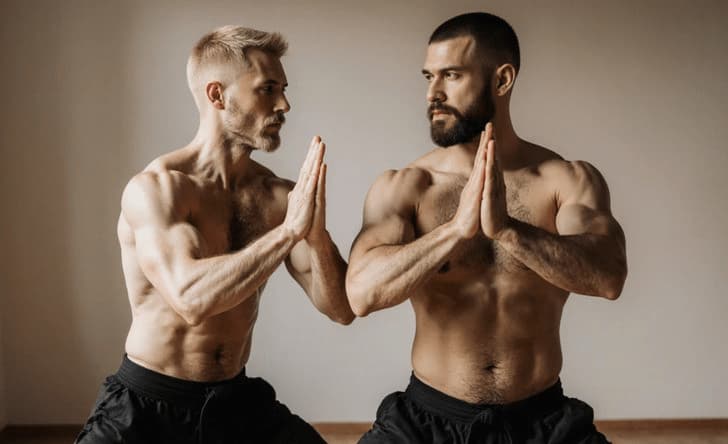
Mirrors in the locker room feel like a jury of your peers. You compare your chest to the man standing at the next bench. Every calorie feels like a setback in a race you can never win. Anxiety grows in the gap between your reflection and the filter. Muscles become armor to protect a soft and frightened inner self.
Social media feeds display a parade of bodies that look like marble. You feel a pang of shame when you skip a single workout. Hunger becomes a companion in the quest for a lower body fat. Your worth seems tied to the visibility of your abdominal muscles. Peace of mind is traded for a number on a bathroom scale.
Workouts feel like a chore rather than a way to stay healthy. You push through pain because you fear falling behind the curve. Exhaustion is a badge of honor in a culture that never rests. Your body is a project that never reaches a finished state. Calm only arrives when the gym doors close for the night.
Unfollow accounts that make you feel bad about your own appearance. Removing the constant flow of comparison reduces the trigger for body anxiety.
Eat when you are hungry and listen to your body signals. Honoring your physical needs restores the trust between your mind and your body.
Try a form of movement that has nothing to do with aesthetics. Activities like hiking or swimming for pleasure shift the focus away from physical looks.

Hi, I'm Yoko. Your mystique friend.
What's Hagriella-Yoko Saying?
Stop drinking and start eating more, I would say. Alcohol isn't good for your brain in the long run. Eat lots of baked or grilled food.
Do I have a recommendation? Well, anything with the word "yaki" is tasty. Yakitori, grilled chicken. Dorayaki, sweet pancake sandwich, Okonomiyaki and Takoyaki... Google them, darling. Make them, and eat!
Social Comparison in Urban Settings
City life puts success on display in every window and street. You see others with better jobs and more expensive clothes daily. Anxiety rises when you feel like you are falling behind your peers. Every night out is a chance to measure your life against others. Your apartment feels too small while your dreams feel too distant.
Success stories on your phone screen create a sense of urgent panic. You wonder why your life does not look like a professional video. Jealousy poisons the time you spend with friends at the weekend. Comparison is a thief that steals the satisfaction from your own wins. Your brain ignores your progress to focus on the lead of others.
Status becomes a heavy burden that you carry through the subway. You worry about the brand of your watch or the location of your home. Pressure to keep up with the crowd drains your emotional bank. Life feels like a competition where the rules are hidden from you. Calm stays elusive in a world that always wants more from you.
Practice gratitude for one small thing you own or achieved today. Focus on what you have reduces the sting of seeing what others possess.
Remind yourself that every person hides an ordeal behind their public face. Realization that perfection is a lie helps to level the social playing field.
Spend time with people who value you for your character alone. Friendships based on personality create a safe harbor from the storm of comparison.

Social Comparison
Rejection Sensitivity and Past Echoes
Old wounds from school days still throb in your adult life. You hear the echoes of names you were called in the hallway. Anxiety flares when a group of men stares in your direction. A simple "no" feels like a total rejection of your humanity. Your brain interprets current silence as a sign of past trauma.
Fear of being cast out keeps you in a state of alert. You scan for signs of disapproval in every facial expression you see. Small disagreements feel like the end of a long-term friendship. You apologize for things that are not even your fault. Shame is a heavy coat that you wear in the summer sun.
Healing involves looking at the past without letting it lead. You are not that scared teenager in the locker room anymore. Current friends are not the bullies from your hometown or school. Your value stays constant regardless of what a stranger thinks today. Peace comes when you separate the "then" from the "now".
Affirm your worth with a simple sentence when you feel rejected. Positive words act as a buffer against the pain of a social snub.
Recall a time when you were accepted and loved by someone. Memories of warmth help to counter the cold feeling of recent social friction.
Breath deep and remind yourself that you are safe in this moment. Grounding in the present breaks the connection to the painful memories of the past.

Law of Attraction Planner
- Aims to enhance mental, physical, and social aspects using the law of attraction
- Contains 248 pages with weekly and monthly overviews, journaling, and habit tracking
- Provides tools like mind maps and vision boards for setting and achieving goals
- Offers an 8-step system to reduce stress and procrastination.
We earn a commission if you click this link and make a purchase at no additional cost to you.
Boundary Setting and People Pleasing
A word like "yes" when you want to say "no" creates resentment. You take on extra work to avoid a conflict with a peer. Anxiety grows as your schedule fills up with tasks you hate. Fear of disappointing others keeps you stuck in a cycle of service. Your own needs stay at the bottom of a very long list.
Boundaries feel like a wall that might push people away forever. You worry that people only like you for the favors you do. Exhaustion follows every weekend spent doing things for everyone else but you. Your voice stays quiet when someone crosses a line in public. Power flows away from you when you refuse to stand your ground.
Respect for yourself starts with the word "no" and a firm look. You do not owe your time to every person who asks. True friends will understand when you need to rest or stay home. Anxiety drops when you take back control of your own limited time. Freedom is the result of a boundary that is clearly defined.
Pause for ten seconds before you agree to a new request. Taking a moment to think prevents a knee-jerk reaction based on the fear of conflict.
Practice saying no in front of a mirror to build confidence. The sound of your own voice speaking a boundary makes it easier to do in real life.
Turn off your phone when you need time for yourself alone. Digital boundaries protect your mental space from the demands of the outside world.

Alcohol as a False Sanctuary
A drink at the bar offers a quick escape from social nerves. You feel a rush of confidence after the first glass of wine. Anxiety retreats for an hour or two behind a hazy veil. Loud music and dim lights make the liquid courage feel real. Your brain stops worrying about the judgment of the handsome stranger.
Morning brings a return of the worry with a sharp headache. Hang-anxiety is a physical state that makes every fear feel much worse. You wonder what you said or did while you were drunk. Shame follows the temporary high of the night before like a shadow. Alcohol only hides the problem instead of fixing the root cause.
Dependence on a substance for social ease creates a new trap. You forget how to talk to men without a drink in hand. Real connections stay out of reach when the room is spinning. Anxiety becomes a monster that only a bottle can put to sleep. Clarity is the only path to a life that feels authentic.
Try a night out without any alcohol to test your limits. Sobriety allows you to see that you are capable of social life on your own.
Order a club soda with lime to keep your hands busy. Holding a glass reduces the social pressure to accept a real cocktail.
Leave the party when you feel the urge to drink for comfort. Recognition of your triggers allows you to protect your long-term mental health.
Developing a Grounded Routine
Structure provides a safety net for a mind that tends to wander. You know what to expect when you follow a set morning plan. Anxiety thrives in chaos and the lack of a clear path. Predictable habits signal to the brain that the world is stable. Your day starts with a sense of calm and a firm purpose.
Morning light helps to regulate the chemicals that control your mood levels. You feel the sun on your face and the air in your lungs. Exercise burns off the nervous energy before it can turn into panic. Healthy habits build a wall against the stress of the urban life. Your body responds to the care you give it every single day.
Evening rituals prepare the mind for a deep and restful sleep at night. You dim the lights and put away the stressful digital devices. Calm music or a book provides a gentle transition to the dream world. Routine is a gift you give to your future self every morning. Peace becomes a habit when you practice it with every single breath.
Wake up at the same time every day to steady your clock. Regularity helps the brain manage the hormones that trigger stress and worry.
Drink a large glass of water as soon as you get out of bed. Hydration jumpstarts your system and clears the fog of a long night.
A start to the day with your own thoughts prevents the external world from setting the tone. Spend ten minutes in silence before you check your email or phone.

Psycho-Cybernetics (Updated and Expanded)
by Maxwell Maltz (Author), Matt Furey (Introduction)
We earn a commission if you click this link and make a purchase at no additional cost to you.
Social Media and the Comparison Trap
A scroll through the feed becomes a reflex that fills every quiet moment. You see the highlights of lives that look perfect and polished. Anxiety builds as you compare your messy reality to a digital lie. Every like or comment feels like a score in a game. Your thumb moves without thought as you hunt for a quick hit.
Filters hide the flaws that make a person real and human. You see a sea of perfect skin and expensive vacations on screen. Shame grows when your life feels ordinary or slow by comparison. Digital spaces often lack the empathy required for a healthy mind. Your worth feels tied to the number of people watching your story.
Disconnecting is a radical act in a world that demands your attention. You find that the real world has a different pace and feel. Anxiety drops when the noise of a thousand strangers finally stops. Real life happens in the quiet moments between the posts and the tags. Focus returns to the things that actually matter in your own world.
Set a timer for your social media apps to limit the drain. Time limits act as a guardrail for your mental energy during a busy day.
Follow accounts that share knowledge or humor instead of just beauty. Viewing content that adds value reduces the urge to compare your body.
Post only when you feel a genuine desire to share something real. Authentic sharing breaks the cycle of performative posting for the sake of validation.
The Fear of Missing Out (FOMO)
Weekends feel like a race to be at the right place. You worry that everyone else is having a better time than you. Anxiety spikes when you see a group of friends at a party. A quiet night at home feels like a personal failure or loss. Your mind creates a fantasy of the fun you are missing elsewhere.
Pressure to be seen at the latest event weighs on your mind. You spend money you do not have to fit in with the crowd. Exhaustion follows a night of chasing a feeling that never quite arrives. FOMO is a ghost that haunts the corners of your quiet living room. You forget that rest is a productive and necessary part of life.
The joy of missing out is the cure for the social panic. You choose the comfort of your own space over the noise of a club. Peace is found in the absence of a need to be everywhere. Your value is not determined by the number of events you attend. Contentment arrives when you realize that you are enough right where you are.
Removal of the constant stream of invites allows your mind to settle. Turn off notifications for event groups during your quiet time at home.
Investment in your own happiness reduces the power of the outside world. Plan a solo activity that you truly enjoy for a Friday night.
Realization that a photo is a single second of a long night kills the envy. Remind yourself that most events are not as fun as the photos look.

Urban Isolation and the Search for Connection
Living in a city of millions can feel like being on a desert island. You walk past thousands of people without saying a single word. Anxiety grows in the silence of an apartment where the walls feel thin. Social isolation is a heavy weight that many men carry in secret. Your brain interprets the lack of contact as a sign of being unloved.
Groups often feel like a closed circle that you cannot enter alone. You watch others talk and laugh while you stay on the outside. Fear of being awkward prevents you from making the first move to speak. Every interaction feels like a test that you are afraid to fail. Meaningful connection stays out of reach while you wait for someone else.
Building a social circle requires a series of small and brave steps. You must find the spaces where people value character over status. Vulnerability is the price of admission for a real and deep friendship. Anxiety drops when you realize that others are just as nervous as you. Peace is found in the company of men who accept you as you are.
Join a local hobby group that focuses on a manual activity. Working with your hands reduces the pressure to maintain constant eye contact and talk.
Visit the same coffee shop every morning to build a sense of place. Familiar faces create a feeling of belonging that counters the chill of urban isolation.
Volunteer for a cause that matters to your heart and mind. Helping others shifts the focus away from your own internal worries and panic.
Mental Exhaustion and the Burnout Loop
Fatigue makes every small task feel like a massive mountain to climb. You struggle to focus on your work while your mind is elsewhere. Anxiety is a constant drain on the energy you need for a happy life. Your body signals a need for rest that you choose to ignore. Burnout is the result of a mind that never gets a break.
Recovery requires a total reset of your expectations and your daily habits. You must learn to value your own peace over the demands of the world. Logic tells you to keep going but your heart wants to stop. Your worth is not tied to how much you can produce in a day. Balance is an objective that stays out of reach without a firm plan.
Action like this helps to restore the energy that anxiety has stolen from you. You will find that rest is not a waste of your time. Silence is a sanctuary for a brain that is tired of the noise. Every day offers a new chance to slow down and breathe deep. Peace is the reward for a life that honors the limits of the soul.
Schedule a "nothing day" where you have no tasks or plans. Removing the pressure of performance allows your nervous system to fully recover and rest.
Spend time in a park or a garden to connect with nature. Natural surroundings have a calming effect on the human brain and the heart rate.
Limit your professional emails to set hours during the work week. Professional boundaries prevent the stress of the office from invading your private home life.
Overcoming Anxiety For Dummies
Progress follows a path that is rarely a straight line for anyone. You will have days where the clouds return and the chest feels tight. Anxiety is a signal that your body needs a bit of extra care. Focus on the small wins that happen in the quiet parts of the day. Resilience grows every time you choose to stay present instead of running.
Support comes from the men who see you for your true self. You are not alone in the struggle against the noise of the city. Silence the inner critic with the same kindness you show a close friend. Every step away from panic is a victory for your future peace of mind. Calm is a skill that you will practice with every beat of your heart.
Life beyond the grip of worry is wide and full of light. You possess the strength to define your own reality and your own worth. Fear loses its power when you look at it with a steady and calm gaze. Tomorrow brings a new chance to breathe deep and stand tall in the world. Peace is not a destination but a state of being that you carry inside.