

Life on the margins hits entirely differently when your pockets are completely empty and your partner happens to be a man. Society frequently pretends that total equality has arrived because a few wealthy gay celebrities get married on television shows. Real life on the street tells an entirely different story every single day to those who lack financial security. Survival in this environment requires dealing with a massive legal apparatus that views poverty as a personal moral failure. Wealthy people easily purchase their way out of serious trouble while you are left to face the harsh music alone.
Systems of criminal law look perfectly clean on paper but function like heavy industrial grinders for anyone without a massive savings account. Prosecutors look at a broke gay defendant and see an incredibly easy conviction to boost their personal career advancement statistics. Public perception follows the exact same cruel script written by decades of deep-seated cultural animosity and class-based stigma. Stereotypes about your lifestyle mix with assumptions about your bank account to create an inescapable trap that suffocates your future. Escape becomes nearly impossible when the surrounding world decides your guilt long before anyone even bothers to check the actual facts.
Legal battles require massive amounts of money that you simply do not possess in your wallet at this current moment in time. Media outlets absolutely love sensational headlines that exploit your identity for cheap clicks and increased advertising revenue. Judges and juries harbor hidden beliefs that work against your favor from the very first minute you walk into the courtroom. Examination of the structural issues helps expose how the legal machinery operates against vulnerable men who live in poverty. Direct focus on overlapping biases reveals the heavy human cost of a system that punishes people for who they love and what they earn.
The Surveillance of Economically Depressed Neighborhoods
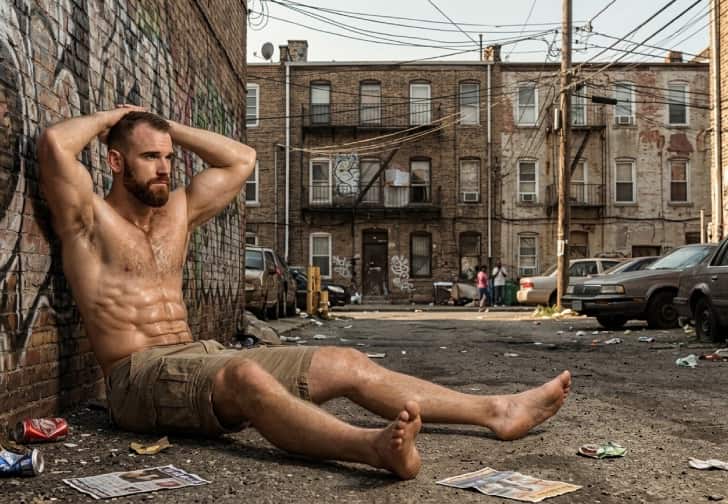
Neighborhoods with cheap rent and affordable housing options always attract an incredibly heavy police presence every single hour of the day and night. Officers patrol these particular blocks with intense scrutiny because they look for easy targets to fill their mandatory monthly arrest quotas. Late-night walks home from a low-wage shift put a massive target on your back if your clothing looks inexpensive or worn out. Law enforcement personnel make immediate assumptions about your actions and intentions based entirely on your zip code and your outward appearance. Poverty forces you into geographic spaces where legal scrutiny remains constant, aggressive, unforgiving, and deeply invasive for anyone trying to survive.
Survival in low-income areas requires a heavy reliance on public spaces like street corners and local parks for basic social interaction. Bars and clubs in wealthy entertainment districts cost far too much money for your extremely limited monthly survival budget. Parks and public plazas become the primary locations where you meet peers, find companionship, and escape the isolation of crowded apartments. Law enforcement authorities view these public gathering spots as hotbeds for illegal activity rather than normal places for human socialization. Aggressive policing strategies ensure that broke gay men face constant monitoring while wealthy residents enjoy absolute privacy inside their luxury homes.
Economic hardship severely limits your ability to secure safe housing away from hostile neighbors who hold deep-seated homophobic views. Landlords regularly exploit low-income tenants because they know you lack the financial resources to fight back in a housing court. Verbal abuse from neighbors turns into a constant physical threat when you share thin walls in neglected apartment buildings. Local police departments frequently ignore emergency complaints coming from gay residents who live in marginalized, underfunded neighborhoods. Safety becomes an unobtainable luxury that your bank account simply fails to secure no matter how hard you work every week.
Your choice of residence increases the statistical likelihood of experiencing random police stops during your ordinary daily commute. Officers question your presence on the sidewalk simply because your outfit looks inexpensive or matches their biased profile of a street solicitor.
Landlords completely ignore your urgent maintenance requests because they know you lack the funds to hire a private tenant lawyer. Disagreements with hostile neighbors over your visible sexuality often result in immediate retaliatory threats of eviction against you instead of the perpetrators.
Public transit stations turn into dangerous zones where law enforcement officials closely monitor your casual conversations with other gay men. Police officers use vague loitering ordinances to justify aggressive searches of your pockets without any actual probable cause or legal justification.
The Public Defender Assembly Line
Private defense attorneys charge astronomical hourly fees that stretch far beyond your realistic financial reach during a legal emergency. Court systems assign overworked public defenders to handle your case the moment your personal funds run completely dry. Caseloads for these public attorneys routinely exceed the reasonable limits established by national legal ethics organizations. Your assigned lawyer often has only a few fleeting minutes to look at your paperwork before your major court hearing begins. High-quality representation completely disappears when your legal counsel juggles over one hundred other active clients at the exact same time.
Homophobic attitudes sometimes surface within the very public defender offices that are taxpayer-funded to protect your constitutional rights. Overworked attorneys rely on quick stereotypes to evaluate your character during brief meetings in crowded court hallways. Your advocate often advises you to take a quick guilty plea because they lack the time required to build a real defense. Thorough trial preparation requires hours of independent investigation that underfunded public offices rarely supply for impoverished clients. Legal justice depends entirely on the size of your bank account rather than the actual truth of the criminal accusation.
Systemic neglect ensures that your personal side of the story remains completely unheard by the prosecutor or the judge. Public defenders often urge you to suppress your sexuality entirely to avoid offending conservative judges who hold traditional views. Strategy discussions focus almost exclusively on state compliance rather than fighting aggressively for your total exoneration from the charges. Prosecutors exploit this obvious lack of preparation to force highly unfavorable plea deals onto you before a trial is able to happen. Legal defense becomes a cold assembly-line process that treats your human life like a piece of commercial cargo.
Your defense attorney explicitly asks you to tone down your natural mannerisms before walking into the courtroom. Counsel fears that the presiding judge will issue a much harsher sentence if your gay identity is obvious during the proceedings.
Investigative resources are completely withheld from your case file because the public defender office lacks adequate operational funding. Alibi witnesses who possess the ability to clear your name never receive a single phone call from your legal representative.
Plea deals get aggressively pushed on you during your very first five minutes of face-to-face legal consultation. Your lawyer insists that fighting the state charges will inevitably lead to the maximum possible prison sentence from a hostile jury.
The Cash Bail Trap and Pretrial Detainment
Cash bail requirements transform local county jails into literal warehouses for the most impoverished segments of the population. Wealthy defendants easily pay the required fee and return to their comfortable homes to prepare for their day in court. Your bank account holds nowhere near the financial amount demanded by the magistrate during your initial arraignment hearing. Forced confinement in a crowded jail cell instantly destroys your ability to maintain a low-wage hourly job. Unpaid debt piles up rapidly while you wait weeks or months for a basic evidentiary hearing regarding your charges.
Jail environments present immense physical and psychological dangers for a broke gay man stuck behind bars without resources. Guards frequently look the other way when other aggressive inmates discover your sexual orientation through gossip or records. Violence becomes a constant daily threat that you face without any real protection from the facility security staff. Isolation cells are regularly used by administrators as a lazy substitute for genuine safety measures within the housing units. Punishment begins long before a jury of your peers ever hears a single piece of evidence against you.
Bail bondsmen routinely refuse to assist clients who lack substantial collateral like real estate holdings or luxury vehicles. Co-signers stay far away because your immediate social circle lacks the financial assets necessary to guarantee a large bond. Your biological family sometimes refuses to offer help because they completely reject your life choices and sexual identity. Extended pretrial incarceration pressures you to accept any plea deal just to escape the horrific conditions of the facility. Freedom possesses a steep price tag that remains entirely out of reach for members of your socioeconomic class.
Your employment terminates automatically after you miss multiple consecutive shifts while locked inside a pretrial facility. Managers replace you immediately with a new applicant without caring about your presumption of innocence or your current legal predicament.
Cell assignments put you in direct physical contact with hostile inmates who openly threaten your personal safety. Jailers ignore your repeated written requests for a housing transfer unless a serious physical altercation actually takes place.
Family members refuse to post their personal assets for your bail because they disapprove of your same-sex relationships. Support networks vanish completely when you require immediate financial assistance to secure your release from jail.

Courtroom Presentation and Aesthetic Prejudice
Visual appearance dictates how legal authorities judge your honesty from the exact second you step forward in court. Wardrobe options for a formal trial require substantial amounts of money that your budget fails to supply. Inexpensive, wrinkled, or ill-fitting outfits signal poverty to every single person sitting in the room. Jurors frequently connect low-income clothing styles with a fundamental lack of respect for the judicial institution itself. Prejudiced eyes view your natural presentation through a distorted lens of suspicion, cultural disdain, and class-based bias.
Speech patterns also trigger immediate negative reactions from conservative legal authorities who control your fate. Vocal inflections traditionally associated with gay culture often invite subtle ridicule or overt hostility from the judicial bench. Judges expect a specific type of middle-class linguistic decorum that you never learned while growing up on the streets. Your vocabulary choices face harsh judgment from authorities who value formal elite education over practical survival intelligence. Misunderstandings multiply rapidly when your natural way of speaking gets twisted by the prosecution into supposed evidence of disrespect.
Presentation advice from your defense lawyer usually involves hiding your true self completely from the view of the jury. Legal strategies often demand that you suppress your natural hand gestures to appear more traditional and masculine. Corporate attire creates a false front that you fail to afford easily without going into deep financial debt. Efforts to mimic someone else drain your limited emotional energy during an already terrifying and stressful legal experience. Sincerity becomes a dangerous liability when the judicial system rewards strict conformity and punishes cultural difference.
Your second-hand suit draws highly negative attention from the prosecutor during aggressive cross-examination procedures. Legal teams use your worn appearance to paint a subtle picture of personal instability and chaos to the jury.
Judges interrupt your testimony because your natural vocal tone matches common stereotypes about gay men. Court officials treat your communication style as an indication of dishonesty rather than a normal expression of your personality.
Defense lawyers insist that you cut your hair and alter your walk to appear more conventional to the public.Total submission to these styling demands strips away your personal identity before the actual trial even begins.
Media Sensationalism and the Construction of Guilt
Local news outlets rely heavily on cheap sensationalism to capture public attention for corporate advertising revenue. Mugshots of broke defendants are plastered across television screens and website banners without any helpful context or nuance. Reporters utilize ancient tropes that automatically connect homosexuality with criminal deviance, instability, and public danger. Your poverty allows media companies to frame you as a desperate, unhinged menace to the surrounding society. Public opinion hardens against your character long before a single witness ever takes the stand to testify.
Journalism frequently ignores the perspective of criminal suspects who lack expensive public relations teams to manage the narrative. Wealthy defendants hire high-priced crisis managers to protect their reputation during highly publicized legal battles. Your life story gets shaped entirely by police department press releases and biased neighborhood gossip columns. Sensational headlines paint your daily lifestyle as sordid, chaotic, and dangerous to shock conservative middle-class viewers. True objectivity completely vanishes when media platforms chase high ratings at the direct expense of vulnerable citizens.
Social media amplification drastically worsens the damage inflicted by traditional television news broadcasts and print articles. Online commentators repeat hateful homophobic slurs under digital articles detailing your pending legal situation without any moderation. Neighborhood watch groups share your booking photograph alongside urgent warnings about safety in the local residential area. Absolute vindication in a court of law later fails to remove the permanent digital stain from search engines. Employment opportunities disappear forever because a simple name search by recruiters reveals old, biased, uncorrected reporting.
News anchors highlight your sexual orientation to make the criminal allegations sound far more scandalous to the public. Broadcasts focus heavily on your personal relationships instead of discussing the actual lack of physical evidence in the case.
Comment sections on local news websites fill with extreme vitriol directed at your lifestyle and income level.Moderation tools completely fail to filter out the aggressive homophobia aimed at your character by anonymous internet users.
Search engine results display your initial arrest record decades after the court dismisses all charges against you. Future employers reject your job applications based entirely on biased internet articles that you lack the funds to legally remove.

Jury Room Deliberations and Double Bias
Selection processes for criminal juries rarely eliminate deep-seated cultural prejudices from the final panel of citizens. Regular people bring their personal biases regarding class status and sexual orientation directly into the secret deliberation room. Broke gay men face a double layer of intense animosity from average working-class and middle-class jurors. People often assume that financial poverty correlates directly with personal dishonesty, desperation, and low moral standards. Combine that widespread view with institutional homophobia, and your chances for receiving a fair trial drop drastically.
Deliberations frequently involve lengthy discussions that have absolutely nothing to do with the actual legal evidence presented. Jurors scrutinize your non-traditional lifestyle choices instead of focusing strictly on the prosecution's heavy burden of proof. Biased jurors interpret your defensive courtroom body language as an undeniable sign of underlying criminal guilt. Misconceptions about same-sex relationships lead the panel to misunderstand your domestic living situation completely. Convictions occur because the panel intensely dislikes who you are rather than what the state proved you did.
Appeals based on hidden jury prejudice remain notoriously difficult to win in higher appellate court systems. Legal standards require ironclad, explicit proof of overt bias to overturn a finalized jury verdict. Conversations inside the deliberation room stay completely secret unless a panel member voluntarily chooses to speak out. Your entire future rests in the hands of twelve strangers who may deeply despise your very existence. Survival depends on overcoming a heavily stacked deck where the institutional dealers hold all the winning cards.
Jurors exchange negative looks and rolls of eyes when the defense attorney mentions your male partner.Panel members show immediate, obvious disinterest in testimonies delivered by your chosen family members during the trial.
Deliberation notes reveal that the panel discussed your lack of steady full-time employment at great length.People use your low financial status to argue that you are naturally prone to committing property crimes out of desperation.
Verdicts come back guilty simply because the jury wants to purge your neighborhood of perceived moral deviance. Justice takes a back seat to social cleansing when deep-seated prejudice guides the final decision-making process of the panel.
Targeted Policing and Vice Operations
Neighborhood profiling ensures that low-income gay men experience frequent, aggressive, and unwarranted law enforcement contact. Officers specifically target geographic zones known for cheap housing, alternative lifestyles, and marginalized nightlife venues. Simple walks down the sidewalk become an exercise in dodging constant, hostile police scrutiny and interrogation. Terry stops occur regularly based on vague suspect descriptions that could easily apply to almost anyone walking by. Police personnel use minor infractions like jaywalking to launch highly invasive field interrogations and searches against you.
Harassment often takes the specific form of verbal degradation during routine traffic stops on local roads. Officers use coded language to mock your physical demeanor without crossing explicit department administrative rules. Your total lack of financial resources means you fail to hire a lawyer to file formal misconduct complaints. Police departments routinely ignore complaints from citizens who lack political clout, social status, or money to make noise. Power dynamics heavily favor the badge every single time you encounter a police vehicle on the street.
Entrapment operations sometimes specifically target poor gay men in public restrooms, highway rest stops, or municipal parks. Undercover officers entice unsuspecting targets into casual conversation before suddenly flashing a gold law enforcement badge. Wealthy men easily avoid these operations because they frequent private clubs with tight security and restricted access. Your socioeconomic vulnerability makes you an attractive target for vice squads looking for easy, unresisting arrests. Successful defense against these aggressive tactics requires specialized legal knowledge that the system intentionally keeps from you.
Police officers detain you simply because you are standing near a gay establishment after midnight.Enforcement officials claim you match the description of a dangerous local suspect without presenting any details.
Patrol cars follow your vehicle for multiple blocks waiting for a microscopic signaling error. Officers search your personal glove compartment without ever obtaining your explicit verbal or written consent first.
Vice operations trap you by utilizing plainclothes officers who initiate highly flirtatious dialogue. Undercover agents arrest you for unlawful solicitation the exact second you mention a private hotel room.

Protective Custody and Institutional Torture
Processing centers and county jails are notoriously dangerous environments for openly gay inmates without financial resources. General population units feature intense inmate hierarchies and rampant, unchecked homophobia among the resident population. Corrections staff frequently suggest solitary confinement as the only available way to keep you physically safe. Acceptance of protective custody looks like a voluntary choice but feels like a severe, cruel punishment. Your daily life shrinks to a windowless concrete box for twenty-three hours every single day.
Mental stability deteriorates with extreme rapidity when you live in complete, uninterrupted sensory isolation. Lack of normal human contact breeds deep, agonizing depression and severe panic attacks within days. You lose all access to the recreation yard, the facility library, and basic educational programs. Wealthy inmates completely avoid this horrific fate by paying bail or securing placement in safer facilities. Poverty locks you in a box where physical safety costs your sanity and your long-term emotional well-being.
Staff members treat protective custody inmates with open contempt, administrative neglect, and systemic hostility. Guards ignore your urgent medical requests because they view your identity as an annoying administrative hassle. Food trays arrive completely cold and your communication with the outside world remains heavily restricted by staff. Your defense attorney struggles to visit you due to strict isolation unit scheduling rules and long delays. Extended survival in the system becomes twice as hard when institutional protection looks exactly like psychological torture.
Jail staff place you in a solitary confinement cell under the official guise of keeping you safe. Wardens strip away your basic privileges because you require special housing arrangements due to your sexuality.
Phone access drops to one brief call per week while you remain trapped in isolation. Connections to your defense team suffer drastically due to these highly restrictive communication limits imposed by guards.
Medical staff completely skip your cell during daily rounds because you live in total lockdown. Access to basic healthcare requires a complicated formal grievance process that takes several months to resolve.
The Collateral Consequences of a Criminal Record
Arrest records create an immediate, insurmountable barrier to gaining stable future employment in the primary job market. Background checks flash bright red the exact moment a potential employer types your name into a database. Low-wage industries often maintain incredibly strict rules that automatically exclude anyone with a pending criminal charge. Loss of your job means you fail to pay rent or purchase groceries for your household. Financial ruin follows an arrest long before any formal courtroom ever determines your actual innocence or guilt.
Gay men already face pervasive workplace discrimination based entirely on personal presentation and perceived identity. A criminal record placed on top of existing homophobia makes future job hunting nearly impossible to succeed. Interviewers quickly dismiss your application without ever giving you a fair chance to explain the legal situation. You find yourself permanently trapped in a cycle of temporary day labor gigs that offer zero stability. Economic mobility disappears completely when society brands you as both a social deviant and a dangerous criminal.
Recovery from a lengthy legal battle requires substantial financial resources that poor men simply lack. Debts to public defenders, court clerks, and bail bondsmen linger for decades after the case officially ends. Expungement processes cost thousands of dollars in administrative court fees and private lawyer retainers. Your criminal record remains completely public because you lack the money for the steep price of clearing it. Permanent social stigma ensures that you stay trapped at the absolute bottom of the socioeconomic ladder.
Background screening systems reject your employment application automatically for entry-level retail positions. Managers refuse to interview you despite your excellent qualifications and years of practical experience.
Temporary staffing agencies drop you from their active rosters after an automated arrest notification arrives.Income streams dry up completely while you wait months for your formal trial date to arrive.
Legal fees drain your tiny personal savings account and leave you facing immediate eviction. Landlords refuse to extend payment deadlines when they discover your ongoing battles with the court system.

The Crushing Weight of Double Isolation
Mental health struggles intensify dramatically when you face active rejection from multiple cultural sides at once. Straight society rejects your presence because of your sexuality and your low-income financial status. Wealthy gay social circles isolate you because you fail to afford their expensive venues and clothing brands. Outcasts find very little comfort when every single social space requires a high financial buy-in price. Loneliness becomes a heavy, crushing weight that completely destroys your spirit during a prolonged legal crisis.
Anxiety builds up constantly as you anticipate the next hostile encounter with judgmental authority figures. Sleep disappears entirely because you worry about impending jail time and sudden financial ruin every single night. Depression deepens when you realize the formal legal system cares absolutely nothing about your basic human dignity. Therapy remains an out-of-reach luxury because your basic insurance fails to cover mental health treatment options. Survival requires a thick emotional skin that eventually turns into complete, despondent numbness over time.
Internalized shame grows rapidly when you hear constant negative messaging from local media broadcasts and prosecutors. You begin to believe the cruel, biased words spoken by state officials who want a conviction. Isolation keeps you from finding supportive peers who share your specific financial struggles and cultural background. Support systems completely fail to materialize when you hide your deep pain from the surrounding world. True healing requires structural resources that the current socioeconomic setup completely denies to impoverished gay men.
Panic attacks occur before every single scheduled appearance in front of the presiding judge. Your physical body reacts to the immense stress of a system that actively wants to lock you away.
Social withdrawal keeps you entirely isolated from friends who could deliver genuine emotional comfort. You avoid casual conversations because explaining your legal troubles brings intense embarrassment and shame.
Self-doubt undermines your personal ability to participate successfully in your own legal defense. You accept highly unfavorable plea deals because you feel completely unworthy of proper justice or respect.
The Erasure of Voice in the Legal Record
Court transcripts rarely capture the complex reality of living as a broke gay man in a hostile world. Court reporters write down the cold text while ignoring the mocking tones used by state prosecutors. Your testimony faces constant interruption from objections that corporate lawyers know how to use perfectly. Legal jargon acts like a foreign language designed to keep you completely confused during your own trial. Powerless defendants watch their life history get rewritten by state actors who hold all the institutional authority.
Linguistic bias plays a massive role in how the official record portrays your credibility to appellate judges. Dialects and slang from low-income urban neighborhoods get categorized as uneducated nonsense by court stenographers. Your inability to speak in polished, middle-class tones makes you look deceptive to an elite panel. Prosecutors use your natural vocabulary to paint you as an aggressive, uncooperative person on the witness stand. Truth gets buried beneath a mountain of stylistic expectations that favor privileged white-collar defendants over you.

Pretrial statements given to police officers under intense duress are weaponized against you later in court. Officers twist your words during hours of unrecorded interrogation to create a false confession on paper. You lack the legal sophistication to know when to remain completely silent during police questioning. Public defenders fail to file timely motions to suppress these tainted statements due to their massive caseloads. The official record becomes a fiction that seals your fate long before the jury deliberates.
Prosecution attorneys twist your casual slang into explicit admissions of criminal intent during cross-examination. Jurors accept these distorted interpretations because they lack familiarity with your neighborhood culture.
Court transcripts omit the hostile sighs and aggressive gestures directed at you by the judge. Appellate courts review only the clean printed text and find no official evidence of judicial misconduct.
Police summaries of your interrogation rewrite your statements to fit their predetermined theory of the crime. You sign the document because you feel physically exhausted and desperate to leave the interrogation room.
The Destruction of Chosen Family Support
Traditional legal systems recognize only biological relationships and state-sanctioned marriages during court proceedings. Your chosen family of close friends and romantic partners has zero legal standing in the eyes of the judge. Courtroom galleries remain empty because your working-class friends fail to afford taking unpaid time off work. Judges look at the empty benches behind you and assume you lack any neighborhood support or social roots. Isolation deepens when the state actively bars your partner from visiting you in the pretrial holding cells.
Biological relatives who hold deeply homophobic views are often contacted by the state instead of your chosen partners. Prosecutors invite estranged parents to testify about your bad character and non-traditional lifestyle choices. Your personal privacy gets completely destroyed as family secrets are aired out to shock conservative jurors. Distant relatives use your legal trouble to justify their past rejection of your sexual identity. You stand completely alone at the defense table while your actual support network gets pushed outside the courthouse doors.
Post-conviction visitation rules continue this cruel pattern of separating you from the people who care most. Prisons restrict visiting privileges to immediate biological family members and legal spouses only. Your long-term male partner faces total exclusion from the visitation list because you lack a marriage license. Letters become the only way to maintain contact, but prison mailrooms inspect and delay every single page. Loneliness turns into a secondary prison sentence that erodes your emotional links to the outside world.
Jail administrators deny your partner visitation rights because your relationship lacks official state recognition. Guards treat your romantic partner like a complete stranger rather than your primary source of emotional support.
Friends face immediate termination from their hourly jobs if they miss work to attend your trial. Empty gallery seats convince the jury that you are a completely isolated social outcast with no accountability.
State officials give your personal belongings to estranged biological parents who openly despise your sexuality. Your chosen partners receive nothing because they lack formal legal standing under current inheritance laws.
The Queer Tarot: An Inclusive Deck and Guidebook
Tarot deck and guidebook set for LGBTQ+, created by queer and trans artist team Ash + Chess.

We earn a commission if you click this link and make a purchase at no additional cost to you.
Ghetto Defendant: When Poverty, Prejudice, and Sexuality Collide
Overlapping biases of class and sexuality create an incredibly heavy burden for poor gay men within the legal apparatus. True justice remains an elusive mirage when the size of your wallet determines the quality of your freedom. Systemic reforms should address these hidden prejudices to ensure that everyone receives equal treatment under the law. Media outlets, police departments, and courtrooms all participate in a cycle that punishes poverty and difference. Human costs of this prejudice are measured in ruined lives, broken spirits, and empty futures for vulnerable citizens.
Survival requires awareness of how these structural traps operate against you every single day on the street. Change will only come when grassroots efforts expose the deep-seated flaws within the current judicial system. Wealthy segments of society are unable to ignore the plight of those who live on the margins. True equality fails to exist while the legal assembly line continues to grind up impoverished gay men. Your voice and your story remain necessary components in the ongoing fight for genuine human dignity.
Confrontation with this rigged system requires immense personal resilience and collective resistance from those on the bottom. You are an invaluable human being rather than a booking photograph, a cheap suit, or a negative stereotype. Truth will eventually outlive the biased narratives manufactured by prosecutors, media corporations, and prejudiced jurors. Keep your head held high as you walk through the harsh realities of a world that fails to appreciate your value. Solidarity among peers supplies the ultimate light during the darkest moments of your legal battle.
I love what you say, but Ghetto Defendant is a strong title. It feels like it represents so many people unfairly trapped by stereotypes and the legal system. Are you exploring a real case, or is this a metaphor?
Thanks for your comment Sammy, yes it is pretty much a metaphor.
Thank you for the inspiring post. It resonates with me. Growing up, I saw how quickly people were labeled, judged, and boxed in by society’s view of 'the ghetto.' People don’t understand the pressure that label creates. This post better dive deep.
Good to know, thanks for your comment.
This makes me think of how the justice system disproportionately affects people from lower-income neighborhoods. Society expects them to fail before they even have a chance. Being a 'defendant' often feels inevitable in these environments.
I don't understand your article. Why are people from certain areas automatically seen as criminals? 'Ghetto Defendant' says it all. It's like people get labeled based on where they come from, regardless of who they are. I hope this article breaks down those stereotypes and brings some perspective, because it’s a real issue that impacts lives.
I grew up in an area that would probably fit the 'ghetto' description, and seeing how people from there are treated in the legal system is heartbreaking. You're judged before you even open your mouth. This phrase—'Ghetto Defendant'—reflects so many unspoken realities about prejudice and assumption, and it feels more relevant than ever.
Sound interesting Marshall, thanks for sharing.
Thank you for the great post. This title alone stirs up a lot of thoughts. It seems like you’re diving into the relationship between poverty, the legal system, and how society labels people. Is it based on real cases or a broader discussion on social justice? Either way, it’s a topic we need to address more openly.
Thanks for your comment.