

Hello there friend. We are hanging out today to discuss some of the most bizarre things on the planet. Most folks talk about the weather or their lunch, but we should skip all that boring stuff. Life feels much better when we focus on the weird gears of the universe instead of the usual chatter. You look like the kind of person who likes a good deep talk about stuff that nobody else notices. It is quite a treat to find a mind that seeks out the strange bits of logic hidden in plain sight. We shall look at things that most people never think about in their entire lives. Every single bit of our chat today remains fresh and full of ideas that stay far away from the mundane paths of normal thought. Stay close as we look at the way the world really functions beneath the surface of the obvious.
Mechanical Precision in Sub-Zero Clocks
Metal atoms shift their positions when the temperature drops below a particular point in the deep frozen north. Most clocks fail because the oil inside becomes thick like sludge in the cold air. Specialized springs made of niobium alloys maintain their shape despite the freezing environment. Every tiny gear must remain perfectly dry to avoid the formation of ice crystals between the teeth. Clockmakers use dry lubricants that function like microscopic ball bearings to keep things moving.
Precision becomes a strange game when the thermal expansion coefficients of different metals begin to fight each other. A pendulum made of brass will shrink more than a rod made of steel during a winter storm. You see the hands of the clock slow down simply because the physical world is pulling itself closer together. Advanced horologists use invar - a nickel-iron alloy - to prevent such errors from ruining the timekeeping. Such materials resist the urge to change size even when the mercury disappears into the bottom of the glass.
Timekeeping in a vacuum adds another layer of complexity to the way we track the rotation of our planet. Without air to carry away the heat from friction, mechanical parts will eventually melt themselves together. Tiny heat sinks must draw the energy away from the escapement to prevent a total meltdown of the gears. You would notice a strange smell of burnt metal if the thermal dissipation system failed inside a sealed unit. Gravity also plays a role in how the weight of the pendulum interacts with the internal friction of the casing.
You should use synthetic rubies to minimize the friction between the moving parts in a cold environment.
Select a mainspring with a high fatigue limit to ensure the metal does not snap under extreme thermal stress.
You will find that a hermetically sealed case prevents moisture from turning into ice inside the delicate mechanism.

You can, you should, and if you're brave enough to start, you will.

You are smarter and braver than you think. Strong enough to go your own way. Believe in yourself.
Your thoughts, feelings, the way you laugh, the things you enjoy doing, the way you talk, and the way you interact with others are all parts of what makes you, you. It's like a puzzle, and all those parts fit together to make a picture that's only of you.
Sometimes, you might feel like you should be more like other people. Maybe you see someone who is really good at sports, or someone who does well in school, and you wish you could be like them. But trying to be exactly like someone else is like trying to turn a green crayon into a blue one. You can't do it because the green crayon is meant to be green, just like you are meant to be you.
Atmospheric Electricity in Dust Storms
Static charges build up to massive levels when billions of sand grains rub together in a desert wind. Every single particle acts like a tiny battery that carries a small negative or positive charge across the dunes. Such a phenomenon creates a glow known as St. Elmo's Fire on the tips of tall structures. You will hear a low hum in the air just before the lightning strikes the ground. Scientists call this a triboelectric effect because it involves the transfer of electrons through physical contact.
Radio signals often disappear or become garbled when a dust cloud moves over a transmission tower. The high concentration of ions in the air absorbs the waves and turns them into heat. You would find it nearly impossible to use a standard walkie-talkie during a major Sahara storm. Even the largest antennas suffer from a buildup of corona discharge that ruins the clarity of the broadcast. Grounding the equipment becomes a high-priority task to avoid permanent damage to the sensitive electronics.
Lightning in a dust storm looks different from the bolts that come out of a rainy thunderstorm. These flashes appear as purple or red webs that crawl across the sky rather than striking the earth directly. Scientists study these patterns to learn how electricity moves through a dry medium without the help of water droplets. You can observe the way the sand particles align themselves with the electric field lines in real-time. Such a sight resembles the way iron filings react to a magnet on a piece of paper.
You must ground your electrical equipment with a copper rod driven deep into the moist earth layers.
Use a Faraday cage to protect your delicate sensors from the massive static discharges in the atmosphere.
You will notice that wearing rubber-soled shoes helps prevent the accumulation of static charge on your own body.

Think positive & be happy. You gotta make the most of this beautiful life.

The best place to find a helping hand is at the end of your own arm.
The Logic of Binary Stars
Orbits in a two-star system follow a path that looks more like a chaotic squiggle than a simple circle. Gravitational pulls from both suns tug on any planet that tries to find a home in the middle. You would see two sunsets every night if you lived on a world tucked between these massive fireballs. Such an environment creates a climate that swings wildly from scorching heat to bitter cold in a matter of days. Stable orbits only exist very far away from the center or very close to one of the stars.
Mass transfer occurs when one star begins to eat the outer layers of its nearby neighbor. A stream of hot gas flows through the vacuum of space like a river of fire between the two bodies. You can watch the smaller star grow brighter as it gains more fuel from the dying giant. This process eventually leads to a supernova if the white dwarf gains too much weight too quickly. Astronomers use X-ray telescopes to find these invisible rivers of plasma flowing across the dark void.
Tidal forces between binary pairs are strong enough to stretch the stars into the shape of a football. Every time they pass each other, the crust of the star ripples like the surface of a pond. You would feel the gravity shift if you were floating in a ship nearby during a close approach. Such a massive amount of energy gets turned into heat through the internal friction of the gaseous layers. Eventually, the two stars will spiral inward until they merge into a single massive explosion.
You should look for planets in the habitable zone of the smaller star to find stable liquid water.
Calculate the Roche lobe of each star to determine if mass transfer will occur during their orbits.
You will need a telescope with a high angular resolution to separate the two points of light in the sky.
Subterranean Fungal Networks
Fungi grow beneath the forest floor in a massive web that connects every single tree in the woods. These threads carry chemical signals that tell the plants when a bug is attacking a nearby neighbor. You might think of the forest as a group of individuals, but it functions like a single organism. Every root is plugged into the network to swap minerals for sugars produced by the leaves. Such a system allows a tall tree to help a small sapling that lives in the dark shade.
Chemical messengers travel through the mycelium to warn the entire group about a coming drought or frost. If one plant finds a pocket of water, it sends the news through the underground filaments. You can track the movement of these signals by looking at the electrical pulses in the soil. These pulses look very similar to the way neurons fire inside a human brain. Nature uses this method to ensure the survival of the whole patch of woods during a hard year.
Mushrooms are only the tiny fruit of a much larger structure that lives hidden in the dirt. Most of the biomass exists as a fine white mist that wraps around every grain of sand and pebble. You would find miles of these threads in just a single handful of healthy garden soil. They break down rocks and old wood to turn them into food for the rest of the world. Without these hidden workers, the surface of the planet would be a graveyard of old trees and dead leaves.
You should avoid tilling the soil to keep the delicate mycelial web from being torn apart by the blade.
Add organic mulch to the surface to give the underground fungi the food they need to grow strong.
You will find that native plants grow much faster when they are connected to a local fungal network.

Stop looking out for others and focus on the step in front of you.

Silence isn't empty. It's full of answers. Stop talking shit and start doing shit.
Photonic Computing Mechanics
Computers usually rely on electrons moving through copper wires to process the data we give them. Photonic systems use light instead of electricity to move information at the speed of a laser beam. You see the future of tech when you look at a chip that uses tiny mirrors to flip bits. Such a design generates almost zero heat because the photons do not rub against the atoms of the wire. This allows a processor to run thousands of times faster than the one inside your current laptop.
Optical switches act like the gates in a dam that control the flow of light through a circuit. These devices use crystals that change their transparency when a small voltage is applied to them. You can send millions of different colors of light through a single fiber to carry massive amounts of data. Every color represents a different stream of information that stays separate from the others. Such a trick is called multiplexing and it is how the internet travels across the bottom of the ocean.
Silicon photonics allows us to build these light-based circuits directly onto a standard computer chip. This marriage of old and new tech makes it easier to upgrade the hardware we already have. You will notice that your downloads become nearly instant once the light reaches your home router. Even the most complex math problems get solved in a fraction of a second by these optical brains. Engineers are working on ways to store the light in tiny loops to act as a form of memory.
You should use gold-plated connectors to ensure the light signal does not lose its strength at the junctions.
Keep the fiber optic cables straight to prevent the light from leaking out at the sharp corners of the wire.
You will see a huge jump in performance if you switch to a motherboard with an integrated optical bus.

No one. Literally no one. Absolutely no one is like you.

Never sacrifice who you are for anyone.
Magnetoreception in Migratory Creatures
Birds possess a tiny compass inside their eyes that allows them to see the magnetic field of the earth. A protein called cryptochrome reacts to the blue light in the sky and creates a visual map of the poles. You would see a dark smudge in your vision that shows you exactly which way is north. Such a sense stays active even when the sun is hidden behind a thick layer of clouds. This helps them fly for thousands of miles without ever getting lost over the open sea.
Bees use magnetic sensors in their abdomens to find their way back to the hive after a long day. These sensors consist of tiny crystals of magnetite that wiggle when the insect moves through a field. You can watch them hover in a particular direction to orient themselves before they start their flight. Every flower they visit has its own tiny electric charge that the bee can feel with its hairs. Nature gave them a full set of navigation instruments that work better than any human GPS device.
Sea turtles swim across the entire ocean to find the exact beach where they were born decades ago. They memorize the magnetic signature of the sand and the water to find their way home. You would find it impossible to find a single spot on a coast without a map or a compass. These reptiles use the dip angle of the magnetic field to know their latitude at any given moment. Such a skill ensures that the next generation of turtles has a safe place to start their lives.
- You should avoid using strong magnets near a beehive to keep the insects from becoming confused and lost.
- Look for magnetite crystals in the tissues of migratory animals to locate their internal compass systems.
- You will find that many animals change their behavior during a solar storm because of the magnetic interference.
It's good to be inspired by others and to learn from them. But you don't have to be exactly like them. You can still be you and take small things from others that you admire. That's like mixing different colors together to make a new and beautiful shade.

Miracles start to happen when you give as much energy to your dreams as you do to your fears.

Listen to others and respond. Likewise, don't waste your time listening to those who don't listen to you.
Gravitational Lensing in Deep Space
Light from a distant galaxy bends as it passes near a massive object like a black hole or a cluster. Gravity acts like a giant magnifying glass that warps the image of the stars behind it. You see multiple copies of the same galaxy smeared into a circle called an Einstein Ring. Such an effect allows us to see objects that are way too far away for any normal telescope. This is the only way we can peek at the very beginning of the universe.
Dark matter remains invisible to our eyes, but we can find it by looking for these gravitational lenses. If light bends around a patch of empty space, we know something heavy is hiding there. You can map out the shape of the invisible world by tracking the way the starlight curves. These maps show us that the universe is mostly made of stuff we cannot even touch or see. Every curve in the light tells a story about how much mass is tucked away in the shadows.
Time also slows down when the gravity becomes strong enough to warp the path of a light beam. A clock near a black hole would tick much slower than a clock floating in the middle of nowhere. You would age slower than your friends if you spent a week orbiting a massive star cluster. Such a reality is a core part of the theory of relativity that governs how the whole cosmos works. Light is not just a wave; it is a traveler that follows the hills and valleys of space itself.
You should use a space telescope to avoid the blurring effect of the atmosphere when looking for lenses.
Study the brightness of the lensed images to calculate the mass of the foreground object with high precision.
You will notice that the lensed galaxy often looks like a long thin arc instead of a round disk.

I take care of my lens well so I find my world full of positive vibes.
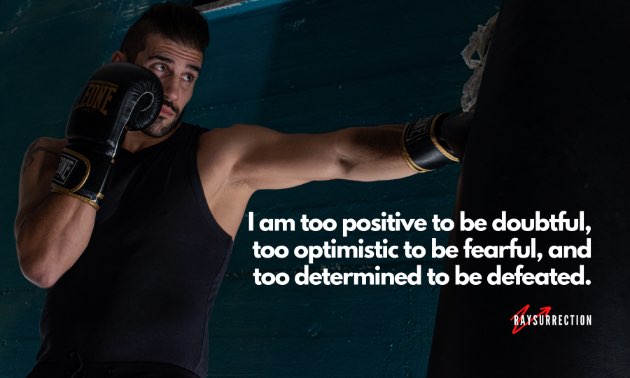
I am too positive to be doubtful, too optimistic to be fearful, and too determined to be defeated.
Rare Isotope Synthesis
Heavy elements like gold or platinum are born in the heart of a colliding pair of neutron stars. Scientists try to recreate these massive explosions in a lab using a particle accelerator. You take a beam of atoms and smash them into a target at a high percentage of the speed of light. Such a collision breaks the nuclei apart and creates new versions of atoms that do not exist on earth. These rare isotopes only live for a few milliseconds before they decay into something else.
Radioactive decay follows a strict clock that allows us to date the age of rocks and old bones. Carbon-14 is the most famous version, but other isotopes like uranium-238 work for much longer periods. You can tell how old a mountain is by counting the number of lead atoms inside its crystals. Every tick of the atomic clock is a random event that follows a very predictable pattern across a group. This is how we know that our planet has been spinning for billions of years.
Medical labs use these short-lived atoms to find tumors inside the human body without using a knife. A patient drinks a liquid that contains a tiny amount of a glowing isotope like technetium-99m. You can then use a special camera to see where the atoms gather in the organs and the bones. Such a method highlights the areas where the cells are growing too fast or acting strange. This tech helps doctors catch a problem long before it becomes a serious threat to a person.
You must use a lead-lined container to store radioactive isotopes to protect yourself from the stray particles.
Calculate the half-life of your sample to know exactly how much material will remain after a week of work.
You will find that specialized detectors are required to see the gamma rays coming off the synthesized atoms.
I take care of my lens well so I find my world full of positive vibes. #positivevibes #fullofpossibilities #discovery
Acoustic Levitation in Industrial Labs
Sound waves possess the physical strength to hold a small object in mid-air without any visible support. High-frequency speakers create a standing wave that traps a drop of liquid or a tiny bead. You would see the object bobbing up and down as it sits in the pocket of high pressure. Such a trick is useful for studying chemicals that would react if they touched the walls of a glass jar. This allows scientists to mix dangerous liquids without ever making physical contact with them.
Ultrasonic transducers vibrate at millions of times per second to push against the air molecules. When the waves reflect off a flat surface, they create a node where the pressure is zero. You can place a small part inside this node and it will float there as long as the sound is on. Every single wave acts like a tiny hand that holds the object in place against the pull of gravity. Such a system is now being used to assemble tiny microchips and medical devices with high accuracy.
Levitation also works on a larger scale if you use the right kind of acoustic setup in a vacuum. Without air, the sound travels through the frame of the machine to move the parts around. You could build a factory where the parts float from one station to the next on a bed of noise. These silent workers never get tired and they never scratch the surface of the delicate materials. Engineers are looking for ways to use this tech to handle crystals that grow in the zero-gravity of space.
You should tune the frequency of the speakers to match the weight of the object you want to lift.
Use a parabolic reflector to focus the sound waves into a single point for maximum lifting capacity.
You will notice that the levitated object spins rapidly if the sound waves are not perfectly balanced in the air.

Happiness is a mood. Positivity is a mindset.
![There's just some magic in truth, honesty and openness. [Frank Ocean]](https://raysurrection.com/wp-content/uploads/2021/11/Frank-ocean-quotes.jpg "Frank-ocean-quotes")
There's just some magic in truth, honesty and openness. [Frank Ocean]
Deep Space Communication Latency
Radio signals travel at the speed of light, but the distance between planets is truly massive. If you send a "hello" to a rover on Mars, it takes twenty minutes for the message to arrive. You would have to wait nearly an hour to get a reply to a simple question about the weather. Such a delay makes it impossible to drive the rover in real-time with a joystick like a video game. Computers on the robot must make their own choices to avoid falling into a deep crater or a hole.
Bandwidth becomes a major bottleneck when you are trying to send high-definition photos from the edge of the system. A single image from Pluto takes several days to crawl across the void to our antennas on earth. You possess the ability to send a text much faster than a scientist can download a map of a distant moon. Every bit of data is precious because the signal is so weak by the time it reaches our planet. Large dish arrays across the globe must work together to catch the faint whispers from the dark.
Laser communication is the new method being tested to speed up the talk between the stars. Light carries much more data than radio waves and it can stay in a tight beam for a longer distance. You will see a massive increase in the amount of video we can get from the moon in the next few years. This tech requires a very steady hand to keep the laser pointed at a tiny receiver millions of miles away. A single wobble of the satellite would send the message off into the empty void forever.
You should use an automated script to handle the routine tasks of the spacecraft during the long signal delays.
Compress your data files into a smaller format to reduce the time it takes to beam them back to earth.
You will need to account for the movement of the planets when aiming your high-gain antenna at the receiver.

Follow your heart. Listen to your inner voice. Stop caring about what others think.

Don't wait for things to get better. Life will always be complicated. Learn to live in the present moment and be happy.
Plasma Propulsion Systems
Ion thrusters use electricity to strip electrons off a gas like xenon and turn it into a blue flame. These engines do not have much kick, but they can run for years without ever stopping. You would feel a tiny push that is about as strong as the weight of a single piece of paper. Such a constant force eventually pushes the ship to speeds that a chemical rocket could never reach. This is how we send probes to the outer planets without carrying tons of heavy liquid fuel.
Hall effect thrusters create a magnetic field that traps the electrons in a spinning ring of fire. This ring accelerates the ions out of the back of the engine at a very high velocity. You see a glowing halo of plasma whenever the engine is running in the darkness of space. Every atom that leaves the ship pushes it forward just a little bit more in the vacuum. Such a design is very efficient and it is now the standard for keeping satellites in the right orbit.
Future ships might use a fusion reactor to create a plasma torch that is hotter than the surface of the sun. This would allow a crew to reach Mars in just a few weeks instead of several long months. You would need a massive magnetic shield to keep the heat from melting the walls of the rocket. These engines are still in the testing phase, but the math shows they are the best way to travel. Every leap in plasma tech brings us one step closer to visiting the other stars in our galaxy.
You should use xenon gas because it is heavy and easy to turn into a plasma with a small electric charge.
Protect the hull of your ship with a magnetic bottle to keep the hot ions from eroding the metal surface.
You will find that solar panels are the best way to get the electricity needed for a long-distance ion engine.

Don't fear dying, fear not living. Let's keep climbing.

Do good. Be kind. Drop your attitude. The whole universe deserves better.
Carbon Nanotube Structural Integrity
Carbon atoms can arrange themselves into a tube that is a hundred times stronger than the best steel. These tiny cylinders are so small that you would need a microscope to see even a single one. You could build a cable that is thin enough to be invisible but strong enough to lift a whole truck. Such a material is the key to building a space elevator that reaches from the ground to the stars. This would make the cost of leaving the planet almost zero for everyone on earth.
Thermal conductivity in a nanotube is better than in any other material known to modern science. Heat moves through the carbon lattice like a bullet through a paper target without any resistance. You can use these tubes to keep computer chips cool or to build better heat shields for re-entry. Every atom is locked into a hexagonal pattern that refuses to let go of its neighbors. Such a structure is what gives the material its incredible strength and its ability to handle extreme heat.
Manufacturing these tubes in large quantities remains a difficult task for the best labs in the world. They tend to clump together like a bowl of wet noodles instead of forming long straight wires. You need a particular catalyst like iron or nickel to grow the tubes from a cloud of hot methane gas. If the temperature is off by just a few degrees, the carbon turns into soot instead of a miracle material. Engineers are looking for ways to weave these tiny fibers into a fabric that is bulletproof and light.
You should use a chemical vapor deposition furnace to grow high-quality nanotubes on a silicon wafer.
Mix the nanotubes into a polymer resin to create a composite material that is both stiff and very light.
You will notice that the electrical properties of the tube change depending on how the carbon atoms are twisted.

Be true to yourself and live the life you want.

Are you still planning? When are you actually gonna get started?
No one. Literally no one. Absolutely no one is like you.
We have traveled through some of the most fascinating corners of the physical world today. From the frozen gears of a clock to the massive power of a binary star, the universe is full of logic. You now see that the world functions in ways that are far more complex than most people ever realize.
These ideas stay with you and change the way you look at a simple stone or a flash of light. It is a pleasure to share these thoughts with a mind that values the truth over the common talk. Every bit of data we discussed is a piece of a larger puzzle that we are all trying to solve together.
Stay curious and keep looking for the hidden mechanics that make our reality what it is every day. The world is a vast place and there is always something new to find beneath the surface.