

Most advice about drinking less assumes you can skip the bar. If your friends meet at one, your Saturday starts at one, and the event you've been looking forward to is sponsored by a vodka brand, that advice does not apply. This plan keeps you in the room and changes what is in your glass, how fast it empties, and what you say when someone offers another.
The plan is practical, so it is built around the situations where drinking is hardest to cut back: bar nights, circuit parties, Pride weekends, first dates from an app, and a group chat that makes plans around happy hour. The aim is to leave the night having had the amount you chose, still part of the group, and clear-headed enough to enjoy the person you went home with, or the walk home alone.
Why a night out and a drink get fused together for so many gay men
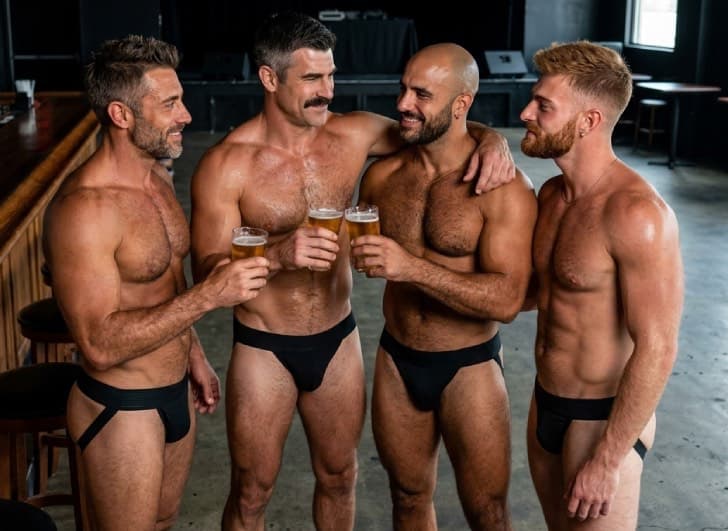
For a lot of gay men, going out and drinking arrived as one package. Many of the dedicated spaces gay men have had, and still have, are bars and clubs. They are built around the sale of alcohol, so the drink is the entry fee, the thing you hold, and the reason the staff acknowledge you.
Layer social habits on top. Alcohol lowers the self-consciousness that makes walking up to a stranger feel impossible. A drink gives you something to do with your hands while you scan the room. A round bought for you is an easy way to start a conversation. Over time the brain links the setting, the nerves, and the glass, so that arriving somewhere without a drink can feel physically odd.
Friend groups reinforce it. If your closest friendships formed over cocktails and brunch bottomless deals, drinking becomes the shared activity, and ordering something different can feel like stepping out of the ritual. Nobody has to say anything for that pressure to be felt.
Understanding this matters because it changes the question. If drinking were just a taste for the stuff, cutting back would be easy. In practice you are replacing a tool that was doing several jobs at once, and the plan below treats it that way.
Work out what the drink is doing for you before you cut it
Before you set any limit, spend ten minutes working out what a drink does for you on a typical night out. Different jobs need different replacements, and a plan that ignores the job tends to fail by the second hour.
Think back over your last few nights out and ask which of these applied:
- It takes the edge off nerves. You feel shy or on show until the second drink.
- It gives you something to hold. Without a glass you don't know where to put yourself.
- It marks the transition. The first drink signals that work is over and the night has begun.
- It keeps you in step with the group. You drink at their pace so nobody notices you aren't.
- It makes flirting or sex feel easier. You find it hard to be forward or relaxed without it.
- It numbs something. A bad week, a breakup, loneliness, or anxiety you would rather not feel.
Write down the top one or two. This is private, so be accurate rather than flattering.

Each answer points somewhere different. If it is nerves, you need an entry routine, such as arriving with a specific person or a first conversation planned. If it is something to hold, a good non-alcoholic drink solves it. If it is the transition, you can build another signal, like a particular playlist while you get ready. If it is numbing, then drinking less will bring the feeling closer, and that is worth knowing in advance so you can plan for it rather than be surprised at midnight.
If the honest answer is the last one, the later section on talking to a professional applies sooner rather than later.
Set your limit before you leave the house
A limit decided at the bar, after two drinks, is negotiated by a version of you whose judgment has already been loosened. Decide at home, sober, with the evening's details in front of you.
A workable pre-night plan has four parts.
1. A number.
Choose how many drinks you will have, in terms of actual standard drinks and not "a few." Cocktails at many bars contain more than one standard drink, and large pours of wine do too, so count by what the glass really holds. If you are unsure what counts as a standard drink where you live, check your national health guidance, because the definition differs between countries.
2. A pace.
A number alone does not stop you from drinking all of it in the first ninety minutes. A common approach is to decide on a time gap between drinks, such as one per hour, and to have a non-alcoholic drink in between.
3. A start and an exit.
Decide when you'll arrive and roughly when you'll leave. Nights drift. If you have decided that you will head home around a certain time, or after your last planned drink, you remove a decision from a moment when decisions are harder.
4. A fallback.
Know what you will do if you go over. Maybe you switch to water for the rest of the night, or you take a car home and leave it there. A fallback matters because the usual response to breaking a limit is "the night is wrecked, so I may as well carry on." Having a pre-agreed next move stops one extra drink from turning into six.
Eat a proper meal before you go. Alcohol on an empty stomach hits faster, which makes any limit harder to hold. Also check anything you take regularly. Some medications interact with alcohol, and a pharmacist can tell you quickly whether yours do.
Tell one person. It does not have to be a big conversation. A text to the friend you are meeting, saying you are keeping it light tonight, gives you an ally in the room and removes the need to explain yourself at the bar.

Drinking in Views That Steal Breath
Scripts for the moment someone hands you another round
The moment of friction is almost always the same: somebody offers or buys a drink and you have a half second to respond. Having a sentence ready is the difference between holding your limit and caving to avoid awkwardness.
Short, friendly answers work best. A long explanation invites debate. A light one closes the topic.
- "I'm good for now, thanks." Works almost everywhere. "For now" keeps it relaxed and leaves no opening for a lecture.
- "I'm pacing myself tonight, but I'll take a soda and lime." Takes the drink, which matters. Accepting something removes the sense of rejecting the gesture.
- "I've got an early start tomorrow." True for many people, and nobody argues with it. Use it only if it is accurate for you.
- "I'm taking a break from drinking at the moment." Direct and complete. Most people move on within seconds.
- "Honestly, I'm having a better night when I drink less." Good with close friends, since it is about how you feel and invites no judgment of their drinking.
If someone is bought-round pushy, a few more tactics help:
- Buy your own first. If you already have a drink in hand, you are rarely handed another. A soda with bitters or a non-alcoholic beer looks like any other glass.
- Take the round and turn it down later. When it is a big group buying rounds, it can be easier to say "I'll get the next one" and then order a non-alcoholic drink for yourself when your turn comes.
- Redirect. "Let's dance first, I'll get one after." Then do not get one.
- Say it once and change the subject. Repeating or explaining makes it a topic. A flat, cheerful answer followed by a question about them closes it.
If a friend keeps pushing after you have declined clearly, that is information about the friendship and not about you. Most people stop after one clear no, and you should expect that. If one particular person doesn't, you can be blunter in private: "I mean it, please stop offering." The people who matter will adjust.

Swaps that keep your hands busy and your night intact
Cutting down is easier when the night looks the same from the outside. You are still holding a glass, still in the round, still at the bar. Three levers do the work: pacing, spacing, and better drinks.
Pacing
Pacing means slowing the rate. The simplest method is alternating: one alcoholic drink, then one non-alcoholic drink, every time. This also keeps you hydrated, which helps the next day regardless of how much you drink.
Other pacing habits:
- Pick drinks that take longer to finish, such as a long drink over ice rather than a shot or a short cocktail.
- Put the glass down. People sip faster when a glass is in their hand constantly. Setting it on a table between sips cuts the pace without any effort.
- Do not top up a glass that is not empty. It makes it impossible to keep track of how much you've had.
Spacing
Spacing is about when the drinking happens in the evening. Starting late, or arriving after the pre-drinks phase, shortens the window in which you can drink at all. If your group meets at someone's flat at seven for an hour of drinking before heading out, arriving at the venue directly gets you the night without the extra hours.
Alternate the setting, too. Spend part of the night dancing, outside, or in a different room, rather than at the bar. Drinks are easiest to order when you are standing next to the counter.

Better drinks
A non-alcoholic drink that you actually like makes everything easier, and the choice is wider than it used to be. Options worth trying:
- Soda water with lime and a few dashes of bitters, which looks and tastes like a cocktail
- Tonic with plenty of ice and a slice of citrus
- Non-alcoholic beer or wine, available at many bars and shops now
- A mocktail, if the bar makes them, or a simple mix of juice and soda
- A low-alcohol option such as a light beer or a spritz with more soda than wine, if your goal is cutting down rather than stopping
Ask the bartender what they do without alcohol. Many bars have an option that is not on the menu.
Circuit parties and Pride weekends
Big events add length and intensity. A circuit party can run for many hours, and a Pride weekend is several days, so a per-night number does not cover it. Set a limit for each day, and plan sleep and food as seriously as the drinks. Drinking over several days compounds, because you start each night already tired.
Keep your drink in sight and stay with it. Drink spiking is a real risk at crowded venues, and a drink you have left unattended should be replaced, not finished. Alcohol also combines unpredictably with other substances, so if drugs are part of your night, going in with less alcohol gives you a clearer head for those decisions. Water between drinks matters more in hot, crowded rooms.
At large events, a friend who agrees on a meeting point and a time to check in is useful. It costs nothing and means someone notices if you are not where you said you would be.
When the group is the pressure
If drinking is the group's main activity, you can still keep these friendships while changing your part in them. Suggest the first hour somewhere with food. Propose something that sits alongside the bar, like a show or a game night, now and then. If you find you want more connections that are not built around a bar, the piece on how to make gay friends without going to a bar covers that side of it. Those friendships can sit next to the old ones; you don't have to swap one for the other.
Dating and hookups: how to meet someone sober enough to remember it
Dating gets its own section because alcohol does two things at once here. It makes meeting someone feel easier, and it makes your decisions less reliable.
First dates from an app
A first date does not need to be at a bar. Coffee, a walk, a gallery, or a meal all give you something to do besides drink, and they make it easier to tell whether you like the person. If a bar suits you both, you can still set the pace.
A few lines you can use when planning:
- Suggesting the venue: "Want to grab a coffee or a walk first? Then drinks if it's going well." This gives him an easy yes and keeps your options open.
- At the bar: order first, and order what you want. "A tonic with lime for me" in a normal tone is rarely questioned.
- If he asks: "I'm cutting back at the moment, I'm enjoying it." Short and true.
How he reacts to your ordering is useful information. A date who is relaxed about it is easy company. A date who pushes you to match his drinking, or makes a point of it, has told you something about how the evening, and maybe more, would go.
Hookups
Alcohol affects judgment about consent, safer sex, and who you go home with. Both partners need to be able to give clear consent, and heavy drinking undermines that for either person. If you are not sure the other person is sober enough to decide clearly, or you are not, wait.
Decide your safer-sex plan before you drink. That includes whether you have condoms, how you handle PrEP or other medication you take, and what you will and won't do. A decision made in advance is much easier to keep than one made in the moment. If a sexual health clinic or your doctor has given you advice about alcohol and your medication, follow that, because I can't tell you how a specific medication interacts with drink.
Practical points that help:
- Keep to your limit if you think the night may end with someone coming home with you. You will remember it, and you will be able to tell if something is wrong.
- Keep your phone charged and tell a friend where you are if you are going home with someone new.
- If you wake up and regret decisions made while drunk, that is a sign worth taking seriously, not something to push down. It is a reason to change the pattern, and it does not make you careless or bad at this.
Sex without alcohol can feel different at first, especially if drinking has been part of how you relax into it. That is normal, and many people find that it gets easier with practice. If anxiety about it is strong, that is something to raise with a therapist or doctor, and the reason is practical: it is a solvable problem.

Recovering the next day without shame, and when to talk to a professional
If you go over your number, the next day matters more than the night did. The usual reaction is a round of self-criticism, followed by a decision to quit entirely, followed by a relapse a few weeks later. A flatter response lasts longer.
The day after:
- Drink water and eat something. Alcohol dehydrates, and a proper breakfast helps with how you feel.
- Do something light. A walk is better than lying in bed with your phone.
- Make a note. One line: what you drank, what led to it, what you would do differently. This turns a slip into data. Look for patterns, such as a particular venue, person, or mood.
- Go to bed on time that night. Alcohol disrupts sleep, so the day after a heavy night often feels worse than it should, and an early night starts the repair.
- Skip the hair-of-the-dog drink. It postpones the problem.
Treat going over as a normal part of changing a habit. Shame is the feeling most likely to send you back to the bar for relief, so cutting it out is part of the plan.
When to talk to a professional
Self-directed cutting back works for many people. It does not work for everyone, and there are clear signs that it is time to get help:
- You repeatedly set a limit and cannot keep to it, even when you really want to.
- You drink to manage anxiety, depression, loneliness, or the after-effects of difficult experiences.
- You feel shaky, sweaty, anxious, or unwell when you haven't had a drink, or you need more to get the same effect.
- Drinking is affecting your work, health, relationships, or safety.
- Other people close to you have raised concerns.
If you drink heavily and every day, do not stop suddenly without speaking to a doctor first. Sudden withdrawal from heavy drinking can be dangerous, and a medical professional can help you reduce safely.
The Queer Tarot: An Inclusive Deck and Guidebook
Tarot deck and guidebook set for LGBTQ+, created by queer and trans artist team Ash + Chess.
We earn a commission if you click this link and make a purchase at no additional cost to you.
Your GP or primary care doctor is a good first call, and you can ask directly about alcohol. If you would rather see someone who understands gay life, look for a therapist or counsellor who lists LGBTQ+ experience, since many of the pressures in this article, from the bar-centred social world to stress about being out, are easier to discuss with someone who does not need them explained. Local LGBTQ+ health organisations and sexual health clinics often have information or referrals, and many can be reached without a long wait.
Wanting to drink less is a reasonable thing to want, and it does not mean you have to leave the scene, your friends, or your dating life. Start with the next night out: pick the number, choose the drink you will order, and have one sentence ready for the first offer of another round.