

History books often paint a dry picture of ancient heroes but the reality of a Thracian warrior who broke his chains is far more visceral than any classroom lecture. You look at the silver screen and see oiled muscles or dramatic speeches yet the actual grit of the Ludus involved a level of mental fortitude most modern people will never touch. Every drop of sweat in the Roman dust served a purpose beyond mere survival because the man known as Spartacus sought a life far removed from the constraints of his masters.
People forget that gladiatorial life functioned as a strange mix of celebrity status and death sentence which created a persona that was both feared and envied. Your interest in this legendary figure likely stems from a desire to find that same inner fire to combat the mundane stresses of your 21st-century existence. Prepare to strip away the myths and look at the hard truths regarding how a slave became the greatest threat to the Roman Senate through sheer willpower and a very particular set of physical habits.
Rome feared him because he turned victims into victors using nothing but discarded farm tools and the sheer weight of his conviction. You will find that his methods for staying alive and keeping an army together offer a blueprint for personal transformation that ignores modern comforts in favor of primitive strength. Let us explore the ways you shall transform your own routine by looking back at the blood-soaked sands where true legends earned their names through pain.
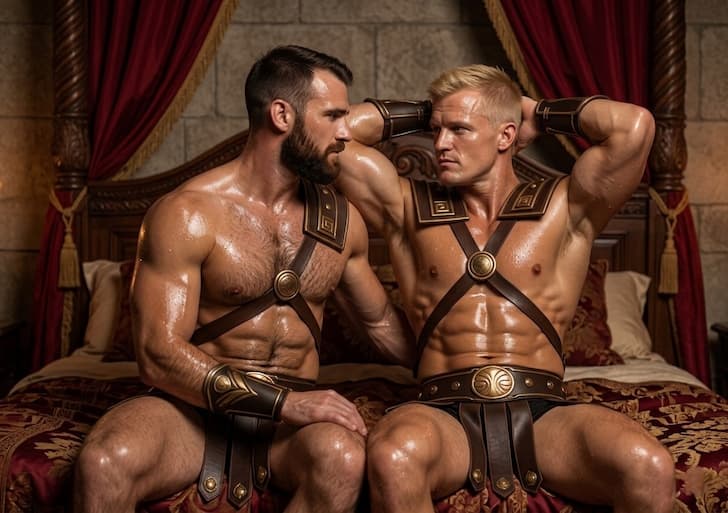
Who Was Spartacus?
The man himself began his life in Thrace - a region known for producing fierce warriors - and he likely spent his youth learning the ways of the sword before a turn of fate led to his capture. Records from the Roman era indicate that he served in the Roman auxiliary forces which gave him a detailed view of the very military machine he would later attempt to dismantle. He eventually landed in the gladiatorial school of Lentulus Batiatus in Capua where he was trained as a heavy fighter known as a murmillo. His life in the school was a daily cycle of brutal combat drills and meager rations designed to turn a human being into a disposable source of entertainment for the masses. He refused to accept a fate as a mere pawn in the bloody games and organized a daring escape using only kitchen knives to overcome the guards.
The rebellion he started grew from a small group of seventy-odd gladiators into a massive army of over seventy-thousand escaped slaves and marginalized poor people. He led his followers to the slopes of Mount Vesuvius where they used vines to rappel down cliffs and ambush the Roman forces sent to arrest them. His tactical brilliance allowed him to defeat several Roman commanders who underestimated the resolve of a man with nothing left to lose. He did not seek to rule Rome but rather to lead his people toward the Alps so they could return to their homelands as free individuals. His name became a symbol of resistance that haunted the nightmares of the Roman elite for generations because he proved that the system was not invincible.
The end of his story is shrouded in the fog of ancient war but most accounts say he died in the heat of battle near the Silarus River. He allegedly killed his own horse before the final charge to show his men that there was no retreat and no alternative to victory or death. His body was never found among the thousands of fallen warriors which only served to make his legend grow even larger in the minds of those he inspired. He left behind a legacy that suggests a single person is able to disrupt an entire empire if they possess enough grit. You should see him as a man who valued his autonomy above his heartbeat and lived every second with that cold realization in his mind.
You must study the history of the Thracian people to understand the origins of the warrior spirit that fueled the rebellion. Their culture prioritized individual bravery and tactical cleverness which allowed them to survive in a harsh mountain environment.
Find a way to look at your current obstacles as if you were a commander surveying a Roman legion across a valley. He viewed every setback as a puzzle to solve rather than a wall that could not be scaled.
Acknowledge that your freedom is a mental state before it ever becomes a physical reality. He remained a free man in his mind even while the chains were still wrapped around his wrists in the Capua school.
Practice the art of silent observation to learn the weaknesses of the systems that hold you back in your daily life. He watched the guards for months to find the exact moment when their vigilance wavered.
Prepare yourself for the reality that true change requires a willingness to leave behind every comfort you once held dear. He walked away from the relative safety of the Ludus into the cold uncertainty of the mountains without a second thought.
What is the Spartacus Workout?
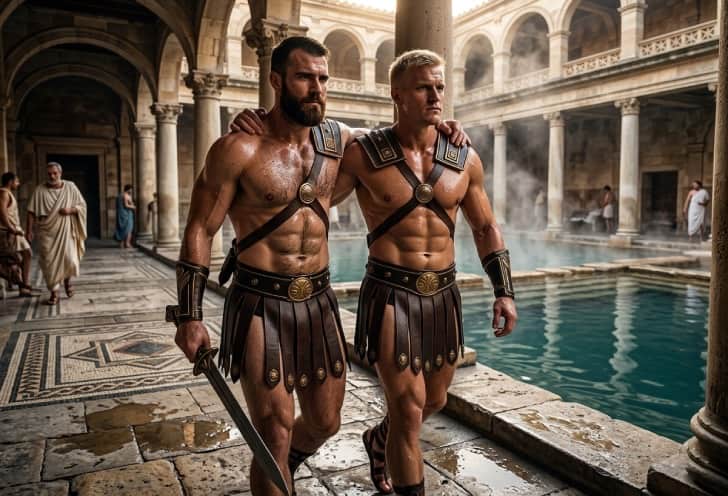
Modern fitness enthusiasts have revived the name of the Thracian hero to describe a routine that prioritizes high-intensity interval training over slow and steady progress. You will find that this routine focuses on functional movements that mimic the demands of a life-or-death struggle in the arena. The goal of this training is to build a body that is as resilient as it is aesthetic - focusing on the dense muscle required to move heavy steel and the endurance to keep moving when your lungs feel like they are on fire. He did not have fancy machines so the movements rely on your own weight or heavy objects that require total body coordination. You are building a physique that is ready for a sprint or a slugfest at any given moment.
The structure of the workout involves performing a series of exercises for sixty seconds each with a very short rest period between them. High repetitions with moderate weight will force your heart rate to skyrocket while your muscles scream for oxygen. You shall perform movements like the goblet squat - the mountain climber - and the dumbbell swing to ensure every major muscle group is taxed to its limit. Recovery is a luxury you do not have in the middle of a battle and this workout recreates that pressure by keeping the intensity high for the entire duration. You must push through the mental fog that occurs when your body wants to quit because that is where the real growth happens.
A typical session might include three circuits of ten different exercises which creates a total body fatigue that lasts for hours after you finish. You will notice that your grip strength improves rapidly as you handle heavy weights for extended periods without setting them down. The lack of long rest periods trains your metabolic system to become highly efficient at clearing lactic acid and utilizing stored energy. He would have spent hours doing similar repetitive tasks with wooden swords and heavy shields to prepare for the few minutes of actual combat. You are essentially hardening your exterior to match the internal resolve required to live like a gladiator.
Perform your goblet squats with a heavy weight held close to your chest to build a core that is as solid as a stone wall. Your legs will gain the explosive power needed to lunge forward or hold your ground against a larger opponent.
Execute mountain climbers with a focus on speed and form to simulate the quick footwork required on the uneven terrain of the Italian countryside. Your shoulders and abdominals will burn as they stabilize your frame through the rapid movement.
Swing a kettlebell or a dumbbell with a focus on the hip hinge to develop the posterior chain strength that drives a powerful strike. This movement builds the glutes and lower back muscles that are the foundation of all human power.
Push yourself through a set of burpees until your vision blurs to find the limits of your cardiovascular capacity. He had to keep moving even after being wounded and this exercise builds that exact brand of stubbornness.
Hold a plank for as long as your muscles can quiver to build the static strength needed to keep a heavy shield high during a long siege. Your mental focus will be tested as much as your physical endurance during these long holds.
The Spartacus Mindset
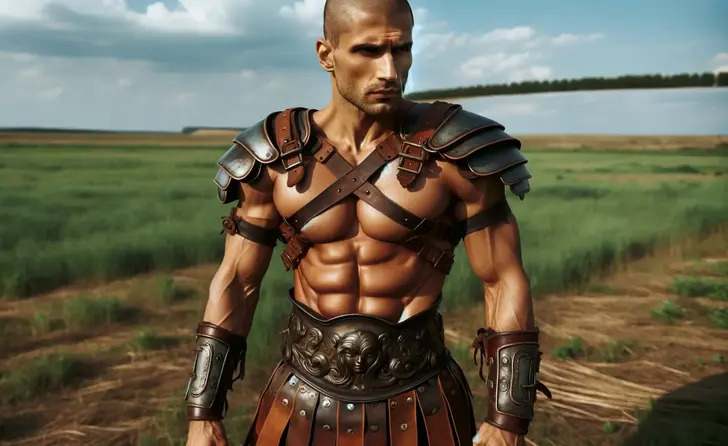
The mental state of a gladiator was a complex mixture of fatalism and extreme self-reliance because they knew that any day could be their final one. You must adopt a perspective that accepts the inevitability of hardship while refusing to let that hardship dictate your actions. He viewed his masters not as superiors but as temporary obstacles that he would eventually move out of his way. This mindset requires you to stop seeing yourself as a victim of your circumstances and start seeing yourself as the protagonist of your own liberation. He did not wait for someone to come and save him because he knew that the only person who could change his life was staring back at him in the mirror.
Resilience is not about avoiding pain but about moving through it with a clear purpose and an unshakeable will. You shall find that the stresses of modern life seem much smaller when you compare them to the prospect of fighting a tiger or a trained killer for your life. He possessed a clarity of thought that allowed him to make split-second decisions under the most extreme pressure imaginable. Your focus should be on the things you are able to control - such as your effort and your attitude - while letting go of the things you cannot. He understood that a calm mind is the most lethal weapon in any arsenal regardless of the tools you have in your hands.
The defiance he showed toward the Roman Republic was not born of hatred but of a deep love for his own human dignity. You must value yourself enough to refuse any situation that treats you as less than a sovereign individual. He believed that a short life lived in freedom was infinitely better than a long life lived in servitude to another person's whims. This belief allowed him to face the overwhelming might of the Roman legions without flinching or seeking a compromise. You should cultivate a sense of inner strength that remains intact even when everything around you is falling into chaos.
Practice a form of stoicism where you visualize the worst possible outcomes of your day and decide how you will face them with grace. He knew he might die by noon and this realization gave him a strange kind of peace that his enemies lacked.
Write down a list of the things that currently hold you captive in your life and formulate a plan to break those chains one by one. He did not escape the Ludus by accident - he had a meticulously crafted strategy that he executed with precision.
Refuse to complain about the small inconveniences that clutter your day because a gladiator had no time for self-pity or whining. You will find that your energy increases when you stop wasting it on verbalizing your dissatisfaction with the world.
Stand tall and maintain eye contact with those who try to intimidate you to signal that your spirit remains unbroken. He looked the Roman generals in the eyes as an equal which unnerved them more than his sword ever could.
Allocate time each morning to sit in silence and remind yourself of your ultimate purpose so that the distractions of the world do not pull you off course. Your resolve must be refreshed daily to withstand the constant pressure of a society that wants you to conform.
The Spartacus Diet
The actual diet of a gladiator would probably surprise you because it was heavily focused on carbohydrates and plant-based proteins rather than lean meats. You would find that they were often called "hordearii" or "barley-eaters" because their meals consisted mostly of barley and beans. This high-carb intake was intentional because it helped them build a layer of subcutaneous fat that protected their vital organs from shallow cuts in the arena. A lean and shredded look was less desirable than a bulky and insulated physique that allowed a fighter to keep going after taking a hit. You are looking for fuel that sustains long-duration activity and provides the raw materials for heavy labor.

Barley and legumes provided the complex carbohydrates and fiber necessary for sustained energy levels throughout a day of grueling training. You shall see that they also consumed a special drink made from charred wood or bone ash which provided a massive dose of calcium and strontium. This ash tonic helped to strengthen their bones and accelerate the healing process after the inevitable fractures and bruises of the Ludus. Meat was a luxury that was usually reserved for the "last supper" before a major game or for the elite fighters who brought in the most revenue. You should focus on whole - unprocessed foods that provide a steady stream of energy rather than quick spikes and crashes.
The Gladiators also made use of seasonal fruits and vegetables to ensure they received the vitamins and minerals needed for a functioning immune system. You will notice that their diet was very high in magnesium which is crucial for muscle function and recovery after intense physical stress. They avoided wine in large quantities during training because a clouded mind was a liability in a fight where timing was everything. Your nutrition should serve your performance rather than your palate - which means choosing foods that make you feel strong rather than just full. He ate to survive and to fight - and your own diet should reflect a similar commitment to your physical readiness.
Swap out your refined white flour for whole-grain barley or oats to give your body the slow-burning fuel it needs for a long day of work. These grains were the backbone of the gladiatorial diet and will keep your energy levels stable without the mid-afternoon slump.
Increase your intake of lentils and chickpeas to provide the plant-based protein that helped ancient warriors build their sturdy frames. You will find that these legumes are incredibly filling and offer a variety of minerals that are often missing from modern diets.
Look for high-quality calcium supplements or mineral-rich waters to mimic the effects of the bone ash tonics used in the ancient world. Your skeletal structure needs these building blocks to withstand the stress of heavy lifting and high-impact movements.
Limit your consumption of sugar and processed oils because these ingredients create inflammation that slows down your recovery process. He needed his body to be a finely tuned machine and he could not afford the sluggishness caused by poor-quality fuel.
Eat large portions of leafy greens and seasonal vegetables to ensure your body has the micronutrients required for optimal health and repair. These foods act as the internal armor that protects your cells from the oxidative stress of a hard workout.
How to Train Like Spartacus
Training for the arena was an all-encompassing lifestyle that required hours of repetitive practice to master the mechanics of combat. You should focus on drills that emphasize spatial awareness and the ability to move your body with precision while carrying a heavy load. He used a wooden sword called a rudis that was weighted much more heavily than a real steel blade to build massive strength in his arms and shoulders. When he finally stepped into the arena with a standard sword - it felt light and fast in his hands - allowing him to strike with devastating speed. You must find ways to add resistance to your movements so that the tasks of your daily life become effortless by comparison.
Footwork was just as important as arm strength because a gladiator who could not move was a gladiator who was about to die. You shall practice agility drills that force you to change direction quickly while maintaining your balance on varied surfaces. He would have trained in pits filled with sand to build the stabilizer muscles in his ankles and knees which are often neglected in modern gyms. Your training should include carrying heavy objects like sandbags or stones over long distances to develop a functional strength that applies to the real world. You are training for reality - not for the mirror - so your movements should reflect the messy and unpredictable nature of a fight.
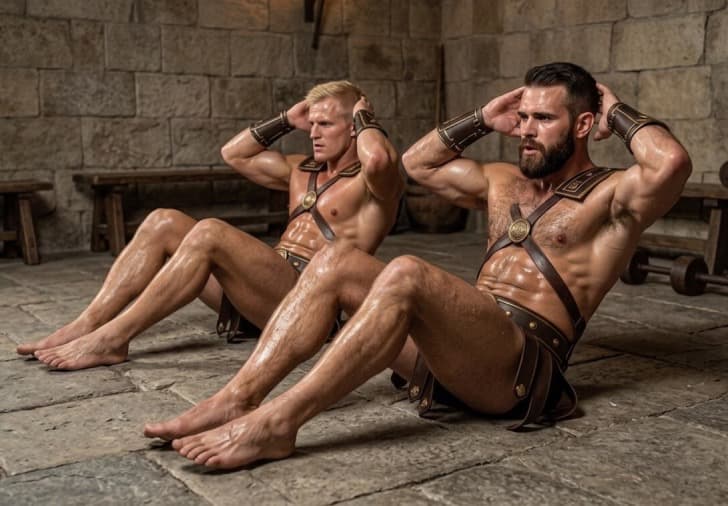
Endurance training in the ancient world involved long marches and constant movement rather than just running on a flat treadmill. You will find that your stamina improves when you incorporate weighted carries and hiking into your routine as these activities build a rugged cardiovascular system. He also spent time practicing his breathing to ensure he could remain calm and focused even when his physical exertion was at its peak. Your training should push you to the point where you want to quit - and then you must find the strength to do one more rep or one more mile. This is how you build the iron will of a leader who can inspire others to follow him into the unknown.
Carry a heavy sandbag on one shoulder while walking for a mile to develop the asymmetrical strength needed to handle a shield and a sword. Your core will have to work overtime to keep your body upright and your functional power will increase exponentially.
Practice your striking movements with a weighted bar to build the explosive speed that will surprise any opponent you might face. These drills develop the fast-twitch muscle fibers that are the difference between a glancing blow and a knockout strike.
Find a steep hill and sprint up it multiple times to simulate the frantic energy of a battlefield charge. Your heart will pound against your ribs and your legs will feel like lead - but you must reach the top every single time.
Spend time walking barefoot on uneven ground to strengthen the muscles in your feet and improve your overall balance and proprioception. Modern shoes often weaken our feet and this practice will reconnect you with the earth and your own natural movement patterns.
Use a heavy rope to practice pulling movements that simulate the act of dragging an opponent or climbing over a wall. These exercises build the "pulling" muscles in your back and biceps that are required for any kind of grappling or manual labor.
Love and Relationships Gladiators Used To Have
The social life of a gladiator was often restricted by their status as infamis - a legal category that stripped them of many rights - but they still found ways to form deep connections. You will see that many of them entered into informal marriages known as contubernium since they were legally prohibited from entering into a proper Roman marriage. These bonds were often incredibly strong because the couples knew that their time together could be cut short by a single blow in the arena. He likely had a partner who supported him through the mental toll of his profession and provided a small sanctuary of humanity in a brutal world. You should recognize that even the toughest warriors need a support system to remain grounded and focused on their long-term goals.

Brotherhood among the fighters in the Ludus was a common theme because they were the only ones who truly understood the reality of their situation. You shall find that they often formed collegia - which were social clubs or funeral societies - to ensure that if they died - they would receive a proper burial and their families would be taken care of. This sense of solidarity allowed them to face the horrors of the arena with a degree of courage that they might not have found on their own. He relied on his fellow gladiators during the escape and the subsequent rebellion - proving that a cohesive group is much more than the sum of its parts. Your own relationships should be built on mutual respect and a willingness to stand by one another during the most difficult times.
The relationship between a gladiator and his fans was also a significant part of his existence as he was often treated like a modern-day rock star. You would notice that some fighters had "groupies" who would pay large sums of money for a vial of their sweat or a lock of their hair. This strange celebrity status created a bizarre dynamic where a man could be a slave on one day and a national idol on the next. He had to navigate these interactions with a degree of caution because the same people who cheered for him could just as easily turn their thumbs down. You should be aware of how the perceptions of others can influence your own sense of self and strive to remain true to your own values regardless of the noise.
- Build a circle of friends who are willing to tell you the hard truths and stand by you when you are at your lowest point. He needed people he could trust with his life - and you should settle for nothing less in your own social circle.
- Communicate with your partner about your fears and your ambitions to create a foundation of trust that can withstand any external pressure. The gladiators who had a reason to live outside the arena were often the ones who fought with the most ferocity.
- Seek out groups of like-minded individuals who share your commitment to personal growth and physical excellence. You will find that your progress accelerates when you are surrounded by people who push you to be better every day.
- Learn to distinguish between those who truly care for your well-being and those who are only interested in your status or your success. He knew that many of his "fans" were only there for the spectacle and he did not let their praise inflate his ego.
- Treat every interaction with a level of dignity and respect that reflects your own high standards for yourself.Your character is defined by how you treat those who can do nothing for you - and he was known for his noble bearing even in the face of death.
Were There Any Gay Gladiators?
The concept of sexual identity in the Roman world was vastly different from our modern understanding as it was based more on power dynamics and roles than on gender preference. You will find that sexual encounters between men were relatively common in Roman society and this likely extended into the gladiatorial schools where men lived in close quarters for years. A gladiator was often seen as an object of desire for both men and women - and their status as slaves meant they frequently had little say in who they were paired with. It is highly probable that many gladiators had intimate relationships with other men either by choice or as a result of the social environment of the Ludus. You should look at this through the lens of ancient Roman culture rather than projecting 21st-century labels onto historical figures.
Roman men generally viewed being the active partner in a sexual encounter as a sign of dominance and masculinity - regardless of the gender of the other person. You shall see that the gladiators - who were the epitome of physical prowess - were often seen as the ultimate active partners in the Roman imagination. This meant that a man could have sex with another man without it necessarily affecting his social standing as a "masculine" warrior. He lived in a world where the lines between friendship - mentorship - and intimacy were often blurred by the constant threat of death and the intense physical nature of their training. Your understanding of his life must include the reality that human connection takes many forms when people are stripped of their freedom and forced to live on the edge.
The historical record does not specifically name many "gay" gladiators because the language to describe such an identity did not exist at the time. You will find that there are many accounts of men forming deep - emotional - and physical bonds that lasted for years within the gladiatorial schools. These relationships provided a source of comfort and stability in an environment that was designed to be dehumanizing and lonely. He would have seen these bonds as a natural part of the human experience and a necessary way to survive the mental pressure of his life. You should appreciate the complexity of human sexuality throughout history and realize that the warrior spirit is not tied to any specific orientation.
- Read the works of Roman poets and historians to gain a deeper understanding of how they viewed sexuality and the human body. You will see that their perspectives were often much more fluid than the rigid categories we use today.
- Recognize that the intensity of the gladiatorial experience created bonds that transcended modern definitions of friendship or romance. These men were everything to each other - protectors - teachers - and sometimes lovers - in a world that wanted them dead.
- Acknowledge that physical intimacy was a way for these warriors to reclaim a sense of agency over their own bodies in a system that treated them as property. He and his companions used every means at their disposal to maintain their humanity in the face of Roman cruelty.
- Avoid applying modern prejudices or labels to ancient figures who lived in a completely different moral and social landscape. You will gain a much more accurate view of history when you look at it through the eyes of those who actually lived it.
- Value the diversity of the human experience and understand that strength and bravery have always been found in individuals of all backgrounds and preferences. The rebellion was made up of people from every corner of the known world - and their shared desire for freedom was the only thing that mattered.
The Queer Tarot: An Inclusive Deck and Guidebook
Tarot deck and guidebook set for LGBTQ+, created by queer and trans artist team Ash + Chess.

We earn a commission if you click this link and make a purchase at no additional cost to you.
The Ultimate Guide to Living Like Spartacus: How to Channel Your Inner Gladiator
Living like a gladiator requires more than just a heavy workout and a high-carb diet because it is fundamentally about the refusal to be a victim of your own life. You should see the legend of the Thracian warrior as a reminder that the human spirit is capable of overcoming even the most oppressive systems through sheer force of will.
Your daily routine is your arena and the obstacles you face are the opponents that you must overcome to earn your own version of freedom. He did not ask for permission to be great and he did not wait for the perfect conditions to start his rebellion against the status quo. You have the power to transform your own reality by adopting a mindset that prioritizes your own dignity and personal autonomy above the comforts of a safe and predictable existence.
Let the fire that fueled the escape from Capua be the same fire that drives you to reach your own highest potential regardless of the odds.