

Small talk is everywhere—at work, in social settings, even with strangers in line at the grocery store. It’s a kind of mindless chatter that people often feel obligated to participate in. But let’s face it, small talk is not only boring, it’s utterly pointless. There’s no substance to it, no depth, and worst of all, it wastes everyone’s time. Instead of meaningful conversation, we’re stuck exchanging pleasantries that nobody cares about. So why do we keep doing it? Let’s break down just how much of a waste small talk really is.

Surface-Level Drivel That Gets You Nowhere
Small talk is filled with the same boring topics—weather, traffic, weekend plans. It’s like a loop of nothingness. There’s no real communication happening, just an exchange of empty words that have been said a thousand times before. No one learns anything, no one grows from it, and, in the end, both sides walk away having wasted their time.
- Talking about the weather doesn’t make a connection. It’s predictable, dull, and adds no value to any interaction.
- Asking how someone’s weekend was becomes so routine that people don’t even listen to the answer. It’s just noise filling the silence.
- Conversations about local traffic or minor inconveniences might pass the time, but they leave no lasting impression.
These topics aren’t designed to spark any meaningful discussion. They’re just filler—like the verbal equivalent of elevator music. It’s there, but nobody actually enjoys it or wants it. The worst part? People pretend to care about these things when, in reality, they’re just waiting for the conversation to be over.
A Distraction from Real Interaction

Small talk serves as a barrier to real conversation. Instead of diving into topics that matter, we get stuck on the surface. There’s a social expectation to keep things light, avoid anything that could spark genuine interest, and never get too deep. It’s as if people are afraid to break through the facade of politeness, so they stay in the safe zone, making no real connection.
- The moment someone starts with "How’s the weather where you are?" the chance for a genuine exchange disappears. It’s an invitation to keep things shallow and forgettable.
- Small talk often avoids anything personal or meaningful, keeping conversations stuck in a state of superficiality.
- By sticking to trivial topics, people are discouraged from talking about their real interests or concerns, making the whole exchange feel empty.
Instead of using conversation to really learn about someone or exchange ideas, small talk pushes everyone into a corner where nothing new or interesting is ever discussed. It’s a waste of what could be an opportunity to actually connect with another person. Real communication is sidelined in favor of bland chatter.
A Complete Waste of Time and Energy
For something so trivial, small talk takes up a lot of time. Whether it’s during a quick break at work or at a social gathering, small talk eats away at moments that could be spent doing something more productive or meaningful. Instead of building relationships, learning something new, or even just enjoying a moment of silence, people feel obligated to fill the space with meaningless conversation.
- Those quick exchanges about the weather or someone’s weekend plans add up. After a day of work or socializing, small talk can leave you feeling drained for no reason.
- The need to “make conversation” turns simple interactions into exhausting exercises in forced politeness.
- Even though these interactions don’t require deep thought, they still take up mental space. People are left feeling like they’ve spent energy on something that doesn’t matter.
Time spent on small talk could be better used doing almost anything else. It leaves people feeling like they’ve wasted time on nothing, with no real outcome or purpose. At the end of a day filled with these empty exchanges, the exhaustion sets in—not because the conversations were deep or challenging, but because they were pointless and repetitive.
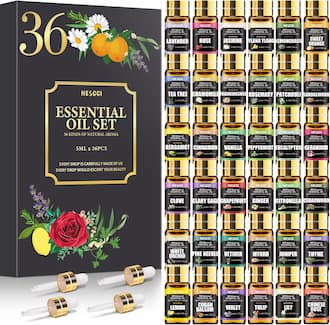
Essential Oils Set - Chosen For You
We earn a commission if you click this link and make a purchase at no additional cost to you.
The Social Obligation That No One Actually Wants
There’s a strange pressure in many settings to make small talk, even though nobody seems to enjoy it. It’s treated like a necessary evil, something you just have to do to avoid awkward silence. But if you really think about it, small talk isn’t something anyone actively looks forward to—it’s a forced performance.
- In workplace settings, people often start meetings with unnecessary small talk to "warm things up," even though everyone just wants to get to the point.
- Social gatherings can be littered with small talk, where people feel the need to "break the ice" with useless comments about trivial things instead of having an actual conversation.
- The awkwardness of silence is often cited as a reason for small talk, but the truth is, silence can be more comfortable than empty words.
The worst part is that small talk is often seen as a social requirement, not something anyone genuinely enjoys. People do it because they think they have to, not because they want to. If given the choice, many would prefer silence or a more meaningful conversation, but small talk persists because it's ingrained into everyday interactions.
It Fosters Nothing but Pointless Politeness
Small talk exists under the guise of politeness, but there’s nothing genuine about it. Most of the time, people are just going through the motions, saying what they think they’re supposed to say rather than actually caring about the conversation. This kind of forced politeness creates a distance rather than a connection. It doesn’t foster relationships—it just keeps them on the surface, ensuring they never go deeper.
- Politeness in small talk often leads to people asking questions they don’t really care about, like “How was your weekend?” or “Any big plans for the week?”
- Even when people answer, the response is usually generic, like “It was fine” or “Not much going on.” These answers don’t encourage any real follow-up.
- Small talk’s polite nature actually discourages sincerity, pushing people into a routine of meaningless exchanges that neither party enjoys.
There’s no real communication happening, just a performance of social norms. Instead of being polite by showing genuine interest in what someone else is saying, small talk keeps things in a cycle of empty, formulaic exchanges that serve no real purpose other than to avoid uncomfortable silence.

Law of Attraction Planner
- Aims to enhance mental, physical, and social aspects using the law of attraction
- Contains 248 pages with weekly and monthly overviews, journaling, and habit tracking
- Provides tools like mind maps and vision boards for setting and achieving goals
- Offers an 8-step system to reduce stress and procrastination.
We earn a commission if you click this link and make a purchase at no additional cost to you.
A Barrier to Real Connection
Small talk prevents real relationships from forming. By sticking to the surface, it blocks any chance for people to get to know each other on a deeper level. Real conversations build connections, but small talk keeps everything shallow and forgettable. It’s a waste of an opportunity to learn about someone, to share something meaningful, or to have a conversation that sticks with you afterward.
- People are unlikely to remember what was said in small talk because nothing of value was discussed.
- Small talk keeps conversations in safe, unremarkable territory, leaving no room for interesting or insightful exchanges.
- By avoiding anything personal or meaningful, small talk becomes a barrier to deeper conversations that could actually matter.
Instead of fostering connections, small talk keeps people at a distance. It’s a shield that everyone uses to avoid real interaction, and as a result, it limits the potential for anything beyond pleasantries.
Small Talk is a Total Waste
In the end, small talk serves no real purpose. It’s a way to fill the space with meaningless words, keeping things polite but shallow. There’s no depth, no real connection, and no lasting impact. It wastes time, energy, and the opportunity for real conversation. Instead of engaging in small talk, people would be better off with silence or, better yet, an honest, meaningful exchange.
