

Love refuses to respect boundaries, and gay love particularly defies every map humans have ever drawn. While most people assume romantic connections follow predictable patterns - meeting someone at work, through friends, or in the same neighborhood - queer love operates by entirely different rules that would surprise even seasoned relationship experts.
The most profound gay love stories often begin in the most unlikely places, cross the most impossible distances, and thrive in conditions that would destroy conventional relationships. This exploration reveals how gay love transcends not just geographical borders, but social, cultural, and even temporal boundaries in ways that reshape our entire understanding of human connection.
The Paradox of Digital Distance
The internet was supposed to make the world smaller, but for same-sex couples, it has actually made love larger and more complex than ever before. Traditional relationship advice suggests that long-distance relationships have poor success rates, yet couples separated by continents often report deeper emotions than those living in the same city.
The constant communication required to maintain a relationship across time zones creates a level of intentionality that co-located couples rarely achieve. Digital-first relationships force you to fall in love with minds and personalities before physical attraction takes precedence, reversing the typical relationship progression.

The Midnight Text Revolution
Studies of international couples reveal that those who spend at least six months in different time zones before meeting report 40% higher relationship satisfaction scores than couples who met locally. When you send a good morning text that arrives as a goodnight message across the world, your boyfriend experiences a form of romantic time travel.
The delayed gratification of responses creates anticipation that married couples living together often lose after years of instant availability. The asynchronous nature of international relationships creates what psychologists term "intentional romance" - every interaction becomes a deliberate choice rather than a default behavior.
You develop rituals like leaving voice messages while your partner sleeps, creating what researchers call "dream conversations." The asynchronous communication patterns often survive even after you relocate to the same city. You've learned to treasure delayed responses and thoughtful communication over instant availability.
You must actively decide to share your day, ask about your boyfriend's experiences, and maintain emotional connection across vast distances. This intentionality often translates into stronger relationships even after you eventually live in the same location. You have already developed advanced communication skills that most couples never learn.
The Translation of Love
Love languages become literal languages when you speak different tongues, creating intimacy through the act of learning itself. You communicate through translation apps and patient repetition, discovering that relationship development slows to accommodate language learning - often strengthening bonds through the extra time and attention required.
The effort you invest in understanding each other's culture and communication styles creates patience and dedication that monolingual couples rarely develop. The process of teaching each other languages becomes a form of extended courtship that can last for years.
You become each other's most patient teachers and most motivated students, creating a dynamic where personal growth and romantic development become inseparable. Multilingual couples often report that different languages unlock different aspects of personality, allowing you to fall in love with multiple versions of the same person.
You discover that humor translates differently across languages, while vulnerability and romance express themselves through distinct linguistic patterns. The process of switching between languages becomes a form of emotional code-switching that reveals hidden depths in personality that monolingual relationships cannot access.
The vulnerability required to mispronounce words and make grammatical mistakes in front of your lover creates a foundation of acceptance that serves relationships well through other challenges. The necessity of explaining culture to someone from a different background forces you to understand the arbitrary nature of many social expectations, isn't it fascinating how language barriers become intimacy builders?
The Underground Railroad of Modern Love
Gay love has always operated through hidden networks and secret societies, but modern technology has transformed these underground connections into sophisticated international support systems. The same discretion that protected gay people in hostile environments now enables love to flourish in places where it theoretically cannot exist.
Dating apps designed for gay men have become modern Underground Railroads, moving not just people but emotions, support, and connections across borders that governments have tried to seal. The clandestine nature of gay love in many parts of the world has created relationship skills that openly gay couples in accepting countries often lack.
The Art of Invisible Courtship
Gay men in countries where homosexuality remains illegal have developed courtship rituals so subtle they are practically invisible to heterosexual observers, yet crystal clear to other gay men. You maintain relationships through business communications, gaming sessions, and social media interactions that appear platonic to outsiders.
Your relationship vocabulary develops through code words, emoji combinations, and cultural references that create a secret language meaningful only to those fluent in gay semiotics. The constant threat of discovery forces you to develop hyper-awareness of each other's needs, moods, and safety concerns.
You learn to communicate volumes through single glances, text timing, and social media activity patterns. The heightened attention required for survival often translates into extraordinary emotional intelligence that benefits your relationship long after you escape to safer territories.
Those who met through underground networks often report feeling like co-conspirators in a beautiful crime, creating a bond that transcends typical romantic connection. You develop shared communication systems that survive displacement and separation, using music playlists, reading lists, and digital breadcrumbs to maintain contact when direct communication becomes dangerous.
The playlist method has become particularly popular - adding songs to indicate mood, location, and safety status in a code that sustains relationships through years of forced separation. This creates intimacy through shared secrecy that most open relationships never experience, right?
Safe House Romance
When you flee persecution, you often experience accelerated relationship development as you become each other's entire support system in foreign countries. You must simultaneously navigate immigration law, cultural adjustment, and relationship dynamics without external support networks.
The intensity of rebuilding life together in unfamiliar territory tests every aspect of compatibility while forcing rapid emotional intimacy. The process of seeking asylum as a couple requires proving the authenticity of your relationship in ways that would horrify straight couples.
You must document your love through photos, messages, witness statements, and intimate details that heterosexual couples take for granted as private. This forced transparency creates a level of emotional honesty that many relationships never achieve, but also adds legal pressure that tests even the strongest connections.
Many refugee couples report that the process of fighting for legal recognition taught them to value love in ways they never had before. You develop daily practices of documenting appreciation - not for romance, but for potential legal evidence of relationship authenticity.
The habits continue long after legal status is secured, creating foundations of daily gratitude that most couples struggle to maintain without external motivation. Your love becomes evidence in court proceedings that would challenge any relationship to prove its legitimacy.
The Time Traveler's Guide to Gay Love
Gay relationships often exist in multiple time periods simultaneously, with you living in different decades of LGBTQ+ acceptance depending on your locations, families, and personal journeys. A gay man who came out in the 1980s during the AIDS crisis brings entirely different relationship expectations and survival skills than someone who grew up with marriage equality.
These temporal differences create unique dynamics where you must navigate not just personal compatibility, but historical trauma, generational expectations, and vastly different lived experiences of what it means to be gay. The age gap becomes less about numbers and more about navigating different eras of gay history within a single relationship.

The Generation Bridge
Couples with significant age differences often function as living history lessons, with older lovers serving as witnesses to struggles that younger ones view as ancient history. You create relationships that bridge pre-internet gay culture with social media activism.
The younger partner gains historical perspective that no academic study could provide, while the older one discovers hope for futures they never expected to see. The teaching dynamic in age-gap relationships often reverses traditional mentorship patterns, with younger lovers educating older ones about modern gay identity and digital culture.
You learn about evolving terminology, contemporary activism, and digital communication norms, while your partner discovers historical context, survival strategies, and the significance of chosen family structures. Your relationships become two-way cultural exchanges that enrich both of you in ways that same-age relationships rarely achieve.
Those bridging generational gaps in gay history often report feeling responsible for preserving and updating LGBTQ+ culture for future generations. Your relationships become living archives where survival stories meet liberation dreams.
The personal becomes political in ways that transform both your understanding of your place in gay history. You create continuity that individual activism cannot achieve through the simple act of loving across decades.
The Coming Out Timeline
When you came out at vastly different ages, you often experience relationship development in reverse chronological order, with the recently out person going through identity phases while the veteran navigates relationship stability. Late-life coming out creates dynamics where one of you experiences first Pride celebrations while the other plans shared long-term futures.
The recently out partner brings fresh excitement to experiences the veteran had taken for granted, while the experienced one provides stability during emotional identity development. The different coming out timelines create relationships where you serve as both lovers and guides through different stages of gay identity development.
The experienced partner becomes a mentor through gay culture, social dynamics, and identity formation, while the newcomer brings fresh perspectives on what modern gay life looks like. This dynamic often creates deeper intimacy than traditional relationships, as you witness each other's fundamental identity formation in real time.
Those with staggered coming out experiences often develop unique empathy for the fear and excitement of identity discovery that most people experience only once. The veteran partner relives the joy of first gay experiences through their boyfriend's eyes, while the newcomer benefits from guidance that prevents common early mistakes.
Your relationship becomes a safe space for identity exploration that extends far beyond typical romantic boundaries, creating bonds that encompass both love and personal transformation, wouldn't you agree?
The Diplomatic Immunity of Love
Gay love operates under its own international law, creating relationships that exist in the spaces between official policies and social realities. You develop immigration strategies, family definitions, and legal frameworks that often supersede the governments that don't recognize your relationships.
The necessity of creating alternative legal and social structures has made gay couples pioneers in relationship innovation, developing solutions that heterosexual couples are only beginning to adopt. Marriage equality was never just about weddings - it was about forcing the world to recognize that love creates its own sovereignty that transcends national borders.
The Passport to Intimacy
When you're from different continents, you often become experts in immigration law, visa regulations, and international legal frameworks in ways that would challenge professional lawyers. You research visa options across multiple countries, mastering tourist visa limits, work permit requirements, student visa possibilities, and investment thresholds.
The process transforms you into amateur immigration attorneys whose expertise often exceeds professionals who haven't personally navigated the system. The legal obstacles facing international couples often require creative solutions that redefine traditional relationship timelines and commitments.
You may need to marry within months of meeting to secure visa status, or maintain long-distance relationships for years while navigating legal pathways. The external pressure of visa deadlines and legal requirements forces you to make decisions about commitment that heterosexual couples typically have years to consider gradually.
Many couples report that the process of overcoming legal barriers to be together taught them to treat relationships as shared projects rather than individual romance. The collaborative problem-solving required to navigate international law, visa applications, and legal documentation creates partnership dynamics that extend far beyond emotional connection.
Your love becomes a joint venture in the most literal sense, with both of you actively working to create the legal and social framework that allows your relationship to exist. This transforms romance into conscious partnership building that most couples never experience.
The Embassy of Two
When you live in countries that don't recognize relationships, you often develop parallel legal and social structures that function as micro-nations. You create marriage-equivalent arrangements through multiple legal systems, combining documents from different countries to achieve protections that married couples take for granted.
Your relationships exist in spaces between legal systems, creating jurisdictions of love that transcend national boundaries. The process of creating alternative legal frameworks forces you to actively design relationships rather than defaulting to social expectations.
You must explicitly discuss inheritance, medical decisions, financial obligations, and family responsibilities in ways that heterosexual couples often take for granted. This intentional relationship design often results in stronger, more conscious partnerships that have been stress-tested by legal and social challenges.
Those who create alternative legal frameworks often become informal ambassadors for gay rights, demonstrating the stability and commitment that opponents claim gay relationships lack. Your relationships serve as proof of concept for marriage equality, showing government officials, employers, and communities that gay love operates with the same dedication and responsibility as heterosexual marriage.
The personal becomes political through the simple act of building a life together against legal odds. You create your own diplomatic immunity through sheer force of documented commitment.
The Translator's Dilemma
Love requires translation not just between languages, but between entire worldviews, cultural expectations, and family systems that often have no equivalent terms. When you're from different cultures, you must navigate not only your own identity formation, but the intersection of distinct cultural approaches to family, masculinity, relationships, and social obligations.
The translation process goes far beyond language - it requires creating new cultural frameworks that honor both backgrounds while building something entirely new. Your relationships become living experiments in cultural fusion that would challenge professional anthropologists.
The Cultural Hybrid
When you're from different cultural backgrounds, you often create entirely new family traditions that blend elements from both cultures while accommodating the unique needs of same-sex relationships. You develop wedding traditions that honor both families while establishing relationship legitimacy within different cultural contexts.
Your solutions involve creating new rituals that respect traditional elements while building frameworks that didn't previously exist for same-sex partnerships. The process of cultural fusion in international relationships often requires you to become anthropologists of family systems, explicitly examining traditions that heterosexual couples absorb unconsciously.
You must explain cultural concepts like family hierarchy, masculinity expectations, and communication styles to someone from completely different social systems. Both of you become cultural translators for extended families, explaining relationships in terms that make sense within each cultural framework.
Many culturally mixed couples report that the process of cultural translation taught them to question assumptions about gender, family, and relationships that they had never examined before. The necessity of explaining culture to someone from a different background forces you to understand the arbitrary nature of many social expectations.
Your relationships become laboratories for conscious culture creation, blending the best elements of both backgrounds while discarding aspects that don't serve your partnership. This creates entirely new cultural frameworks that honor tradition while embracing innovation.
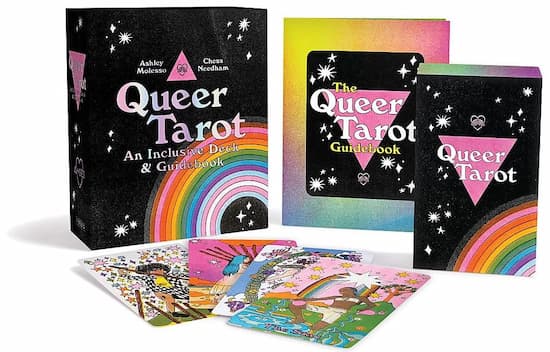
The Queer Tarot: An Inclusive Deck and Guidebook
Tarot deck and guidebook set for LGBTQ+, created by queer and trans artist team Ash + Chess.
We earn a commission if you click this link and make a purchase at no additional cost to you.
The Family Interpreter
When you're from different cultural backgrounds, you often become bridges between families who would never have met otherwise, creating unexpected international relationships that extend far beyond romance. Extended families begin learning languages, sharing traditional foods, and developing communication methods that transform understanding of the world beyond local communities.
Your relationships create cultural exchange programs that expand worldviews through personal connection rather than academic study. The challenge of introducing same-sex lovers to traditional families often requires you to develop sophisticated diplomacy skills that would benefit international relations professionals.
You must navigate different cultural approaches to sexuality, gender roles, and family structure while maintaining respect for traditions that may not include space for your relationship. The successful couples become cultural ambassadors who expand families' worldviews through patient education and demonstrated commitment.
Families who initially resist culturally mixed gay relationships often become the most protective advocates once they accept partnerships. Extended families who struggle with both sexuality and cultural differences frequently transform into fierce defenders against any form of discrimination.
The conversion process teaches families that love transcends cultural boundaries in ways that academic diversity training never achieves, don't you think? Your relationship becomes the bridge that connects not just two people, but entire cultural worlds that might never have intersected otherwise.
Love refuses to be contained by the borders humans create - whether geographical, cultural, legal, or temporal. Gay love, in particular, operates by rules that would astound relationship experts and immigration lawyers alike. The couples who navigate these complex international waters don't just find love - they pioneer new ways of building relationships that transcend every limitation society tries to impose.
Your stories reveal that the most profound connections often begin in the most impossible circumstances, thrive across the greatest distances, and create bonds that governments spend decades trying to catch up with through legislation. In a world obsessed with building walls, gay love continues to prove that human connection recognizes no authority higher than itself.
