

Gay dating feels like a circus where everyone forgot their lines and the tent is on fire. Your romantic history probably reads like a series of high-stakes accidents rather than a smooth stroll through a park. Many guys find themselves stuck in loops of chasing men who run or fleeing from men who care too much.
Psychology offers a lens to view these patterns without the shame often piled onto queer lives. Every person carries a blueprint for how they handle closeness and distance based on early life events. Gay men face additional layers of complexity due to societal pressures and hidden identities. Your brain wired itself to survive before it learned how to love.
A thorough decoding of these internal settings changes the way your future connections unfold. Peace exists within reach if your mind learns how to trust again. Success requires looking at the raw truth of your emotional habits.
Your earliest relationships leave invisible fingerprints on every romantic connection you'll ever have. These patterns, formed before you even learned to walk, become the unconscious blueprint for how you connect, communicate, and cope in love. Attachment theory reveals why some people seem effortlessly secure in relationships while others constantly worry about abandonment or feel suffocated by closeness.
Breaking free from these patterns requires first recognizing which attachment style runs your relationship operating system. Once you see the blueprint, you gain the power to rewrite it.
The Anxious Heart and Digital Panic

Secure Attachment
Fear often drives the anxious mind to seek constant validation from a romantic partner. Your nervous system reacts to a late text as if a physical threat exists in the room. Men who identify as gay often struggle with a deep-seated fear of abandonment rooted in early rejection. Every silence becomes a puzzle that your brain tries to solve with worst-case scenarios. Stability feels like a foreign concept when your self-worth depends on another person’s attention.
Anxiety manifests as a hunger for intimacy that never feels quite satisfied. Your internal monologue may obsess over whether the other person is losing interest or looking for someone better. Such patterns often stem from childhoods where love was conditional or unpredictable. Proximity becomes the only way to feel safe, yet the pressure you apply often pushes others away. A frantic need for closeness acts as a defense against the pain of being alone.
Searching for security in another person creates a precarious foundation for a relationship. Your tendency to over-analyze small shifts in tone or body language leads to unnecessary conflict. Longing for a deep connection is natural, but the urgency you feel creates a sense of desperation. Partners may feel overwhelmed by the weight of your emotional expectations. Growth happens when you learn to soothe your own fears instead of outsourcing that task to a partner.
A sudden delay in a text response triggers a cascade of mental distress. Your mind spins a narrative of rejection before the hour is even up.
Small gestures of affection become the only metrics for your relationship health. Your mood fluctuates wildly based on how much attention a partner gives you today.
Vulnerability feels like a gamble where the stakes are your entire identity. Every conversation serves as a test to see if the other person still wants you.
Space is perceived as a precursor to a permanent breakup. Your impulse to close the gap often ignores the personal boundaries of your partner.
Hyper-vigilance keeps you scanning for signs of a wandering eye or a cooling heart. Peace of mind stays out of reach because you are always waiting for the second shoe to drop.
Avoidant Armor in a Hyper-Masculine World
Independence becomes a weapon for the avoidant man who fears losing his autonomy. Your history likely includes moments where being vulnerable resulted in ridicule or harm. Many gay men adopt a "lone wolf" persona to protect themselves from the perceived suffocating nature of commitment. Closeness feels like an encroachment on your freedom rather than a source of strength. You might find yourself withdrawing exactly when things start to get serious.
Distancing behaviors serve as a shield against the potential of being controlled or rejected. Your brain perceives emotional intimacy as a trap that will eventually lead to disappointment. Often, you pride yourself on being low-maintenance or "not dramatic" to avoid deep emotional labor. A preference for casual encounters or short-term flings keeps your heart at a safe distance. Maintaining a wall ensures that no one gets close enough to see your flaws.
Subtle criticisms of a partner often act as a way to maintain emotional distance. Your focus shifts to a partner's minor imperfections to justify why the relationship cannot work. Such deactivating strategies prevent you from fully investing in a long-term future. Freedom is a core value, but you confuse it with isolation and lack of support. True connection requires a level of openness that currently feels like a threat to your safety.
Silence is used as a tool to regain a sense of personal control. Your partner feels shut out when you refuse to share your inner thoughts.
Casual sex offers a way to experience physical touch without the risk of emotional debt. Connection remains surface-level to ensure you can walk away at any moment.
Commitment feels like a loss of self rather than a gain of a partner. Every request for more time together sounds like a demand on your limited energy.
Nostalgia for an idealized "ex" prevents you from seeing the value in your current partner. Perfection becomes a ghost that no real human being could ever compete with.
Plans for the future stay vague to avoid the weight of a permanent promise. Your exit strategy is always mapped out in the back of your mind.

Anxious Attachment
The Secure Anchor Amidst Chaos
Consistency defines the secure attachment style within the often-turbulent gay dating world. Your ability to trust yourself allows you to trust others without excessive fear or suspicion. Many men with this style grew up in environments where their needs were met with reliable care. Closeness feels natural and safe rather than a source of anxiety or a threat to freedom. You have the capacity to communicate your needs clearly without playing games.
Reliability makes you a stabilizing force in any relationship you enter. Your partner knows what to expect because your actions align with your words over time. Conflict does not feel like the end of the world, but rather an opportunity for resolution. A secure man does not feel the need to hide his feelings or manipulate his partner for attention. Support is given freely and received without a sense of obligation or guilt.
Building a life with someone else becomes a collaborative effort rather than a power struggle. Your boundaries remain firm but flexible enough to allow for deep intimacy. Such a foundation provides the safety needed for both partners to thrive as men. Healthy gay relationships flourish when both men prioritize emotional honesty over ego. Security is not the absence of problems, but the presence of the capacity to handle them.
- Direct communication of feelings prevents misunderstandings from festering into resentment. Your partner hears the truth even when the truth is difficult to say.
- Consistency in your behavior builds a bank of trust over many months. Small promises are kept just as faithfully as the large ones.
- Autonomy and intimacy coexist without one threatening the existence of the other. Time spent alone is viewed as healthy rather than a sign of a failing connection.
- Forgiveness is extended easily because you do not view a partner's mistakes as a personal attack. Conflicts are resolved through compromise instead of shouting matches or cold shoulders.
- Support for a partner's individual dreams comes without a feeling of competition. Success for one person is seen as a victory for the entire relationship.
Fearful-Avoidant Paradoxes and Past Trauma
The fearful-avoidant style creates a painful cycle of craving love while simultaneously fearing it. Your experience of intimacy is often a roller coaster of intense highs and sudden retreats. Many gay men who have faced severe trauma or abuse carry this "disorganized" pattern into adulthood. You want the very thing that terrifies you the most, leading to confusing behavior for both you and your partner. Safety feels like an illusion that could be shattered at any second.
Hyper-arousal keeps your nervous system on high alert for any sign of betrayal. Your reactions to perceived slights are often explosive or deeply depressive. A partner might describe you as "hot and cold" because your mood shifts so rapidly. Trust feels like an impossible task when your history suggests that caregivers are also sources of pain. Living in this state of constant contradiction exhausts your mental and emotional resources.
Healing requires a slow and deliberate effort to rewire your responses to sexual performances. Your brain must learn that not every partner is a replica of those who hurt you in the past. Such progress is rarely a straight line and involves many setbacks along the path. Patience from a partner is a requirement, but you must also do the work of self-regulation. Complexity is a part of your story, but it does not have to be the end of it.
- Intense passion at the start of a relationship quickly turns into a desire to flee. Your brain interprets a deep connection as a signal of impending danger.
- Sabotage occurs just as the relationship reaches a new level of closeness. Chaos feels more familiar and comfortable than the quiet of a stable life.
- Mixed signals leave your partner feeling confused and emotionally drained. One day you are planning a future, and the next you are questioning everything.
- Hyper-sensitivity to a partner's tone leads to frequent and intense arguments. Small disagreements are viewed as evidence of a total lack of care.
- Dissociation acts as a defense mechanism when emotions become too overwhelming to process. You might mentally check out of a conversation to protect your psyche.
Hookup Culture and the Triggering of Insecurity

Hookup Culture
Digital platforms have revolutionized how gay men meet, but they also exacerbate attachment issues. Your phone becomes a source of dopamine hits that mask a deeper sense of loneliness. Many men use the anonymity of apps to avoid the vulnerability of face-to-face rejection. A culture of "on to the next one" reinforces avoidant tendencies and leaves anxious men in a state of panic. Value is often placed on physical attributes over emotional compatibility.
Ghosting has become a standard practice that deeply wounds those with insecure attachments. Your sense of self-worth takes a hit every time a conversation vanishes without an explanation. Such a disposable approach to humans makes building a real connection feel nearly impossible. Avoidant men find the lack of accountability on apps to be a perfect way to maintain distance. Anxious men find the lack of feedback to be a form of psychological torture.
Resisting the urge to treat people as commodities is a radical act in the modern gay scene. Your choice to be present and honest sets you apart from the crowd of "headless torsos." Creating a different experience requires a shift in how you use these digital tools. Meaningful interaction is possible if you prioritize quality over the quantity of matches. Integrity in your digital life leads to more satisfying real-world outcomes.
- Endless scrolling provides a distraction from the work of building a real relationship. Your brain stays in a state of constant search rather than a state of connection.
- Profile filters allow you to hide the parts of yourself that feel unlovable. Authenticity is traded for a curated image that no one can actually touch.
- Rejection on an app feels like a verdict on your entire existence as a man. Every "left swipe" is internalized as a sign that you are not enough.
- Instant gratification through casual hookups prevents the development of emotional depth. Pleasure is disconnected from the person, leaving you feeling empty afterward.
- The "paradox of choice" keeps you wondering if a better option is just one click away. Satisfaction remains elusive because your focus is always on the hypothetical "next."
Overcoming the Fear of Enmeshment
Loss of individuality is a common fear for men who have fought hard for their identities. Your path to coming out likely involved a struggle to define yourself against societal expectations. Many gay men worry that a relationship will swallow their hard-won freedom whole. A partner's needs can feel like a set of chains rather than an invitation to grow together. Finding a middle ground between isolation and enmeshment is the key to longevity.
Healthy boundaries allow you to remain yourself while still being part of a pair. Your hobbies, friendships, and interests do not have to disappear once you are "coupled up." A relationship should be an addition to your life, not a total replacement for it. Men who fear enmeshment often push back against even the smallest requests for collaboration. Learning to say "we" without losing "me" is a vital skill for a successful partnership.
Communication about your need for space prevents your partner from feeling rejected. Your request for a night alone can be framed as a way to recharge rather than an escape. Such transparency builds a bridge of understanding instead of a wall of resentment. A partner who respects your boundaries is a partner who truly sees you. Balance is achieved when both men feel secure enough to pursue their own paths.
- Setting aside time for personal hobbies preserves your sense of self. Your identity stays vibrant when you continue to do what you love.
- Maintaining separate friendships prevents the relationship from becoming an echo chamber. Diverse social circles provide the support that one person cannot give alone.
- Open discussions about financial independence reduce the fear of being controlled. Clear agreements about money prevent many future arguments.
- Taking solo trips or retreats can actually strengthen the connection you share. Absence allows for a renewed appreciation for the partner you left at home.
- Defining your own values helps you stay grounded when a partner's opinion differs. Self-assuredness is the best defense against losing your way in a relationship.
Healing Through Radical Vulnerability

Healing Through Radical Vulnerability
Growth is a difficult process that requires you to face the parts of yourself you usually hide. Your willingness to be seen in your messiness is what actually creates a deep connection. Many men view vulnerability as a weakness, especially in a culture that prizes "masculine" stoicism. Real strength is found in the ability to say "I am scared" or "I need you." Such honesty invites your partner to drop their own guard as well.
Lowering your defenses is a terrifying but necessary step toward a secure attachment. Your past hurts do not have to dictate the script for your future. A therapist or a support group can provide a safe space to practice this new way of being. Change happens in the small moments of choosing to be open instead of shutting down. Radical vulnerability is the antidote to the shame that keeps gay men isolated.
Trusting a partner with your secrets creates a linkage that superficial dates cannot match. Your history of rejection loses its power when it is met with empathy and acceptance. Such a transformation doesn't happen overnight; it requires consistent effort over many years. Peace comes from knowing that you are loved for who you are, not for the mask you wear. Vulnerability is the gatekeeper to the intimacy you have always wanted.
- Sharing your "coming out" struggles helps a partner perceive your inner strength. History is a teacher that explains why you react the way you do now.
- Admitting when you feel insecure prevents a small doubt from growing into a crisis. Verbalizing the fear takes away much of its psychological power.
- Expressing a need for more affection is a sign of emotional maturity, not weakness. Your partner is not a mind reader and requires clear signals.
- Listening to a partner's feedback without getting defensive shows a commitment to growth. Change is only possible when you are willing to look at your own behavior.
- Apologizing sincerely for a mistake repairs the trust that was damaged. Humility is a more effective tool for connection than being "right" all the time.
Consistency as a Love Language
Reliability is often overlooked in favor of "chemistry" or "fire" in the gay dating scene. Your excitement about a new guy can blind you to the fact that he never follows through. Many men mistake the anxiety of an unpredictable partner for the "passion" of a great romance. Real love looks like a person who shows up when they say they will show up. Stability is the most underrated trait a partner can possess.
Building a life requires a foundation of repeated, positive actions over a long period. Your partner’s ability to be a "safe harbor" allows you to take risks in other areas of your life. Consistency reduces the amount of energy you spend wondering where you stand with someone. A relationship that feels like a roller coaster is usually a sign of insecure attachment, not true love. High-value men prioritize the peace that comes from a dependable partner.
Showing up for the boring parts of life is where a relationship truly proves its worth. Your presence at a doctor's appointment or a grocery run matters more than a flashy vacation. Such small acts of service build a reservoir of goodwill that carries you through the hard times. A secure attachment is maintained through a thousand tiny moments of being there. Consistency is a choice that you make every single day.
- A routine of check-ins provides a predictable rhythm for your emotional life. Knowing when you will talk next reduces the urge to panic.
- Financial stability and shared planning create a sense of a future together. Long-term success is built on the mundane details of adult responsibility.
- Emotional availability means being present even when the conversation is not exciting. Deep connection happens in the quiet spaces between the big events.
- Follow-through on small promises builds a mountain of evidence that you are trustworthy. Your words have weight because your actions back them up.
- Patience during a partner's difficult season shows a commitment to the "long haul." Love is a marathon that requires a steady pace rather than a sprint.
Breaking the Cycle of Ghosting

Ending a connection with dignity is a skill that few gay men seem to possess. Your habit of disappearing when things get uncomfortable is a symptom of avoidant attachment. Many guys justify ghosting as "not wanting to hurt the other person," but it is actually a way to avoid their own discomfort. A lack of closure leaves the other person in a state of anxious limbo. Integrity requires you to have the difficult conversation instead of hitting the "block" button.
Honesty about your feelings allows both people to move on with their lives. Your clarity is a gift, even if the message is that you are no longer interested. Such a practice builds your own emotional muscles and increases your self-respect. Ghosting is a cowardly act that perpetuates a culture of disposability and mistrust. Being a man of your word means being honest even when it feels awkward.
Treating others with the respect you want to receive is a basic human requirement. Your reputation in the gay world is built on how you treat the people you are no longer dating. A brief but kind message is all it takes to end a connection with grace. Such a shift in behavior helps to heal the broader gay scene one person at a time. Maturity is defined by how you handle the endings, not just the beginnings.
- A clear text message stating your lack of interest is better than weeks of silence. Clarity allows the other person to stop wasting their emotional energy.
- Direct communication prevents the other person from inventing a story about what went wrong. Your truth is the only thing that can provide them with closure.
- Facing the discomfort of a breakup builds your own resilience and character. Growth happens when you stop running away from difficult emotions.
- Respecting a partner's time means not "stringing them along" when your heart is not in it. Honesty is the most respectful thing you can offer another human being.
- Closing the door completely prevents the "will they, won't they" cycle from draining you. A clean break is the fastest path to healing for both parties.
The Role of Self-Compassion in Change
Forgiving yourself for past relationship failures is a prerequisite for a better future. Your attachment style is not a life sentence or a moral failing of your character. Many gay men carry a heavy load of self-criticism that prevents them from trying again. Acknowledge that your brain was doing its best to protect you from harm in a world that wasn't always kind. Healing begins with the radical idea that you are worthy of a stable and loving connection.
Growth is a slow process that involves making different choices one day at a time. Your awareness of your patterns is the first step toward changing them for the better. Such a transition requires you to be patient with yourself when you slip back into old habits. A secure attachment is something you can build, even if you didn't start with one. Self-compassion provides the emotional fuel needed to keep doing the work of transformation.
Rewiring your brain's response to intimacy is the most rewarding task you will ever undertake. Your future self will thank you for the effort you put in today to become more secure. Such a path leads to a life filled with deeper connections and a more profound sense of peace. Love is not a mystery to be solved, but a capacity to be developed within yourself. You have the ability to create the relationship you have always dreamed of.
- A daily practice of self-affirmation counters the voice of your inner critic. Your value is inherent and does not depend on your relationship status.
- Journaling about your triggers helps you identify patterns before they take over. Awareness is the light that makes the shadows of your past disappear.
- Setting realistic expectations for your progress prevents you from giving up. Change is a series of small wins that add up over many months and years.
- Seeking support from a community of secure men provides a model for your own growth. Surround yourself with people who represent the version of yourself you want to be.
- Celebrating your successes in communication builds your confidence for the next challenge. Every time you choose vulnerability over fear, you are winning the battle for your heart.

Tactics for the Anxious Communicator
Your heart often beats faster when a partner seems distant or distracted. Silence feels like a heavy weight that you feel a need to lift immediately with words. You often find yourself apologizing for things that require no apology. A calm voice helps ground your nervous system during a heated moment. Clarity is your best friend when your mind starts to invent problems.
Focus on statements that start with "I" to express your internal state without blaming your partner. A clear request for reassurance is better than a passive-aggressive remark. You should state your needs directly instead of waiting for your partner to guess. Space is a requirement for a healthy connection, not a sign of failure. Small delays in a response are rarely an indicator of a lost connection.
Practice self-soothing techniques before you hit send on that long text. Your partner deserves a version of you that is not driven by panic. Stability is built through repeated moments of calm interaction. A deep breath changes the entire direction of a conversation. You are able to wait for a better time to talk.
Ask for a particular time to talk if the current moment feels tense. A scheduled conversation reduces the anxiety of waiting for an answer.
State your need for a hug or a kind word directly. Your partner will appreciate the lack of guesswork in the relationship.
Limit your messages to one or two sentences during a disagreement. Brief communication prevents the escalation of emotional distress.
Focus on the facts of the situation rather than your fears about the future. Reality is often much kinder than the stories your brain tells you.
Reassure yourself that your worth is independent of a partner's mood. A stable sense of self makes every conversation easier to handle.
Language for the Avoidant Man in Love
Silence often feels like the safest place to hide when things get heavy. Your first instinct is to pull away when a partner asks for more intimacy. A request for space is a reasonable boundary to set. You often fear that words will trap you in a corner. Honesty about your need for solitude prevents a partner from feeling rejected.
Try a timer for difficult conversations to ensure they have an end. A definitive endpoint makes the emotional labor feel less overwhelming. You should describe your feelings in simple terms without overcomplicating the issue. Independence stays intact even when you reveal a part of your heart. A partner appreciates knowing when you will return to the conversation.
Vulnerability is a skill that improves with intentional practice over time. Your walls protect you, but they also keep out the support you need. A small step toward openness transforms your entire relationship. You deserve to be known and accepted for your true self. Resilience is found in the ability to stay present during a conflict.
Tell your partner you need ten minutes of quiet to process your thoughts. A clear timeline prevents the other person from feeling ghosted.
Acknowledge the partner's feelings even if you do not fully agree. Validation is a way to maintain peace without losing your autonomy.
Use physical touch as a way to communicate when words feel too hard. A hand on a shoulder says a lot without the risk of a misspoken phrase.
Reveal one small detail about your day to build a bridge of trust. Low-stakes disclosure makes the bigger conversations feel more manageable.
State your commitment to the relationship before you ask for space. A reminder of your loyalty keeps the other person from panicking.
Strategies for the Fearful-Avoidant Man
Your mind is a battlefield where the desire for love meets the fear of pain. Consistency feels like a trap that you are always trying to escape. A sudden shift in your mood is often a sign of a triggered trauma. You deserve a partner who is patient with your internal contradictions. Stability is possible even when your history suggests otherwise.
Identify your triggers before they turn into a full-scale argument. Your partner needs to know what causes you to shut down or lash out. A calm environment is the best place for a serious discussion. You should focus on staying grounded in the present moment. A secure connection is built on a foundation of mutual respect.

Forgiveness is a resource that helps you let go of past hurts. Your current partner is not the person who caused your old wounds. A new script for your life is yours to write every day. You have the ability to break the cycle of chaos in your love life. Healing is a slow process that requires a lot of self-care.
Describe your physical sensations when you feel a trigger coming on. A partner helps you calm down if they know what is happening.
Write down your thoughts before you speak them aloud. A pen and paper create a way to organize your chaotic emotions.
Ask for a second attempt if a conversation goes off the rails. A second chance allows you to handle the issue with a cooler head.
Remind yourself that safety is a real possibility in this relationship. A mantra of security helps to silence the voice of fear.
Thank your partner for their patience during your difficult moments. A little gratitude goes a long way in maintaining a healthy connection.
Secure Communication for Success
Clarity is the hallmark of a man who knows his own heart. Your words are a reflection of your intentions and your values. A partner feels safe because you are reliable and honest. You should continue to prioritize directness over manipulation or games. A healthy relationship requires constant maintenance and care.
Active listening is a way to show your partner that they matter. Your full attention is the greatest gift you can give during a talk. A secure man is not afraid to admit when he is wrong. You possess the capacity to hold space for a partner's emotions. Conflict is a natural part of any long-term connection.
Future planning becomes a source of excitement rather than a source of stress. Your mutual life is a work of art that you create together. A sense of humor helps to diffuse the tension of a bad day. You should always aim for a resolution that helps both parties. Love is a choice that you make with every word you speak.
Repeat back what you heard to ensure you have the correct idea. A summary prevents many of the small errors that lead to big fights.
Set a regular time for a relationship check-in once a week. A proactive discussion stops small problems from growing into crises.
Express your appreciation for a partner's effort every single day. A habit of gratitude keeps the connection strong and vibrant.
Keep your voice at a steady volume even during a disagreement. A calm tone invites a calm response from the other person.
Ask how you are able to support your partner when they are having a hard time. A simple question shows that you are on the same team.
The Queer Tarot: An Inclusive Deck and Guidebook
Tarot deck and guidebook set for LGBTQ+, created by queer and trans artist team Ash + Chess.
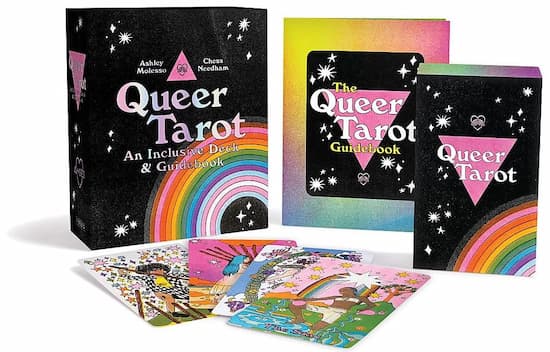
We earn a commission if you click this link and make a purchase at no additional cost to you.
Attachment Styles In Relationships
Understanding your attachment style is the first step toward a healthier and more fulfilling love life. Your past experiences have shaped you, but they do not have to define your entire future. A commitment to growth and self-awareness will lead you to the connection you deserve. Gay men have a unique opportunity to redefine what it means to be in a successful and loving partnership.
Peace, security, and deep passion are within your reach if you are willing to do the work. Your heart is a resilient organ that can learn new ways to beat in sync with another. Success is found in the daily choice to be present, honest, and kind to yourself and your partner.
A better version of your romantic life is waiting for you to step into it with confidence. Believe in your capacity to heal and to build something that lasts through the seasons of life.
The world of gay dating is often a minefield of past trauma and modern digital distractions. Your awareness of these attachment styles provides you with a map to navigate the landscape with more ease. A secure heart is the most valuable asset you can bring to any relationship.
Every interaction is a chance to practice the skills of vulnerability, consistency, and honesty. Growth is not a destination you reach, but a way of living that honors your deepest needs for connection. Your history of rejection is a chapter in your book, not the entire story of your life. Success in love is possible for every man who is willing to look inward and make a change. A life filled with meaningful relationships is the greatest gift you can give to yourself.
Trust in your ability to grow and to find the love that has been searching for you. Peace of mind is the ultimate reward for the hard work of emotional transformation and healing. Would you like me to create a customized communication guide for your specific attachment style to help you manage difficult conversations with a partner?
