

#DidYouKnow Tuna can swim at a steady rate of 9 miles per hour for an indefinite period. They never stop moving.
It's estimated that a 15 year old tuna travels one million miles in its lifetime. Do you know how far is one million miles? The distance between the Earth and the Moon is said to be 238,855 miles. So it's about 2 x return journeys to the moon.
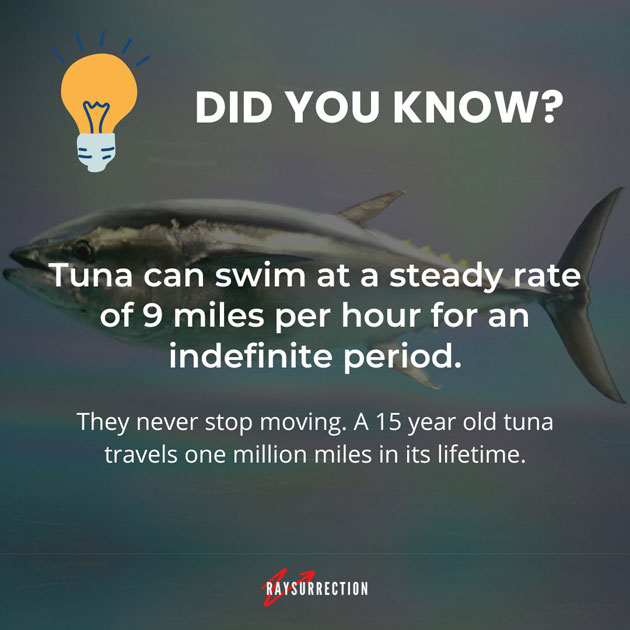
Photo: Tuna (Wikimedia Commons) Creative Commons Attribution 2.1 Japan license.
The Fascinating Facts About Tuna
They are fascinating creatures with many unique features. For example, tuna are warm-blooded, which is unusual for fish. This allows them to maintain a higher body temperature and stay active in colder waters.
Tuna have excellent vision. Their large, well-developed eyes help them spot prey and navigate the ocean. They can see in low light conditions, which is useful for hunting at different depths.
Tuna can dive to great depths. Some species can dive over 3,000 feet. This ability helps them find food in different parts of the ocean and avoid surface predators.
Tuna never stop swimming. From the moment they are born, they keep moving. This constant movement is necessary for their survival - to breathe. Because unlike many fish, tuna cannot pump water over their gills while stationary. They need to swim to force water through their gills to take oxygen.
Constant swimming also helps tuna find food. They cover vast areas of the ocean in search of prey. Their steady speed allows them to catch up with fast-moving prey like smaller fish and squid.
The Migration of Tuna
Different tuna species have different migration patterns. For example, the Atlantic bluefin tuna migrates across the Atlantic Ocean. They travel from their breeding grounds in the Gulf of Mexico to feeding grounds in the North Atlantic.
Tuna move in large groups to protect themselves from predators. It also increases their chances of finding food as they travel.
Their migrations affect other marine species. As tuna move through different areas, they influence the distribution of their prey. This movement helps to spread marine life across various parts of the ocean. That's tuna's role in the ecosystem.
The Threats to Tuna Populations
Despite their speed and strength, tuna face several threats.
- Overfishing is a major concern. High demand for tuna has led to the depletion of some tuna populations.
- Illegal fishing. Capturing young tuna is affecting the species' ability to reproduce.
- Climate change. Changes in ocean temperatures and currents can affect tuna migration patterns. This makes it harder for them to find food and suitable breeding grounds.
Conservation Efforts for Tuna
Efforts are being made to protect tuna populations. International agreements aim to manage tuna fishing sustainably, including catch limits and protecting breeding grounds.
Organizations around the world encourage consumers to choose sustainably sourced tuna. Marine protected areas ensure the survival of tuna and other marine species.
The future of tuna depends on our actions today. Sustainable fishing practices help us ensure that these remarkable fish continue to thrive.
