

Roman baths were the sultry heart of the empire, where sweat, steam, and skin collided in a haze of hedonism. These sprawling complexes weren't just for scrubbing dirt - they were social hubs, pleasure dens, and places where bodies glistened under flickering torchlight. Men, women, and sometimes more, mingled in ways that raised eyebrows and pulses. Let's slip into the steamy world of Roman bathing and see what really went down.
The Layout: A Maze of Heat and Desire
Roman baths were architectural marvels, designed to seduce the senses with their opulent sprawl. Marble columns, mosaic floors, and steaming pools created an atmosphere thick with allure. Public bathhouses, called thermae, catered to everyone from senators to slaves, while private balneae offered exclusive vibes. Every corner promised a new thrill, from scorching saunas to icy plunges.
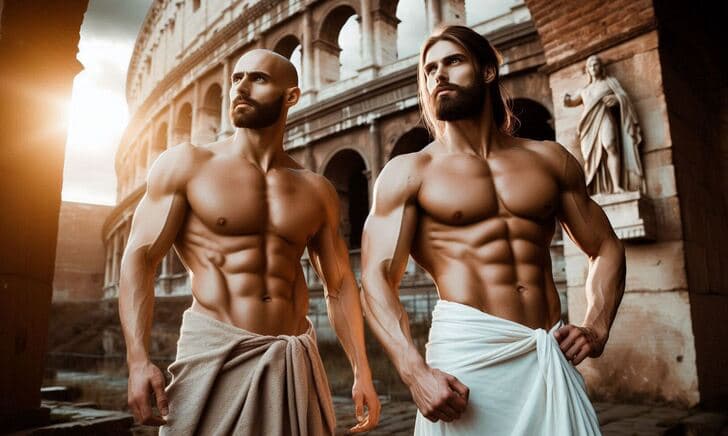
- Massive complexes drew crowds daily. Pompeii's Stabian Baths, one of the oldest, spanned over 3,500 square meters, with separate wings for men and women. Vaulted ceilings echoed with laughter, splashes, and whispered flirtations. Mosaics of nymphs and satyrs set a playful, erotic tone.
- Hot rooms cranked up the heat. The caldarium, heated by underfloor hypocausts, could hit 50°C, leaving bathers slick with sweat. Men lingered here, muscles gleaming, exchanging banter or stolen glances. Scented oils, rubbed into skin, filled the air with earthy musk.
- Cold plunges shocked the system. The frigidarium's icy pool, often open to the sky, made pulses race as men dove in, gasping. Shivering bodies huddled close, sometimes brushing skin in the crowded water. Shouts and playful shoves broke the tension.
- Social spaces blurred boundaries. The tepidarium, a warm middle ground, had benches where men lounged, towels barely clinging to hips. Servants offered massages, their hands gliding over taut shoulders. Gossip flowed as freely as wine, with eyes wandering.
The Ritual: A Slow, Sensual Moves
Bathing in Rome was a ritual, a drawn-out tease that left you buzzing. Men didn't just wash - they indulged, savoring every step from oiling up to scraping down. The process was public, intimate, and unapologetically physical. Hours could vanish in a blur of steam and skin.
- Oiling up was a tactile affair. Men slathered olive oil over their bodies, the slick sheen catching the light. Friends or slaves helped, hands sliding over backs and thighs, lingering just long enough. The air grew heavy with the scent of lavender or myrrh.
- Strigils scraped with precision. After sweating, men used curved metal tools to peel off oil and grime, revealing flushed skin. A skilled slave could make this feel like a caress, blade grazing close. Some men traded the task, a chance for casual touch.
- Baths were a full-body plunge. Men sank into warm pools, water lapping at their chests, muscles loosening. Crowded baths meant thighs brushing thighs, with no room for modesty. Laughter and low voices mingled with the slosh of water.
- Massages sealed the deal. Post-bath, men sprawled on stone slabs as masseurs kneaded out knots with scented oils. Firm hands worked over calves and backs, sometimes straying to tease. A good rubdown left men languid, eyes half-closed in bliss.

The Social Scene: Where Eyes and Hands Wandered
Bathhouses were Rome's hottest social spots, where status melted in the steam and flirtation thrived. Men of all ranks mingled, their bodies bared, egos softened by heat. Friendships formed, deals were struck, and glances turned into something more. The baths were a playground for connection, no questions asked.
- Nakedness leveled the field. Senators and soldiers stripped down together, togas replaced by towels - or nothing. A brawny gladiator might catch a noble's eye, sparking a bold compliment. Barriers of class dissolved in the haze.
- Games and chatter fueled the vibe. Men played dice on marble benches, betting coin or favors, voices loud with bravado. A quick wit or a sly grin could draw a crowd, inviting closer talk. Some conversations drifted to private alcoves.
- Flirting was an open secret. A lingering look across the pool could lead to a shared bench, shoulders brushing. Men might offer to oil a friend, hands bold but subtle. The baths' dim corners hid quick, knowing smiles.
- Wine and snacks kept it lively. Vendors sold honeyed figs and cheap wine, passed around as men lounged. A shared cup could spark a laugh, then a touch, then more. The buzz of alcohol loosened tongues and inhibitions.
The Erotic Undercurrent: More Than Just Bathing

The baths were a hotbed of desire, where the line between hygiene and hedonism blurred. Men reveled in the freedom of bare skin and close quarters, and for some, the vibe turned openly sexual. Same-sex encounters, especially between men, were no rarity in Rome's steamy sanctuaries. The baths offered cover, opportunity, and a pulse-racing thrill.
- Homoerotic vibes were woven in. Roman culture saw male desire as fluid, and baths were a safe space to explore. A muscular youth might draw admiring stares, answered with a smirk. Poetry from the era, like Catullus' verses, hints at lusty bathhouse trysts.
- Private rooms offered discretion. Wealthy bathers could rent small chambers for "rest," their purpose an open secret. A senator and his favorite might slip away, curtains drawn. Low moans sometimes leaked through the walls.
- Public encounters pushed boundaries. In crowded pools, a bold hand might graze under the water, met with a grin or a nudge. Men who lingered late found quieter corners, shadows hiding quick, heated moments. Guards rarely cared, unless things got too loud.
- Erotic art set the mood. Mosaics and frescoes often showed satyrs chasing nymphs or gods entwined. These images, like those in the Baths of Caracalla, stirred the blood. Men joked about them, but the art fueled wandering thoughts.
The Players: Who Kept the Baths Buzzing
The bathhouse crowd was a mix of Rome's finest and roughest, each adding spice to the scene. From swaggering soldiers to sly poets, every man brought his own heat. Slaves and attendants, often young and fit, were part of the draw, their presence a constant tease. The baths thrived on this eclectic energy.
- Soldiers brought raw swagger. Legionaries, fresh from drills, filled the baths with broad shoulders and coarse laughs. Their scars and swagger drew eyes, and they knew it. A quick wrestle in the pool could turn into something else.
- Poets and nobles added wit. Men like Martial spun clever quips, their words as seductive as their glances. A wealthy patron might invite a poet for a private soak, ideas flowing. Their banter kept the air electric.
- Slaves were more than helpers. Young attendants, often chosen for looks, oiled and scraped their masters with practiced hands. A lingering touch could earn a coin - or an invitation. Their beauty was a bathhouse staple.
- Foreigners spiced things up. Traders from Greece or Egypt brought exotic oils and bold attitudes, catching local eyes. A dark-eyed stranger might share a bench, stories leading to closer talk. Their presence made every visit unpredictable.

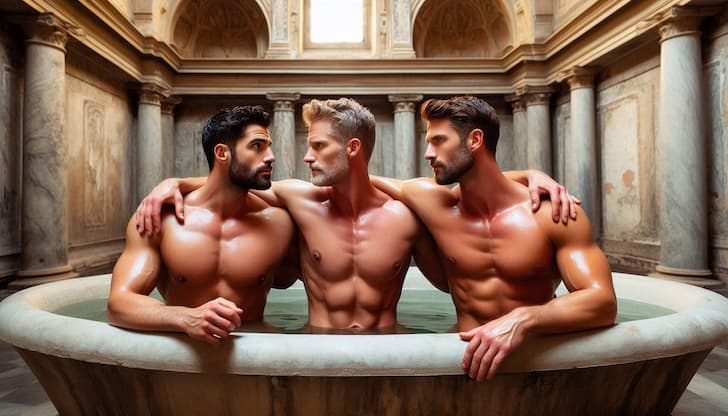
Two Men in Love in a Roman Bath
The Aftermath: Leaving the Baths
Leaving the baths was like waking from a fever dream, body loose and mind buzzing. Men stepped back into Rome's dusty streets, skin still warm, hair damp, a secret smile on their lips. The glow of the experience lingered, a mix of relaxation and unspoken thrills. For many, the baths were the day's peak, a ritual they craved.
- Freshly oiled skin gleamed. Men left with a sheen, their bodies smelling of herbs and musk, drawing looks. A quick tunic barely hid the flush of heat on their chests. Friends teased about who lingered longest.
- Connections followed them out. A bathhouse flirtation might lead to a dinner invite, or a late-night stroll. Men swapped promises to meet again, eyes bright with intent. Some bonds lasted years, forged in steam.
- Energy carried into the night. The baths left men wired, ready for wine-soaked banquets or quiet trysts. A soldier might head to a tavern, still buzzing from a stranger's touch. The city's pulse seemed to match their own.
- Memories fueled anticipation. As men left, they already planned their next visit, craving the heat and chaos. A quick glance back at the bathhouse doors promised more. For Romans, the baths were a fire that never died.

Essential Oils Set - Chosen For You
We earn a commission if you click this link and make a purchase at no additional cost to you.
Outro: The Eternal Heat of Roman Baths
The Roman baths were more than marble and water - they were a steamy crucible of pleasure, connection, and raw human energy. Men dove into a world where sweat and desire mingled freely, where every visit sparked something new. From the caldarium's haze to the frigidarium's jolt, the baths burned bright in Rome's heart, a legacy of heat that still smolders in our minds.
