

Panzanella Salad Recipe – Bright, Fresh, and Full of Summer Flavor
The moment juicy summer tomatoes hit their peak, panzanella salad comes to my mind as the go-to way to enjoy them. This classic Tuscan dish brings together crunchy bread, sweet tomatoes, olive oil, basil, and a handful of other fresh vegetables I usually find in my kitchen. Making panzanella always feels like bringing a bit of Italy to my table, especially when fresh ingredients are easy to find at local markets or in my own garden.
This is a recipe that allows for flexibility while delivering rewarding flavor and texture. I like how it turns simple, everyday ingredients into a colorful, satisfying main or side dish. If you’re working with leftover bread or looking for a way to use up a bounty of tomatoes and cucumbers, this is a great place to start. Panzanella works well for picnics, family meals, or even as a quick lunch that keeps the kitchen cool on warm days.
Why I Love Making Panzanella Salad
- Uses everyday ingredients. Fresh vegetables and day old bread come together easily.
- No cooking required. Everything is tossed together, which is perfect when I don’t want to use the stove.
- Crowd pleasing texture and flavor. Crunchy bread and juicy vegetables give contrast in every bite.
- Easy to personalize. I can add olives, mozzarella, or even grilled veggies based on what I have at home.
- Perfect for meal prep. The salad becomes even tastier after marinating for a short time, letting all the flavors come together.
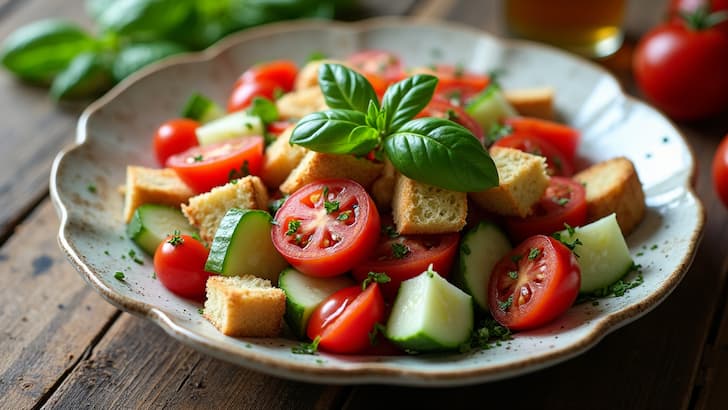
Essential Ingredients
Here’s what I use to build a classic, vibrant panzanella salad:
- 3-4 cups of rustic Italian bread or ciabatta, cut into 1 inch cubes (stale or day old bread works best)
- 4 medium ripe tomatoes, chopped into bite sized pieces
- 1 cucumber, sliced or chopped
- 1 small red onion, thinly sliced
- 1 yellow or orange bell pepper, chopped
- 1/4 cup extra virgin olive oil
- 2-3 tablespoons red wine vinegar
- Salt and freshly ground black pepper, to taste
- 1 clove garlic, minced
- 1 cup fresh basil leaves, torn by hand
- Optional: black olives, capers, or sliced radishes for added flavor
Step by Step Instructions
1. Prepare the Bread
I start with day old bread because it soaks up flavor without turning mushy. If my bread is fresh, I usually cube it and let it sit out to dry for a few hours or toast it in a low oven (about 300°F or 150°C) for 8-10 minutes. The goal is to get a slightly firm, crisp texture that holds up well in the salad.
2. Chop the Vegetables
I chop the tomatoes, cucumber, onion, and bell pepper into similar sizes so every bite feels balanced. If the onion tastes strong, I sometimes soak the slices in cold water for about 10 minutes, which takes away some sharpness and makes it more pleasant in the salad.
3. Make the Dressing
Mixing extra virgin olive oil, red wine vinegar, a minced garlic clove, and a pinch of salt and black pepper together creates a simple dressing. I like to whisk it in a small bowl or shake it up in a jar so it’s well combined. Sometimes I taste the dressing and add another splash of vinegar if I want more tang, depending on my mood or how sweet the tomatoes are.
4. Assemble the Salad
In a big bowl, I layer the bread cubes with all the chopped vegetables and torn basil leaves. Then I drizzle the dressing evenly over everything. At this point, I toss everything gently with my hands or two large spoons so the bread gets coated and starts to soak up the juices.
5. Let the Flavors Soak
This part is really important. I set the bowl aside at room temperature for at least 20-30 minutes. This gives the bread time to absorb the salad juices and turn soft on the inside while staying a little chewy around the edges. Sometimes, I cover the bowl and leave it for up to an hour if I have the time. The flavors come together best after this rest.
6. Serve and Enjoy
Right before serving, I give the salad a final toss and taste for seasoning. If it needs more salt or vinegar, I add it then. I serve the salad as a side for grilled vegetables or alongside anything from the barbecue. It also makes a filling lunch all on its own. I love that panzanella brings everyone to the table, especially during tomato season.
Tips, Substitutions, and Fun Variations
- If tomatoes aren’t in season, cherry or grape tomatoes work well since they tend to be sweet year round.
- For a richer salad, tossing in cubes of fresh mozzarella adds creaminess.
- Add black olives or capers for a briny touch and more depth of flavor.
- Mix in grilled zucchini, eggplant, or artichoke hearts to give a boost of flavor and texture.
- Whole wheat or sourdough bread brings a different flavor. I’ve also used gluten free bread for friends with dietary needs. As long as the bread gets a little stale or toasted, it works.
One time, I made this salad using roasted bell peppers and found the smoky flavor really worked well. The salad can handle creativity and still turn out delicious. Each time I make it, it feels a little different depending on what’s available, which makes it fun and satisfying every time.
If you want to give a boost of protein, try tossing in canned chickpeas or grilled chicken for a more substantial dish. You can also throw in a handful of arugula or spinach for extra greens and a peppery bite. Try removing crusts from the bread if you want a more even texture, or croutons for added crunch if that’s your style.

Philips 7000 Series Pasta Maker
ProExtrude Technology, Versatile Mixing Ability, 8 Shaping Discs, Perfect Dough, Easy Clean, Up to 8 Portions, White (HR2660/03)
We earn a commission if you click these images and make a purchase at no additional cost to you.
Frequently Asked Questions
Q: Can I make panzanella salad ahead of time?
A: I often make it up to two hours in advance, storing it at room temperature and tossing again before serving. It can be refrigerated overnight, but the bread gets very soft, so I prefer making it fresh or adding the bread just before eating if I need to prep early.
Q: What kind of bread is best for panzanella?
A: Any rustic bread like Italian loaf, ciabatta, or even sourdough works well. The important thing is that it’s a little dry and sturdy enough to hold together after soaking up the salad juices.
Q: How do I keep the bread from getting soggy?
A: Using bread that’s a day or two old helps a lot. Also, giving the salad a shorter soak before eating keeps the bread from turning mushy. If I plan to serve guests later, I sometimes keep the bread separate, then toss everything together about 30 minutes before eating.
Q: Does panzanella have to include onions?
A: Onions bring a sharp contrast and some texture, but I skip them or use fewer if I’m serving people who prefer mild flavors. Sometimes I replace onions with sliced scallions or chopped chives, which offer a milder taste.
Q: Are there vegan or dairy free options?
A: The classic recipe is naturally vegan, as it contains no cheese or animal products. I add cheese only if I want extra richness, but it’s just as good keeping it simple with pure vegetables and bread.
Try Panzanella for Fresh Summer Meals
If you’ve never tried panzanella before, I highly recommend it next time you have ripe tomatoes and leftover bread. This recipe quickly became one of my summer favorites because it makes use of what I have on hand, tastes even better the longer it sits, and always puts a colorful twist on my table. If you have your own favorite way to make panzanella or unique additions you love, I’d be glad to hear what you do. Enjoy every crisp, flavorful bite!
