

Upper limbs act as the primary interface between your body and the physical world. Your arms endure constant repetitive motion from daily tasks like scrolling or lifting heavy objects. Most people fail to realize how much tension accumulates in the small muscles of the forearm.
Professionals know that limb work requires a level of precision that back massages simply do not demand. You should look at the arm as a complex series of pulleys that need regular maintenance to function. Every stroke must be intentional to address the deep-seated fatigue within the fibers. Pressure calibration is the secret to a successful session on these extremities. You will find that the rewards of a focused arm session include better grip and less shoulder strain.
Let's look at the mechanics of the arm to see why it differs so much from the rest of the body. Your path to mastery starts with a deep dive into limb anatomy. Total relaxation awaits those who learn the subtle art of limb manipulation.

The Structural Logic of the Forearm
Forearm muscles operate in two primary groups called flexors and extensors. Your flexors sit on the palm side and handle gripping tasks. Extensors reside on the back of the arm and lift your fingers up. Both groups require distinct pressure levels because their density varies wildly. Your touch needs to reflect the high-tension reality of these hardworking fibers.
Flexors usually feel thicker and more resilient under your thumb. Tension often hides near the medial epicondyle, which sits on the inner elbow. You should spend extra time searching for knots in the belly of these muscles. Tightness here contributes to carpal tunnel issues or general hand fatigue. Your goal is to melt the fascia that binds these individual strands together.
Extensors have less mass but suffer from repetitive strain more frequently. You should use a flat palm or soft knuckles when working the outer forearm. High pressure on the bone creates discomfort rather than relief. Your movements should always follow the direction of the muscle fibers toward the wrist. Professional results depend on your ability to distinguish between bone and dense connective tissue.
Press your thumb firmly into the inner elbow area to locate the flexor origin.
Glide your hand slowly toward the wrist while maintaining steady downward force.
Use a circular motion around the wrist bones to loosen the tightest ligaments.
Apply broad pressure with your palm across the top of the forearm to soothe the extensors.
Squeeze the muscle belly between your thumb and fingers to release deep-seated knots.
Biceps and Triceps Dynamic Balance
Upper arm muscles function as a push-pull system that dictates your elbow health. Your biceps flex the arm and rotate the forearm upward. Triceps extend the arm and provide stability during pushing movements. Overuse of one side creates an imbalance that ripples through the entire limb. You must treat both sides with equal attention to restore functional harmony.
Biceps often harbor tension in the long head of the muscle near the shoulder. You will find that gentle, sweeping strokes work best to warm up this sensitive area. Pressure should increase as you move toward the middle of the muscle belly. Avoid the delicate space at the inner elbow where nerves sit close to the surface. Your focus should remain on the thickest part of the muscle for maximum impact.
Triceps require a different strategy due to their three-headed structure. You should use your knuckles or a firm palm to address the lateral and medial heads. Tightness in the triceps often causes referred pain in the elbow or shoulder. Deep compression helps to release the stubborn fibers that accumulate from heavy lifting. Your hands should wrap around the back of the arm to provide a secure and comforting grip.
Place your hand over the bicep and use long strokes from elbow to shoulder.
Grip the back of the upper arm and use your fingers to knead the triceps.
Apply steady pressure to the area just above the elbow to release tendon tension.
Lift the arm slightly to access the underside of the triceps with more ease.
Roll the muscle between your palms to encourage blood flow to the upper arm.
Pressure Differences Between Arm and Back
Back muscles cover a massive surface area and tolerate heavy, broad pressure. Your arms consist of much smaller, more delicate structures that sit close to the bone. You cannot use the same "leaning in" technique that works for a lumbar massage. Precision becomes the most necessary element when transitioning from the torso to the limbs. Your touch must adapt to the cylindrical shape and limited padding of the arm.
Pressure on the arm should be more localized and specific to the muscle borders. You will find that using a single thumb or two fingers provides better control than a whole hand. Bones in the arm are prominent and should be avoided to prevent bruising or pain. Back massages often ignore the spaces between muscles, but on the arm, those gaps are where tension hides. Your focus must shift from broad relaxation to detailed structural work.
Skin on the inner arm is much thinner than the skin on the back. You should adjust your friction levels to avoid causing irritation or "rug burn" on the soft tissue. Nerves and blood vessels in the arm are more exposed and require a lighter touch. Your sensitivity to the client's feedback must remain high throughout the session. Accuracy in your placement will always trump the sheer amount of weight you apply.
Use your thumb to trace the lines between individual forearm muscles.
Reduce your weight when moving over the inner bicep to protect sensitive nerves.
Increase the frequency of your strokes rather than the depth of your pressure.
Maintain contact with the skin at all times to keep the limb stabilized.
Switch from using your forearm to using your fingers for better accuracy.

Hand and Wrist Connectivity
Hands act as the terminal point for all the tension generated in the arm. Your wrists serve as the narrow gate through which all tendons and nerves must pass. Blockages in the wrist often stem from issues higher up in the forearm or shoulder. You must treat the hand and wrist as an extension of the arm rather than a separate entity. Your work here will provide immediate relief for those who use computers all day.
Palm massage requires a surprising amount of force to penetrate the thick skin. You should use your thumb to "open" the palm by moving from the center toward the edges. Small muscles between the metacarpal bones often get ignored and remain perpetually tight. You will find that releasing the thumb pad creates a sense of space in the entire hand. Your goal is to restore flexibility to the many small joints of the fingers.
Wrists demand a gentle and rhythmic approach to avoid straining the carpal tunnel. You should use your fingers to perform light circular friction around the wrist bones. Traction helps to create space in the joint and allows for better fluid movement. Tightness in the wrist often limits the range of motion in the elbow as well. Your touch should be supportive and firm to give the joint a sense of security.
Apply firm thumb pressure to the center of the palm and hold for ten seconds.
Stretch each finger individually by pulling gently away from the hand.
Rub the fleshy base of the thumb in a circular motion to release gripping tension.
Rotate the wrist slowly while holding the forearm steady to check for tightness.
Press your fingers into the spaces between the knuckles to loosen the hand fascia.
Nerve Pathways and Safety Zones
Arm anatomy features several "danger zones" where nerves sit very close to the surface. Your ulnar nerve passes through the inner elbow and causes a sharp sting if hit directly. Median and radial nerves also run through narrow channels that you must respect. You should learn the exact locations of these paths to ensure a safe experience. Your knowledge of these zones separates a novice from a professional.
Nerve compression feels like a tingle, a zap, or a sudden numbness. You must immediately shift your position if the person feels any of these sensations. Deep work should be reserved for the muscle bellies away from the bone. The "funny bone" area is the most common place for accidental nerve strikes. Your movements should glide over these spots rather than digging into them.
Safety also involves monitoring the pulse and blood flow in the limb. You should never apply pressure that causes the hand to turn blue or feel cold. Arm massage should encourage circulation, not restrict it through heavy compression of the arteries. Your strokes should generally move toward the heart to assist with venous return. Professional care means being aware of the biological signals the body sends.
Locate the ulnar nerve on the inner elbow and avoid direct thumb pressure there.
Use a flat hand when crossing over the inner wrist to protect the median nerve.
Ask for feedback frequently to ensure no tingling sensations occur.
Check the temperature of the hand to ensure healthy blood flow remains constant.
Move your pressure to the outside of the arm if the inner path feels too sensitive.
Effleurage Techniques for the Limbs
Effleurage serves as the foundation for any arm massage by warming the tissue. Your hands should glide smoothly over the skin using oil or lotion to reduce friction. This technique introduces your touch to the limb and helps the muscles relax. You will find that long, rhythmic strokes prepare the arm for deeper work later. Your speed should be slow and deliberate to calm the nervous system.
Upper arms require broader effleurage strokes using the entire palm. You should wrap your hand around the limb to maximize the surface area covered. This creates a sense of enclosure that feels very grounding for the recipient. You can vary the pressure from light to medium to see how the muscles respond. Your goal is to create a seamless flow from the shoulder down to the fingertips.
Forearms benefit from a "closed-loop" effleurage where both hands work in tandem. You should move one hand up as the other moves down to maintain constant contact. This keeps the limb warm and prevents the person from tensing up. Light strokes also help to move lymph fluid toward the axillary nodes in the armpit. Your touch should feel like a wave moving steadily across the skin.
Start at the wrist and glide your hands all the way to the shoulder in one motion.
Wrap your fingers around the arm to provide a firm and consistent touch.
Apply more oil if you feel the skin dragging or pulling during the stroke.
Use the heels of your hands to push upward toward the heart with moderate force.
Keep your movements slow to allow the muscle fibers time to react to the heat.

Petrissage and Kneading for Deep Tissue
Petrissage involves lifting, rolling, and squeezing the muscle tissue to release tension. Your arms possess many individual muscle strands that respond well to this "kneading" motion. This technique breaks up adhesions that form between the layers of fascia and muscle. You will find that petrissage is the best way to address chronic stiffness in the biceps and triceps. Your hands should act like they are working dough to reach the deeper layers.
Biceps respond exceptionally well to a gentle "C" clamp motion with the hand. You should lift the muscle away from the humerus bone and squeeze it rhythmically. This encourages fresh blood to enter the tissue and flush out metabolic waste. Tight biceps can pull the shoulders forward, so this work is necessary for posture. Your rhythm should be steady and predictable to avoid triggering a startle response.
Forearms require a more refined kneading technique due to the smaller muscle size. You should use your thumbs and fingertips to roll the muscle fibers against each other. This helps to separate the flexors and extensors, which often get stuck together. You will feel "crunchy" spots where the tissue is particularly tight or overworked. Your persistence in these areas will yield the greatest results for the client.
Grasp the bicep firmly and lift it slightly before giving a gentle squeeze.
Roll the muscles of the outer forearm between your thumb and the side of your index finger.
Apply a kneading motion to the triceps by alternating your hands in a rhythmic pattern.
Focus on the thickest part of the forearm to release the most tension.
Use small circular kneading on the shoulder attachment points to loosen the arm.
Friction Techniques for Tendon Health
Friction involves focused, small-scale movements intended to create heat and break down scar tissue. Your tendons at the elbow and wrist often suffer from micro-tears and inflammation. This technique is mandatory for addressing issues like tennis elbow or golfer's elbow. You should use friction sparingly and only after the tissue is thoroughly warmed up. Your accuracy in finding the tendon attachments is the key to success.
Cross-fiber friction involves moving across the grain of the tendon or muscle. You will find that this helps to realign fibers that have become tangled or scarred. Pressure should be firm but within the comfort level of the person receiving the massage. You should use the tip of your thumb or a reinforced finger for this work. Your goal is to stimulate a small healing response in the local tissue.
Circular friction works best around the bony protrusions of the elbow and wrist. You should move the skin over the underlying structure rather than sliding your finger across the skin. This prevents irritation while still allowing you to reach the deep connective tissue. Tendons have less blood flow than muscles, so they take longer to respond to treatment. Your patience will be rewarded as the joint gains more fluid movement.
Place your thumb on the outer elbow bone and move it back and forth across the tendon.
Use small circles around the wrist bones to break up any stiff connective tissue.
Apply friction to the area where the bicep tendon meets the inner elbow.
Check the skin color to ensure you are not creating too much surface irritation.
Follow any friction work with a long, soothing stroke to calm the area down.
Compression and Ischemic Release
Compression involves pressing directly down into a muscle and holding the position. Your arms contain several "trigger points" that respond best to this stationary pressure. This technique temporarily cuts off blood flow to a specific spot to trigger a flush of new blood upon release. You will find that compression is the fastest way to "quiet" a hyperactive muscle knot. Your pressure should be deep and directed toward the bone.
Triceps often hide deep knots that are hard to reach with simple kneading. You should use your elbow or a firm knuckle to apply compression to the back of the arm. Hold the pressure for thirty to sixty seconds while the person breathes deeply. You will feel the muscle "melt" or soften under your weight as it relaxes. Your timing is just as necessary as the amount of force you use.
Forearm compression is very helpful for people who spend hours at a keyboard. You should use the heel of your hand to press into the thickest part of the flexor group. This releases the tension that builds up from holding the fingers in a static position. You can also have the person slowly move their wrist while you maintain the pressure. Your work will feel intense but will provide a massive sense of relief afterward.
Find a sensitive knot in the forearm and press down with your thumb for thirty seconds.
Use your own forearm to apply broad compression to the bicep of the recipient.
Release the pressure slowly to allow blood to rush back into the tissue.
Ask the person to take a deep breath as you increase the depth of the compression.
Target the area just below the elbow where the muscles are most dense.
Stretching and Range of Motion Integration
Stretching during a massage session helps to lengthen the muscles you just loosened. Your arms have a wide range of motion that should be explored and maintained. Incorporating stretches allows the fascia to reorganize in a more functional way. You will find that the effects of the massage last much longer when movement is involved. Your role is to guide the limb through its natural path without forcing it.
Wrist stretches are the most common and helpful addition to an arm session. You should gently pull the hand back into extension and then down into flexion. This stretches the long tendons that run from the elbow to the fingers. You will notice that any remaining tension in the forearm becomes much more apparent during a stretch. Your movements should be slow and smooth to avoid any muscle guarding.
Shoulder and elbow integration stretches the biceps and triceps simultaneously. You can lift the arm over the head or pull it across the chest to reach different angles. This helps to address the tension that limits how well the arm connects to the torso. You should always support the joints with your hands during these movements. Your focus is on creating a sense of openness and freedom in the entire limb.
Gently pull the hand toward the forearm to stretch the extensor muscles.
Rotate the arm slowly in its socket to check for any clicking or resistance.
Hold the wrist and pull the arm away from the shoulder for a light traction effect.
Encourage the person to relax their weight entirely into your hands during the stretch.
Combine a muscle squeeze with a stretch to perform a "pin and stretch" technique.
The Role of Temperature in Limb Therapy
Heat and cold play a major role in how the muscles of the arm respond to touch. Your arms are extremities, meaning they can lose heat faster than your core. Applying a warm towel before the massage helps to soften the fascia and increase blood flow. You will find that the muscles are much more pliable after just a few minutes of heat. Your hands will also have an easier time gliding over the skin.
Warmth is particularly helpful for chronic issues like stiff joints or old injuries. You should use heat to relax the forearm muscles before attempting deep friction on the tendons. This reduces the risk of causing pain and makes the session more comfortable for the person. Cold, on the other hand, is best for acute inflammation or sudden "zings" in the muscle. Your choice of temperature should depend on the current state of the tissue.
Cold stones or ice can be used to "reset" the nervous system after intense deep tissue work. You should glide a cold tool over the area for a minute to reduce any temporary swelling. This also helps to numb the surface if you need to work on a particularly sensitive spot. You will find that alternating between heat and cold creates a "pumping" effect for the circulation. Your session becomes a therapeutic experience that addresses both pain and recovery.
Wrap the arm in a hot, damp towel for five minutes before you start the massage.
Use warm oil to maintain a comfortable temperature throughout the session.
Apply a cold pack to the elbow if the person has a history of tendonitis.
Rub your hands together to warm them up before making initial contact.
Check the skin temperature to see which areas are getting the most blood flow.

Post-Massage Recovery and Long-Term Health
Recovery after an arm massage is just as necessary as the treatment itself. Your muscles need time to process the changes and flush out any released toxins. Drinking plenty of water is a mandatory step to keep the fascia hydrated and slippery. You will find that the person might feel a bit sore the next day, which is a normal reaction. Your advice on post-care will help them get the most out of your work.
Self-care exercises help to maintain the flexibility you created during the session. You should encourage the person to do light wrist circles and finger stretches at home. Avoiding heavy lifting or repetitive tasks for a few hours is a wise move for the muscles. You will find that regular maintenance is better than waiting for a major problem to develop. Your goal is to give them the knowledge to take care of their own limbs.
Posture also affects how tension accumulates in the arms and shoulders. You should mention how sitting at a desk or looking at a phone creates a forward-leaning strain. Keeping the shoulders back and the chest open helps the arms hang in a more natural position. This reduces the constant pull on the biceps and the strain on the forearm extensors. Your work as a therapist is to help the person find a better way to move through their day.
Suggest drinking a full glass of water immediately after the session concludes.
Recommend a warm bath to further relax the muscles later in the evening.
Demonstrate a simple forearm stretch that can be done at a desk.
Advise the person to monitor their grip strength over the next few days.
Encourage regular arm massage sessions to prevent chronic tension buildup.
Common Mistakes to Avoid in Arm Massage
Novices often make the mistake of using too much pressure on the bony areas. Your elbow and wrist are structural points that do not have much muscle covering. Pressing hard on these spots causes pain and does nothing to help the muscle fibers. You should always feel for the "meat" of the muscle before applying deep force. Your touch should be firm on the belly and light on the joints.
Ignoring the hand is another frequent error in a limb-focused session. Your fingers and palms do a massive amount of work and hold a lot of residual stress. Skipping the hand prevents the arm from fully relaxing because the tension remains "trapped" at the end. You should always spend at least five minutes on the palm and fingers. Your work will feel incomplete if you do not address the terminal point of the limb.
Moving too fast is a common issue that prevents the person from truly letting go. Your arms are sensitive and can easily go into a protective "guarding" state if poked or prodded. Slow, rhythmic strokes are necessary to convince the nervous system that it is safe to relax. Fast movements tend to be superficial and fail to reach the deeper layers of tissue. Your patience is what allows the muscles to finally release their hold.
Avoid pressing directly on the point of the elbow to prevent discomfort.
Ensure you do not pull on the fingers too hard during the stretching phase.
Keep your pressure even rather than "poking" with your fingertips.
Slow down your movements to match the person's breathing pattern.
Spend enough time on the thumb area to release the main gripping muscle.
Grip Strength and Forearm Tension
Forearm health is directly linked to the strength and endurance of your grip. Your hands use a variety of grips, from the powerful "crush" grip to the precise "pinch" grip. Each of these actions uses a different set of muscles within the forearm. You will find that people with heavy grip requirements often have very dense, tough muscle tissue. Your massage must be deep enough to penetrate these layers of functional strength.
Overactive grip muscles can lead to a condition where the fingers stay slightly curled even at rest. You should focus on lengthening these flexors to allow the hand to open fully and easily. Tightness in the palm often reflects a constant state of "readiness" that the body cannot turn off. You will find that releasing the tension in the palm makes the entire arm feel lighter. Your touch helps to recalibrate the resting tension of these hardworking muscles.
Strong forearms also protect the elbow and wrist from injury during physical activity. You should encourage the person to maintain a healthy level of activity while also getting regular massage. Deep work on the extensors prevents the "over-tightening" that leads to common sports injuries. You will find that athletes appreciate the extra attention to their limb recovery. Your session serves as a tune-up for the most active parts of their body.
Assess the person's grip strength by having them squeeze your hand lightly.
Focus your pressure on the muscle belly that controls the index finger and thumb.
Use a broad palm stroke to soothe the muscles after deep grip work.
Look for any signs of "trigger finger" where a digit gets stuck in a curl.
Reinforce the idea that a relaxed grip is a more efficient grip.
A Step-By-Step Routine for a Self-Massage on the Forearms
Manual care for your own limbs starts with a shift in perspective toward daily maintenance. Most people ignore their hands until a sharp twinge makes a simple task like opening a jar feel impossible. Your forearms carry the weight of every digital interaction and physical lift you perform throughout the day.
Tension builds in the small fibers of the flexors and extensors without you even noticing the slow accumulation. You must learn to treat your own tissue with the same precision as a professional therapist would. Your hands are your primary sensors and your primary instruments of change. Every stroke you perform on yourself builds a map of where your body holds stress. You should view this routine as a reset for your nervous system and your mechanical alignment. Let us begin with the preparation of the skin and the initial warming of the fascia.
Total limb freedom is the ultimate result of your dedicated time and focus. Your dedication will allow you to regain the full capacity of your grip and the ease of your movement. Every muscle in the arm plays a role in the health of the joints above and below. You will find that a few minutes each day keeps the chronic stiffness at bay. Your hands are the only instruments you need to succeed in this mission of self-repair. Every step in this routine delivers a layer of relief that builds toward a state of total comfort.
Prep and Skin Friction Basics
You should start by finding a comfortable seat where your arm remains supported by a soft surface. Your muscles need a stable environment to relax against during the entirety of the manual work. Warm oil or lotion reduces the friction that would otherwise irritate your skin surface over a long session. Your palms should feel warm and receptive before they make contact with the forearm area for the first time. Every movement should follow the direction of the heart to assist with blood flow and venous return.
Lotion helps your fingers slide without pulling on the delicate hairs of the limb or causing redness. You will find that a light layer of lubricant allows for much deeper work during the later phases of the routine. Your initial strokes should be broad and cover the entire length of the forearm to introduce the stimulus. Soft hands communicate safety to the brain and prevent the muscle from tightening up in response to the touch. You must keep your breath steady and deep to ensure the tissue remains receptive to the structural changes.
Upper forearm areas often feel cooler and need more vigorous rubbing at first to wake up the nerves. Your heat transfer from the palms creates a more pliable environment for the deeper fibers to begin their release. Professionals call this the warming phase because it prepares the fascia for the more intense work to come. You should spend at least two minutes just moving your hands over the surface with a gentle intent. Your goal is to see a slight pink flush in the skin which indicates a healthy increase in local circulation.
Apply a nickel-sized amount of oil to your palms and rub them together to create heat.
Slide your hand from the wrist to the elbow using moderate speed and light pressure.
Repeat the long strokes ten times on both the top and bottom of the arm surface.
Press your palm firmly against the skin to generate friction heat in the superficial layers.
Verify that the skin feels slick and ready for the deeper compression work ahead.

Flexor Release Mechanics
Flexor muscles sit on the inner side of your forearm and handle every part of your daily grip. You will feel a dense mass of tissue near the inside of your elbow joint when you press down. Your thumb should press firmly into this area to hunt for any hidden knots or tender spots. Tension here often radiates down toward the palm and the fleshy base of the thumb in a pattern. You should maintain a steady pressure while you slowly breathe through the sensation to allow for relaxation.
Muscles in this group work together to pull your fingers into a fist shape during any physical task. You often find that one particular strand feels tighter than the rest of the bunch under your thumb. Your thumb should glide slowly from the elbow toward the middle of the wrist to map the tension. Every inch of movement uncovers a new layer of stiffness that needs your focused attention and steady touch. You must avoid the very center of the wrist where the nerves and tendons are most exposed to the surface.
Deeper layers of the flexors require a bit more force from your other hand to reach the root. You should use the heel of your opposite hand to press into the thickest part of the muscle mass. Your arm should remain limp and heavy so the pressure can penetrate through the surface fascia layers. Tight flexors are a major cause of discomfort for people who spend their days at a computer keyboard. You will feel a release as the muscle fibers finally start to spread apart and stop pulling on the joints.
Place your thumb on the inner elbow and find the thickest muscle mass available.
Press down firmly and hold the spot for ten slow counts while you exhale fully.
Move your thumb one inch toward the hand and repeat the pressure on the next spot.
Use your knuckles to knead the middle section of the inner forearm with circular motions.
Shake your hand out to ensure the muscles remain loose after the deep work finishes.
Extensor Group Mobilization
Extensors reside on the top of the arm and lift your wrist and fingers away from the floor. You will notice these muscles look smaller and feel closer to the bone than the flexor group. Your touch should be firm but careful not to grind against the radius bone with too much force. Overuse of these fibers leads to the common ache that many people experience after a long day of work. You should treat this area with slow, rhythmic strokes to reduce the tension that pulls on the elbow.
Fascia on the top of the forearm tends to be thinner and more prone to sticking to the bone. You should use a flat palm to "iron out" the tissue from the elbow down to the wrist. Your fingers should spread out to cover as much surface area as possible during the gliding stroke. Every stroke helps to separate the individual muscles that control your finger and hand movements. You must maintain a light but consistent pressure to achieve the best results for your upper arm health.
Knuckles are able to be used for a more intense release on the outer forearm ridge muscles. You should rotate your wrist while applying pressure to feel the muscles shift under your skin. Your perception of the tissue will change as the fibers begin to soften up and become more pliable. Tightness in the extensors often makes the back of the hand feel heavy or stiff during daily tasks. You will feel an immediate improvement in your ability to lift your fingers and move your hand.
Place your hand flat on the top of your forearm near the elbow joint.
Push toward the wrist with the base of your palm using steady and even force.
Use your index finger to trace the lines between the two forearm bones carefully.
Apply small circular motions to the outer elbow bone to loosen the stiff tendons.
Stretch your fingers toward the floor after you finish the top-side work for relief.
Thumb Pad and Palm Care
Hands act as the terminal point for all the mechanical stress of the upper limb throughout the day. You will find that the palm holds a surprising amount of muscular density and hidden stress. Your thumb should work the fleshy area at the base of your own thumb to find relief. Tension here limits your dexterity and results in a cramped feeling in the hand after long tasks. You should use deep, circular friction to break up the tight connective tissue and restore full movement.
Palms contain several layers of fascia that protect the nerves and blood vessels within the hand structure. You should press your thumb into the center of the hand and push outward toward the edges. Every finger has a corresponding muscle strand that runs through the palm area to control your grip. You often ignore these small structures during a standard self-care routine in favor of larger muscles. You must give them the attention they deserve to maintain your fine motor skills and hand health.
Metacarpal bones are the long structures that connect your wrist to your fingers inside the hand. You should use your fingertips to press into the spaces between these bones to release the tightness. Small interosseous muscles reside in these gaps and often become extremely tight from constant typing or clicking. You will feel a release in the tension that pulls your fingers together and restricts your reach. Your hand should feel wider and more spacious after this detailed work on the internal structures.
Press your opposite thumb into the center of your palm and hold with weight.
Rub the fleshy base of the thumb in a slow and steady clockwise direction.
Squeeze each finger from the base to the tip to encourage the blood flow.
Spread your fingers wide while you press into the palm with your other hand.
Rotate your hand in a circle to feel the new space in the small joints.
Wrist Joint Traction and Fluidity
Wrist joints act as the bridge between your forearm and your active hand during every single movement. You will find eight small bones here that need proper alignment to function at their best. Your hands should grasp the wrist firmly to give a sense of stability during the traction. Tension in the ligaments often causes a clicking sound or a feeling of restriction in the joint. You should use gentle traction to create space within the joint capsule for better fluid movement.
Ligaments around the wrist are tough and respond best to rhythmic movement and consistent manual pressure. You should rotate the hand slowly while holding the forearm bone in place with your other hand. Your focus should be on the sensation of the bones moving without any friction or discomfort. Every circle helps to redistribute the synovial fluid that keeps the joint healthy and functional over time. You must keep your arm relaxed so the wrist can move through its full range of motion.

Pressure around the wrist crease should be light to protect the carpal tunnel and the nerves. You should use your fingers to perform light sweeps across the front of the joint surface. Your goal is to reduce the swelling that often accumulates from repetitive typing and long work days. Tightness here is able to lead to numbness or tingling if the median nerve is compressed. You will feel a sense of lightness as the fluid moves away from the narrow joint.
Grip your wrist with your opposite hand and pull gently toward your torso area.
Draw slow circles with your hand while keeping your elbow still and relaxed.
Use your fingertips to rub the small bones on the back of the wrist.
Press your palms together in a prayer position to stretch the joint surface gently.
Shake your wrist vigorously to release any remaining joint stiffness after the manual work.
Brachioradialis and Ridge Muscle Focus
Brachioradialis is the thick muscle that forms the ridge on the thumb side of your arm. You will find this muscle is active whenever you lift an object with a neutral palm grip. Your thumb should hook into the edge of this muscle near the elbow fold for release. Tension here often creates a dull ache that mimics joint pain in the outer elbow area. You should use a "pin and stretch" technique to release this particular fiber and restore ease.
Ridge muscles are frequently overworked in people who use handheld objects or heavy weights during work. You will feel a distinct band of tissue that is often quite sensitive to your touch. Your fingers should knead the length of this muscle from the elbow to the mid-forearm ridge. Every squeeze helps to flush out the metabolic waste that builds up during a long day. You must stay on the muscle belly and avoid the bone to prevent any bruising.
Sensitive spots in the brachioradialis often correspond to trigger points for the hand and the wrist. You should apply a steady compression to any area that feels like a hard lump or knot. Your breath should be deep and calm as you wait for the muscle to relax under you. You will notice that the tension in your thumb also decreases as this ridge muscle softens. Your overall arm strength will improve when this ridge muscle is healthy and free of restriction.
Hook your thumb over the top ridge of the forearm near the outer elbow.
Bend your wrist up and down while maintaining the pressure on the muscle ridge.
Knead the side of the arm using a firm and rhythmic squeezing motion.
Trace the path of the muscle down toward the base of the thumb area.
Apply a warm compress to this area after the massage for extra muscle relief.
Triceps and Upper Arm Maintenance
Triceps occupy the entire back of your upper arm and stabilize the elbow during pushing tasks. You will find three distinct heads that require different angles of pressure to fully relax. Your hand should wrap around the back of the arm to reach these deep muscle fibers. Tension in the triceps is able to pull on the shoulder blade and cause neck discomfort. You should use your knuckles to dig into the thickest part of the muscle for deep relief.
Upper arm tissue is often denser and requires more weight to achieve a real structural release. You should use the edge of a table to apply compression to the back of your arm. Your arm should hang heavy so the table edge can sink into the triceps muscle belly. Every shift in your body weight changes the location of the pressure on the muscle heads. You must move slowly to avoid hitting the bone or any major nerves in the arm.
Long head of the triceps attaches near the armpit and often remains tight and restricted for years. You should lift your arm and use your fingers to reach the underside of the limb. Your touch should be firm but sensitive to the lymph nodes that sit in that area. Every release in the triceps helps to improve your overhead range of motion and overall mobility. You will feel a greater sense of freedom in your shoulder after this work is complete.
Reach over your shoulder to grab the back of your opposite upper arm firmly.
Use a kneading motion to lift the triceps muscle away from the humerus bone.
Press your triceps against a flat surface and roll your arm side to side.
Extend your arm fully and then bend it while applying manual pressure to the back.
Rub the area just above the elbow to loosen the stiff tendon attachments there.
Bicep Care and Front Arm Relaxation
Bicep muscles are the most famous parts of the arm and handle all of your pulling tasks. You will find the muscle belly sits right in the middle of the upper arm structure. Your fingers should wrap around the front of the limb to feel the two muscle heads. Tension here is able to cause the elbow to stay slightly bent even when you rest. You should use long and sweeping strokes to calm the nervous system in this sensitive area.
Front arm muscles are often sensitive due to the proximity of the brachial artery and nerves. You should use a broad palm instead of sharp fingertips for the initial work on the bicep. Your pressure should be medium and directed toward the shoulder joint to assist the blood flow. Every stroke helps to lengthen the muscle and reduce the strain on the inner elbow joint. You must be careful around the inner edge where the nerves are most vulnerable to pressure.
Short head of the bicep attaches to the front of the shoulder and often becomes very tight. You should use your thumb to apply small circles near the top of the muscle attachment. Your arm should rest in your lap to ensure the bicep is not actively contracting. You will feel a release that helps your shoulders drop back into a better postural alignment. Your goal is a soft and supple muscle that responds quickly to every movement you make.
Cup your hand over your bicep and use long strokes up to the shoulder.
Squeeze the middle of the muscle belly and hold for several seconds with weight.
Apply light friction to the inner elbow where the bicep tendon lands on the bone.
Rotate your palm up and down while you hold the bicep muscle firmly in place.
Finish with a broad sweep from the elbow all the way to the side neck.
Cross-Fiber Friction for Elbow Health
Elbow tendons are the common sites for repetitive strain and persistent soreness in many active people. You will find the lateral epicondyle on the outside and the medial bone on the inside. Your fingers should locate these bony bumps to identify where the tendons attach to the limb. Tension here often feels sharp or localized to a very particular point on the joint surface. You should use cross-fiber friction to address the health of these tough connective tissues.
Friction across the fibers helps to break up the micro-scarring that comes from daily hand use. You should move your finger perpendicular to the direction of the tendon for the best effect. Your pressure should be deep enough to feel the structure but not so hard it causes pain. Every movement encourages a small amount of heat that triggers the natural healing process within. You must follow this work with a period of rest to allow the tissue to recover.
Medial elbow tendons are often tight in people who perform a lot of manual labor or lifting. You should use your thumb to rub across the inner bone with a steady and firm rhythm. Your arm should be bent at a ninety-degree angle to relax the surrounding muscle groups. You will notice that the tendon feels smoother after a few minutes of this focused work. Your joint health depends on the flexibility and integrity of these many attachment points.
Find the bony bump on the outside of your elbow with your thumb tip.
Move your thumb back and forth across the bone using firm and steady pressure.
Repeat the process on the inner elbow bone for the flexor tendon group.
Use small circles around the joint to loosen the surrounding fascia and skin.
Ice the area for a few minutes if you feel any heat after the friction work.
Trigger Point Therapy for Forearms
Trigger points are hyper-irritable spots within a taut band of muscle tissue in your arm. You will find these as "peas" or small lumps that feel tender when you press down. Your pressure should be direct and steady until the sensation begins to fade and relax. Tension in these points is able to cause referred pain in the hand or elbow. You should use your thumb or a firm knuckle to address these particular knots of stress.
Neurological release happens when you hold a trigger point for a sufficient amount of time and breathe. You should wait for the "melting" feeling that signals the muscle is finally letting go of tension. Your breath should remain calm and deep to prevent the body from fighting the manual pressure. Every release helps to restore the full length and function of the muscle fiber in the arm. You must be patient as some stubborn knots take several minutes of steady work to dissolve.
Forearm trigger points are often located in the middle of the extensor group on top. You should search for any spot that feels more sensitive than the rest of the arm. Your thumb should sink deep into the tissue while you relax your entire limb and hand. You will feel the pain dissipate as the blood flow returns to the previously compressed area. Your overall arm comfort will increase once these points are cleared of their chronic tension.
Search your forearm for a spot that feels particularly tight or tender to touch.
Press your thumb into that spot until you feel a dull and manageable ache.
Hold the pressure for at least thirty seconds without moving your thumb at all.
Focus on the sensation of the muscle softening under your steady and even weight.
Release the pressure slowly and then stroke the area to soothe the nerves.
Lymphatic Flushing and Waste Removal
Lymphatic fluid accumulates in the limbs and needs manual assistance to move toward the heart area. You will notice that your arms might feel heavy or swollen after a long day of activity. Your touch should be very light, like the weight of a coin, for this particular technique. Every stroke should start at the hand and move all the way to the armpit node. You must follow the natural pathways of the lymphatic system for the most successful result.
Drainage strokes help to clear out the metabolic waste from the muscle tissue after deep work. You should use your whole hand to "scoop" the fluid up toward the shoulder with ease. Your movements should be slow and rhythmic to match the natural pace of the lymph system. Every pass helps to reduce the feeling of congestion within the arm and the wrist. You will feel a sense of lightness and improved circulation as the fluid clears the limb.
Flushing is a necessary final step for any deep tissue work you have performed on yourself. You should use slightly more pressure than the drainage strokes to move the blood through. Your hands should wrap around the limb and push toward the torso in a long glide. This helps to integrate the changes you made in the deeper layers of the muscle tissue. Your arm will feel refreshed and revitalized after this thorough flushing process is complete.
Use a feather-light touch to stroke from your wrist toward your elbow joint.
Move your hand over the inner arm toward the lymph nodes in the pit.
Repeat the sweeping motion twenty times on each side of the arm surface.
Keep your fingers together to create a broad surface for the fluid to move.
Drink a large glass of water to help your body process the cleared fluid.
Nerve Glide Safety and Tension Release
Nerve gliding is a technique used to improve the path of nerves through the tight tissue. You will find that nerves can get "stuck" in tight fascia or narrow bony channels over time. Your movements should be gentle and never cause a sharp zap or intense electrical pain. Every glide helps to reduce the irritation that leads to chronic nerve discomfort in the arm. You should incorporate these movements after the muscles have been thoroughly warmed and relaxed.
Radial nerves run along the back of the arm and control the extensor muscles you use. You should tilt your head away while extending your arm and bending your wrist toward you. Your sensation should be a light pull or stretch along the path of the nerve fiber. Every repetition helps the nerve move more freely through the surrounding muscle and fascia structures. You must avoid overstretching to prevent the nerve from becoming further inflamed or irritated.
Electric Pulse Machines
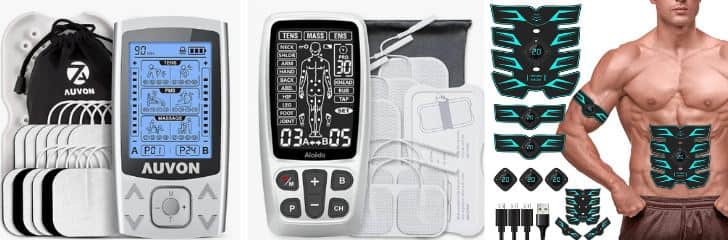
We earn a commission if you click this link and make a purchase at no additional cost to you.
Ulnar nerves pass through the "funny bone" area on the inner part of the elbow joint. You should create an "OK" sign with your hand and bring it toward your face slowly. Your movement should look like you are putting on a pair of goggles with one hand. Every glide helps to clear the path for the nerve as it enters the wrist bones. You will notice improved sensation and strength in your ring and pinky fingers after the glide.
Extend your arm out to the side with your palm facing the ceiling surface.
Bend your wrist back and forth slowly while keeping your arm straight and still.
Tilt your head toward the shoulder and then away in a rhythmic and slow flow.
Perform the "goggle" movement with your hand to floss the ulnar nerve safely.
Stop immediately if you feel any sharp electrical sensations in the arm or hand.
Dexterity Exercises and Joint Space
Finger joints are the most frequently used and often the most neglected parts of the body. You will find that each joint needs a bit of space to maintain its full mobility. Your fingers should be pulled gently away from the hand one by one with a grip. Tension in the small tendons can make your grip feel stiff or clumsy during tasks. You should use light traction to help the synovial fluid reach every part of the joint.
Webbing between the fingers is a common place for fascia to become restricted and tight. You should use your thumb and index finger to pinch and pull this skin gently. Every pinch helps to increase the blood flow to the small muscles within the hand. Your hands will feel more responsive and less tired after this detailed work on the web. You must be gentle as this area is able to be surprisingly sensitive to pressure.
Knuckles require a circular rubbing motion to keep the connective tissue flexible and healthy over time. You should use your thumb to rub around each knuckle bone on the back side. Your hand should be relaxed into a soft claw shape during this rubbing process. Every circle helps to prevent the stiffness that often comes with age or heavy hand use. You will feel a greater range of motion when you make a fist after this.
Grasp the base of each finger and pull gently to create a joint gap.
Pinch the skin between your fingers and pull it away from the hand surface.
Rub each knuckle with your thumb using small and firm circular movements.
Spread your fingers as wide as possible and then curl them into a ball.
Massage the back of the hand from the wrist to the knuckle base area.
Fascial Stripping for Long-Term Mobility
Fascia is the connective tissue that wraps around every muscle and nerve in your arm. You will find that this tissue can become dehydrated and "glued" to the muscle fibers. Your technique for fascial stripping involves a very slow and dragging motion across the skin. Every pass should take at least thirty seconds to travel from the elbow to the wrist. You should use a firm and flat surface like a table for the necessary resistance.
Slow movements are required because fascia is a substance that needs time to melt and shift. Your pressure should feel like it is pulling on the skin rather than just pressing. Every inch of the arm needs to be addressed to ensure total limb freedom and comfort. You often feel a "burning" sensation which indicates the fascia is finally stretching and releasing. You must maintain a steady pace to allow the tissue to reorganize its internal structure.
Fascial health is the secret to why some people remain flexible and pain-free for years. You should perform this stripping technique at least once a week for long-term maintenance. Your arm will feel significantly longer and more relaxed after a session of deep fascial work. Every layer of the limb benefits from the increased space and hydration this movement creates. You will find that your standard massage techniques become more successful after the fascia is loose.
Place your forearm on a table with the palm facing toward the ceiling area.
Use the heel of your opposite hand to drag slowly down the inner muscle.
Apply enough force to feel a slight pulling sensation in the surface skin.
Take a full minute to move from the elbow all the way to the wrist.
Repeat the process on the back of the forearm with the palm facing down.
Temperature Contrast for Limb Recovery
Contrast therapy involves alternating between heat and cold to boost the circulation in the arm. You will find this especially helpful after a particularly intense self-massage session on the forearm. Your blood vessels dilate with heat and constrict with cold, creating a healthy internal pump. Every cycle helps to flush out the waste products from the deep muscle tissue fibers. You should use two bowls of water or a heating pad and an ice pack.
Heat should be applied for three minutes to relax the fascia and the tense muscles. You should follow this with one minute of cold to reduce any latent inflammation or heat. Your sensation will shift from a deep warmth to a sharp and refreshing coolness during this. Every transition encourages the body to move fresh and oxygenated blood into the tired limb. You must always end the cycle with the temperature that feels most comfortable for you.
Icy water is best for the tendons of the elbow and the wrist area joints. You should submerge your forearm for a short period to "reset" the local pain receptors. Your nerves will feel calmer and the tissue will feel more stable after the cold. Every session of contrast therapy improves the overall resilience of your arm tissue over time. You will notice a significant drop in chronic soreness over the coming weeks of practice.
Soak your arm in warm water for three minutes to soften the fibers.
Dip the same arm into cold water for sixty seconds to constrict vessels.
Repeat the heat and cold cycle three times for the maximum therapeutic effect.
Wrap the arm in a dry towel to maintain the internal heat afterward.
Apply a soothing balm once the skin returns to its normal resting temperature.
Forearm Rotation and Deep Twist Release
Rotation of the forearm is handled by the supinator and pronator muscles deep inside. You will find these muscles are often hidden and tucked away near the elbow joint. Your thumb needs to press into the space where the two forearm bones meet together. Tension in these rotators makes turning a doorknob or using an object painful and difficult. You should focus on these spots to restore the twisting power of your arm.
Supinator muscles are on the back and help you turn your palm toward the ceiling. You should use deep thumb pressure while slowly rotating your hand back and forth often. Your sensation will be one of a deep and localized ache that slowly clears. Every rotation allows the thumb to sink deeper into the hidden muscle layers of the arm. You must maintain the pressure to ensure the muscle does not "snap" away from you.
Pronator muscles sit on the inner side and turn your palm toward the floor surface. You will find a small and square muscle near the wrist and a rounder one. Your fingers should knead these areas while you perform the rotating motion of the hand. Every movement helps to separate the rotators from the flexors and the extensor groups. You will feel a much smoother action in your wrist after this focused manual work.
Press your thumb into the outer elbow and turn your palm up slowly.
Find the muscle just below the inner elbow and turn your palm down.
Hold the pressure while you rotate your hand ten times in each direction.
Use your knuckles to rub the space between the two forearm bones firmly.
Finish by rotating your forearm in full circles to test the new mobility.

Essential Oils Set - Chosen For You
We earn a commission if you click this link and make a purchase at no additional cost to you.
Arm Massage: Techniques and Differences
Arm massage is a specialized field that requires a deep knowledge of anatomy and a sensitive touch. Your limbs are much more than just tools for lifting; they are complex systems of nerves, tendons, and muscles. Most people neglect their arms until pain makes it impossible to ignore them. You have the power to restore function and comfort through intentional and precise movements.
Professional limb work differs from back massage in its need for localized pressure and safety awareness. You will find that the relief provided by a good arm session ripples through the shoulders and neck as well. Your commitment to learning these techniques will make a world of difference for anyone you treat. Arm health is a mandatory part of overall physical well-being in our modern, tech-heavy world.
Let your hands provide the care that these hardworking appendages deserve every single day. Mastery comes from practice, patience, and a genuine desire to help others feel their best.
